
In our previous discussion, "Is Your Gantry Crane Operating Too Close to High-Voltage Lines?", we explored the critical safety distances and electrical hazards that many shipyard operators overlook. That concern becomes even more relevant now as we approach a major regulatory shift. After eight years of industry feedback and technological advancement, the new GB/T 27997-2026 standard was released on January 28, 2026, and will be officially implemented on August 1, 2026. This isn't just a routine update—it fundamentally reshapes how shipbuilding gantry cranes should be designed, equipped, and operated. For shipyard managers and procurement specialists, the question is no longer whether you can afford to upgrade, but whether you can afford the downtime and compliance risks of not upgrading.
At Wuxi ChuncoTech, we have been closely analyzing these changes to ensure our clients' transition is seamless. Visit our official site at https://www.chuncotech.com/ to see how our latest models align with these requirements.
What Are the Biggest Parameter Shifts in the 2026 Update?
The most immediate change you will notice is the expansion of performance capabilities. The 2011 standard capped the total rated capacity at 2500t, but the new GB/T 27997-2026 raises this limit to 4000t. This directly addresses the industry's trend toward building larger offshore platforms and mega-container ships. Similarly, the lower trolley rated capacity has doubled from 1250t to 2500t, and we now see the introduction of dual upper trolley configurations with capacities like 1600t+1600t.
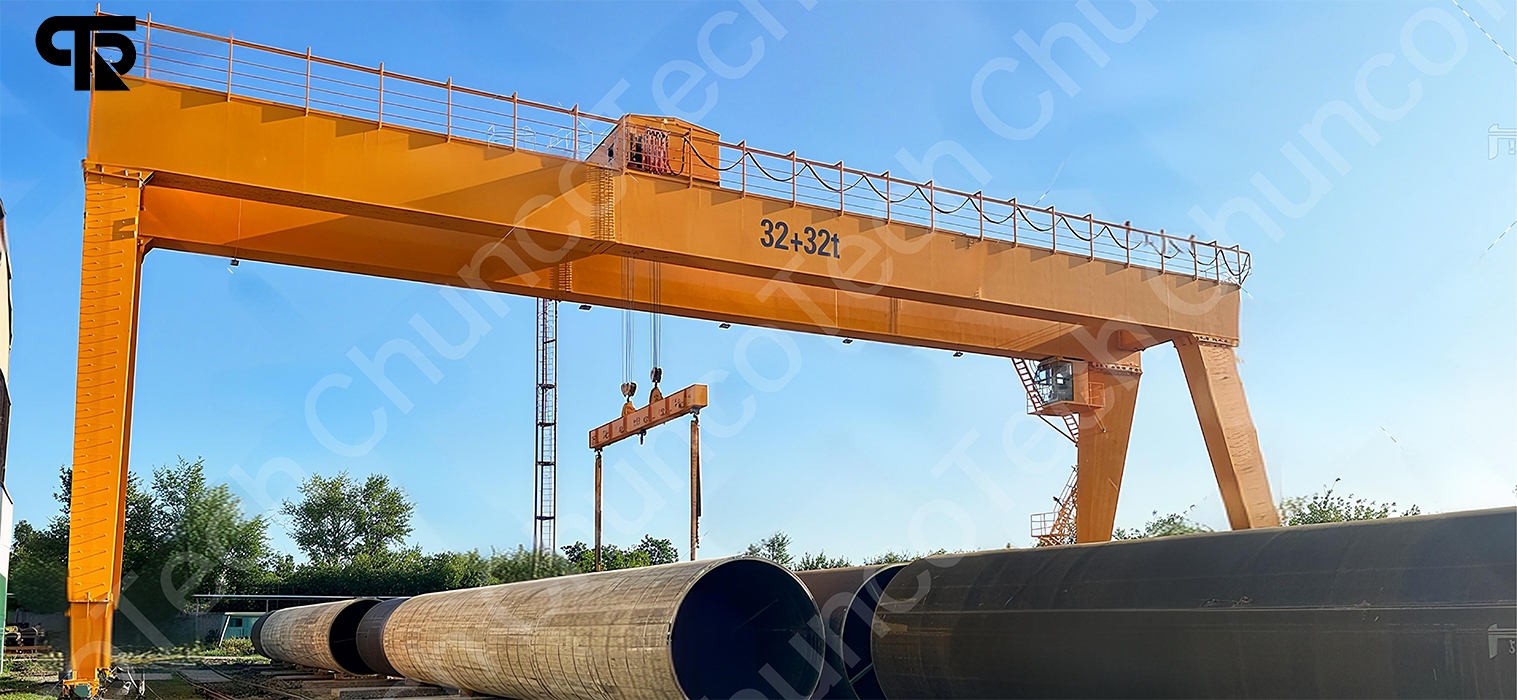
The class of working duty has also been expanded from the narrow A2~A4 range to **A2~A5**. For your daily operations, this means the crane is officially rated for more intense work cycles. If your shipyard has been pushing your existing equipment to its limits, the new standard provides a framework for equipment that can genuinely handle the higher utilization rates of modern shipbuilding without accelerating wear and tear.
How Have Safety and Intelligent Features Evolved?
This is where the new standard truly diverges from its predecessor. The old requirement for an "industrial monitoring system" has been completely overhauled. Now, shipbuilding gantry cranes must be equipped with a safety monitoring and management system compliant with GB/T 28264. We are no longer talking about simple camera feeds. The new mandate requires real-time data acquisition, storage, and transmission of operational status. At Wuxi ChuncoTech, we integrate these systems directly into our control architecture, ensuring that when the standard takes effect, your operators aren't struggling with clunky aftermarket add-ons.

Furthermore, the addition of a dedicated section on intelligent systems is a game-changer. The standard now explicitly requires positioning, obstacle avoidance, and communication capabilities. Imagine your gantry crane automatically plotting a safe path during a tandem lift, with real-time positioning data cross-checked against potential obstructions. The tolerance for data error is strict—total system deviation must not exceed 5% under operating conditions. This pushes the industry toward high-precision encoders and robust communication protocols, moving away from operator-dependent visual estimates.
Is Your Current Electrical and Structural Setup Compliant?
One critical technical change that might require immediate attention is the supply voltage fluctuation tolerance. The allowable fluctuation has been tightened from the old -7%~+10% range to a stricter ±10%. If your shipyard's power grid is unstable, you might experience more frequent faults or under-voltage issues come August. Additionally, the distance from the spreader or wire rope to the outer contour of the operator cab has been increased from a dangerously close 0.4m to a much safer 1m. This is a direct response to near-miss incidents and significantly improves the operator's safety margin.
On the structural side, the new standard adds practical quality checks like main girder drainage testing (ensuring water doesn't pool and cause corrosion) and tightens specifications for welding and bolted connections. For the first time, there is also a clear recommendation for paint film thickness (80μm~120μm) with adhesion quality set to GB/T 9286-2021 Level 1. This isn't just about looks; it's about protecting your investment from the harsh coastal marine environment where these cranes operate.
Why Does the Noise Reduction Matter for Your Crew?
Often overlooked in purchasing decisions, the operator environment has received a major upgrade. The permissible noise level at the operator cab has been slashed from 85dB(A) to just 70dB(A). To put that in perspective, 85dB is akin to heavy traffic noise and is fatiguing over an 8-hour shift. 70dB is closer to a vacuum cleaner—still noticeable, but far less draining. At Wuxi ChuncoTech, we achieve this through precision manufacturing of gearboxes and enhanced cabin sealing. A less fatigued operator is a more vigilant operator, directly contributing to a safer shipyard floor.
What Testing Should You Demand Before Delivery?
Finally, the test methods section has expanded dramatically. It's no longer enough to just lift a weight. The 2026 standard mandates specific tests you should witness or request reports for, including:
• Crane deviation correction testing to verify the anti-sway system actually works.
• Load difference testing and trolley single/interlocked operation testing to validate complex lifting scenarios.
• Insulation resistance testing under specific humidity conditions to prevent electrical leakage.
When you source your next shipbuilding gantry crane from Wuxi ChuncoTech, we don't just hand you the keys. We provide the compliance documentation for these specific tests, proving that the equipment meets the August 2026 deadline right out of the gate. Don't wait for the inspectors to flag your old equipment. Contact us today to discuss how we can future-proof your shipyard with cranes built to the new GB/T 27997-2026 standard.