Floating Dock Crane
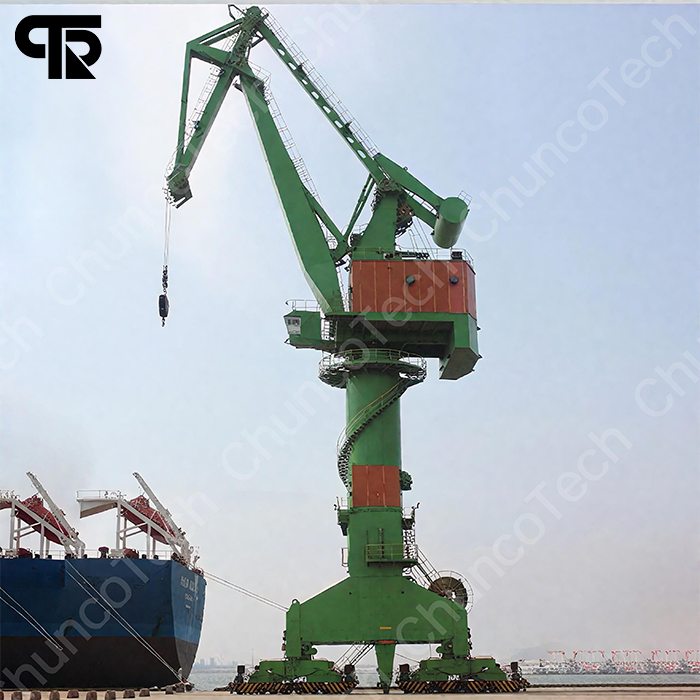
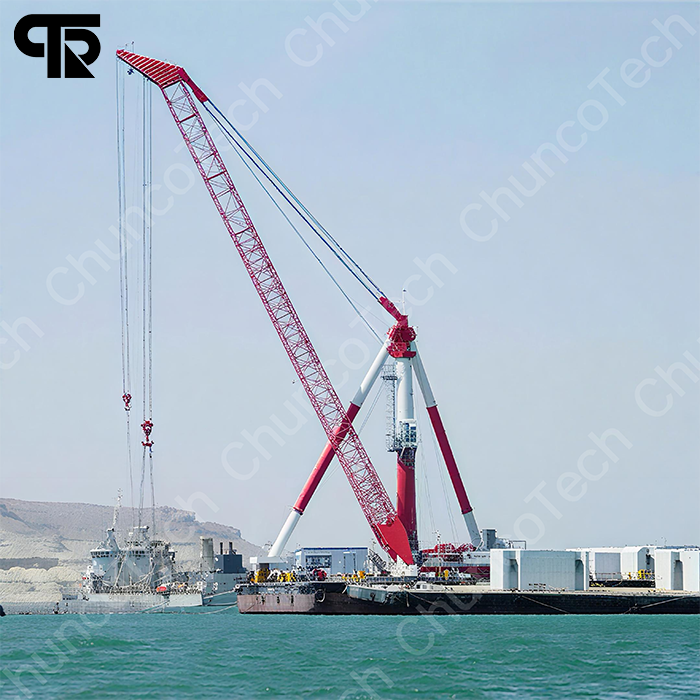
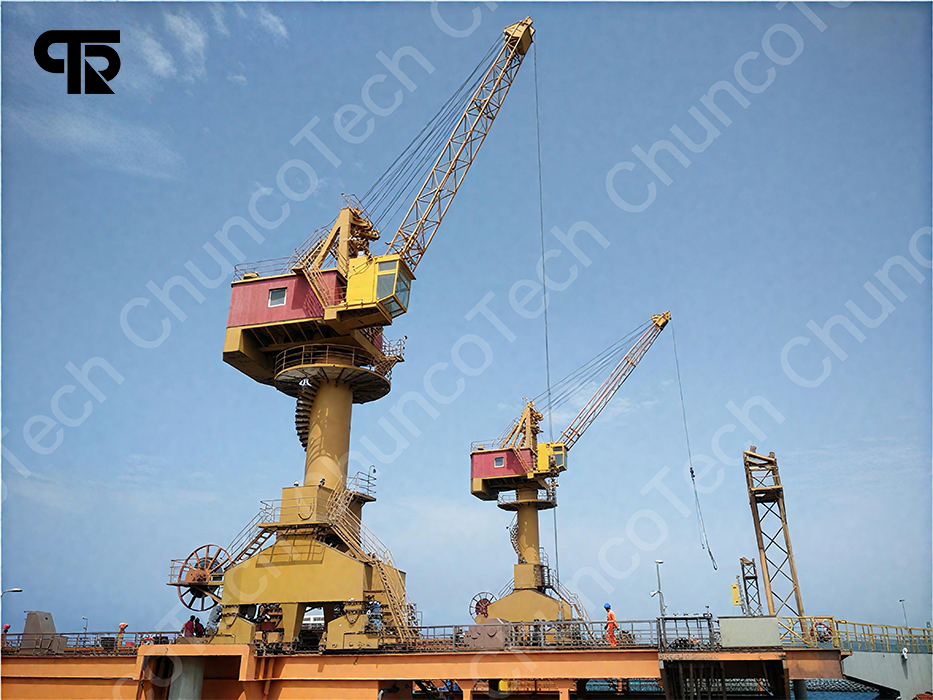
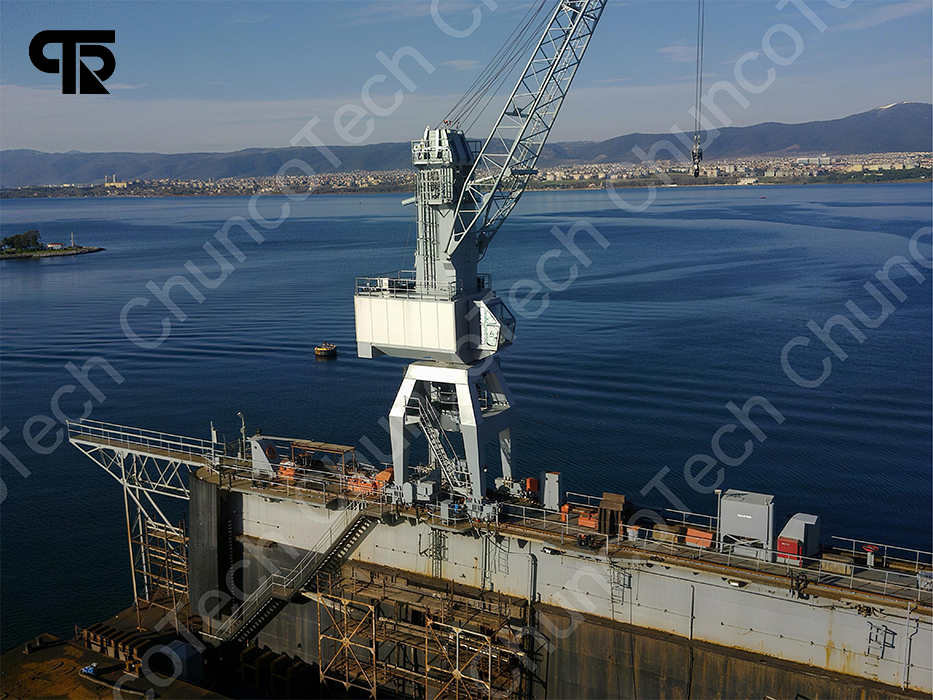
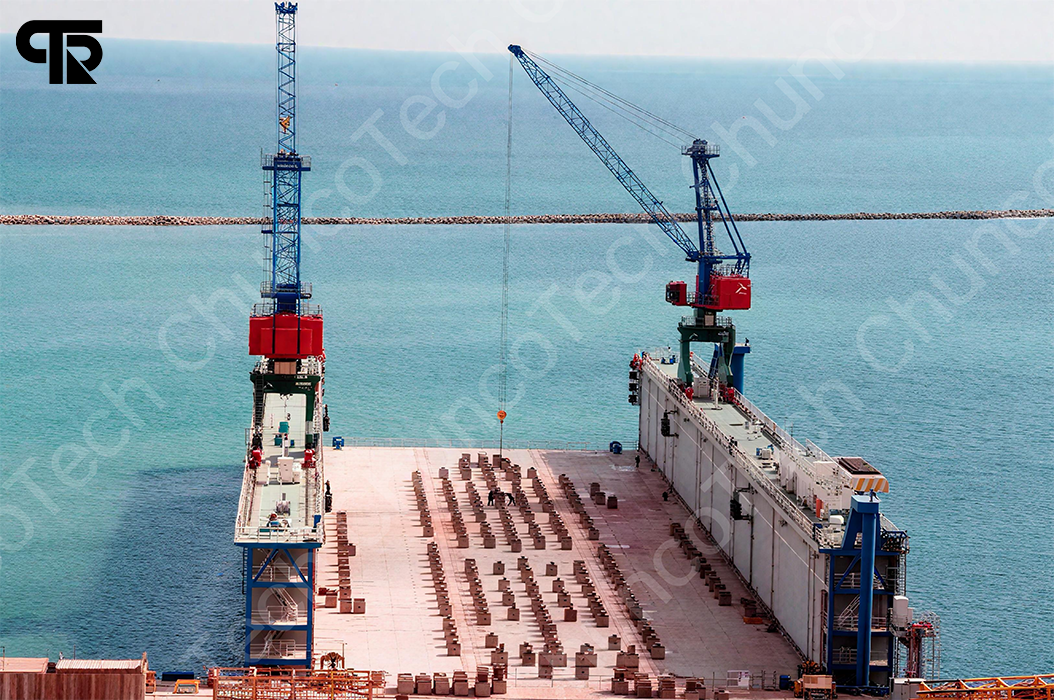
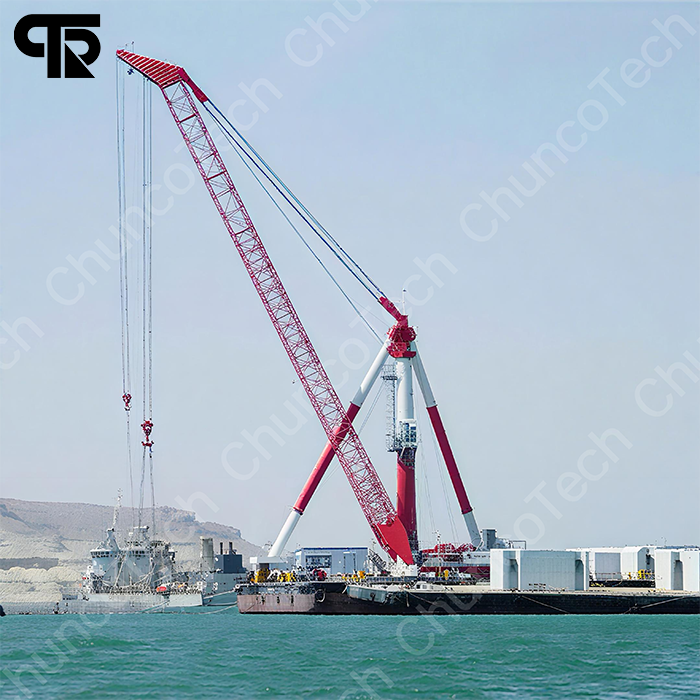
The Floating Dock Crane, also known as a floating crane or derrick barge, is a heavy-duty marine lifting solution that mounts a heavy-duty crane on a dedicated flat-deck pontoon or barge. Compared to land-based fixed cranes, it offers unparalleled on-water mobility and operational flexibility, capable of sailing directly alongside large vessels or into hard-to-reach coastal waters. Designed specifically to overcome land space limitations, this equipment is widely used in heavy lifting scenarios such as shipyard construction and repair, port equipment installation, offshore engineering salvage, and modular bridge construction. Its capacity range is extensive, from smaller 5-ton floating cranes for efficient bulk cargo handling in ports to marine engineering giants capable of hoisting 8,000-ton mega ship blocks.
I. Product Features
1.Superior On-Water Mobility & Flexibility:
Its core advantage is independent waterborne mobility. Whether self-propelled or non-propelled (requiring tug assistance), it can navigate freely to the required work site, realizing "the crane finds the load." This solves the problem of limited working radius faced by fixed quay cranes, making it the ideal choice for projects lacking deep-water berths or for temporary operations, offering exceptional flexibility for heavy marine lifts.
2.Powerful Heavy Load Handling:
Engineered for heavy-lift operations, it can safely and steadily handle oversized, overweight, and irregular components beyond the reach of land cranes. For instance, extra-large floating cranes can perform offshore platform module installation and large ship block assembly, with lifting capacities reaching thousands of tons.
3.Adaptable Structure & Drive Configuration:
● Boom System: Offers both full-slewing and non-slewing designs. Full-slewing types allow 360° operation for greater maneuverability; combination boom designs (like four-link mechanisms) keep the load level during luffing for smoother operation.
● Drive Type: Depending on power and speed control needs, it can use diesel-electric drive (for simpler operation and good speed regulation) or diesel-hydraulic drive (for high sensitivity and reliability) to suit different working conditions.
4.Enhanced Safety & Stability Design:
As heavy marine equipment, its design fully considers complex hydrological conditions. The hull provides a stable buoyant base, and professional mooring systems ensure precise positioning and stability during lifting and shifting, preventing accidents from load swing. Modern models are also equipped with integrated overload limiters and load moment indicators, providing critical safety protection for operations.
II. Product Advantages
1.Overcomes Site Limitations: Eliminates the need for expensive fixed dock construction and shore-based crane rails, making it especially suitable for temporary projects, operations in shallow or deep waters, and lowering the infrastructure investment threshold.
2.Superior Mobility & Coverage: Can be easily relocated via self-propulsion or towing. The long outreach of the boom effectively covers areas and ship holds inaccessible to traditional shore cranes, making it indispensable for cross-sea bridge construction and offshore platform installation.
3.High Lifting Capacity & Investment Value: Its lifting capacity is virtually unconstrained by the structural limits of land-based equipment, offering options ranging from tens to thousands of tons. It provides significant value for users requiring heavy lift services over water or seeking cost-effective heavy-duty floating cranes.
4.Safety & Reliability: Designed to meet high standards such as national "Crane Design Codes" and "Safety Regulations for Lifting Appliances," equipped with comprehensive safety protection systems. The hull structure is reinforced, and key areas feature watertight bulkheads, ensuring overall stability and risk resistance during marine operation
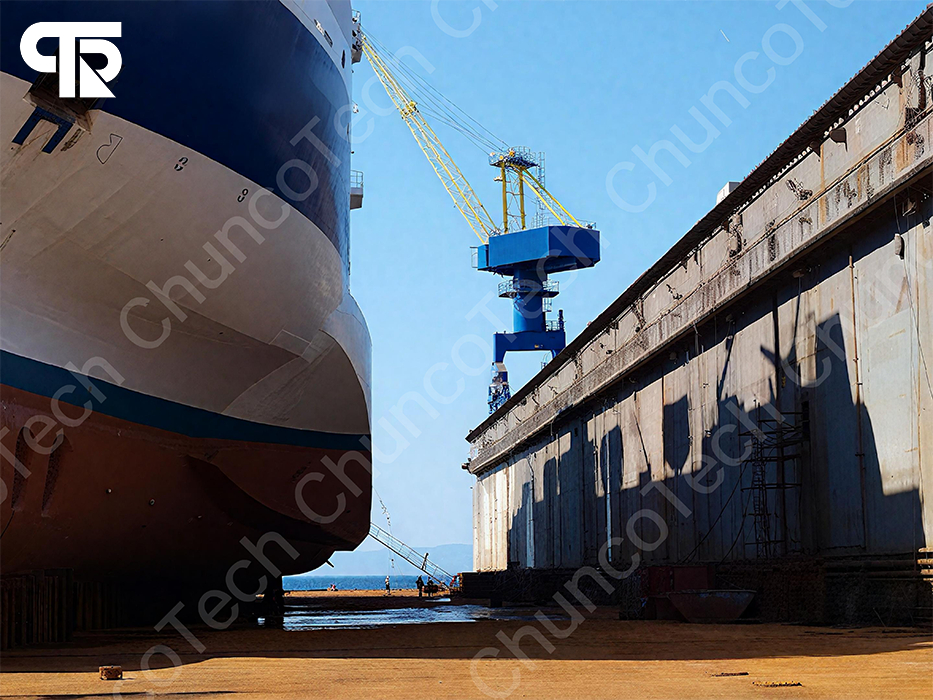
III. Application
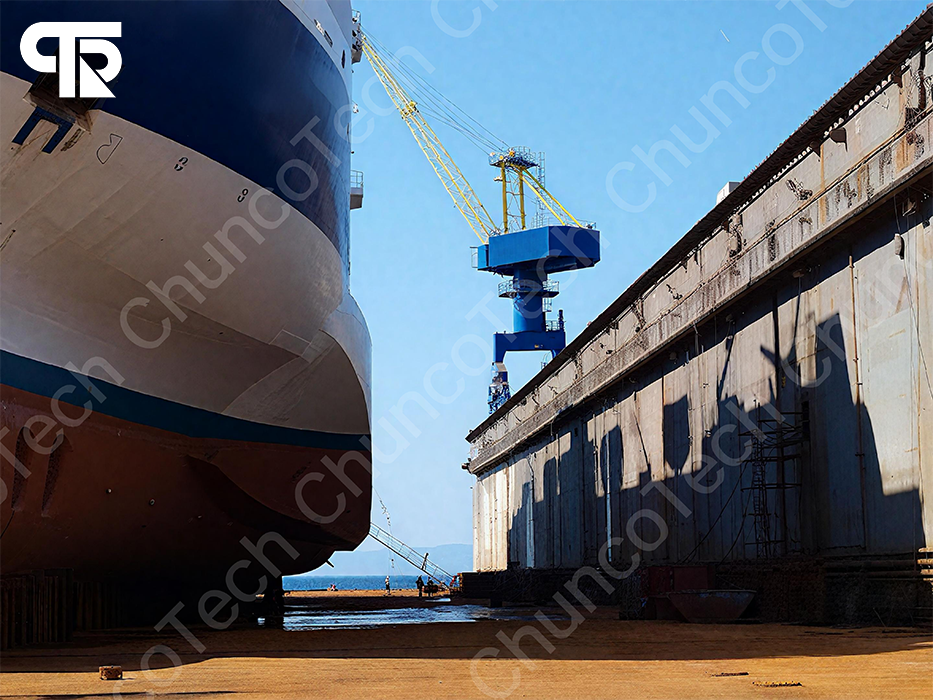
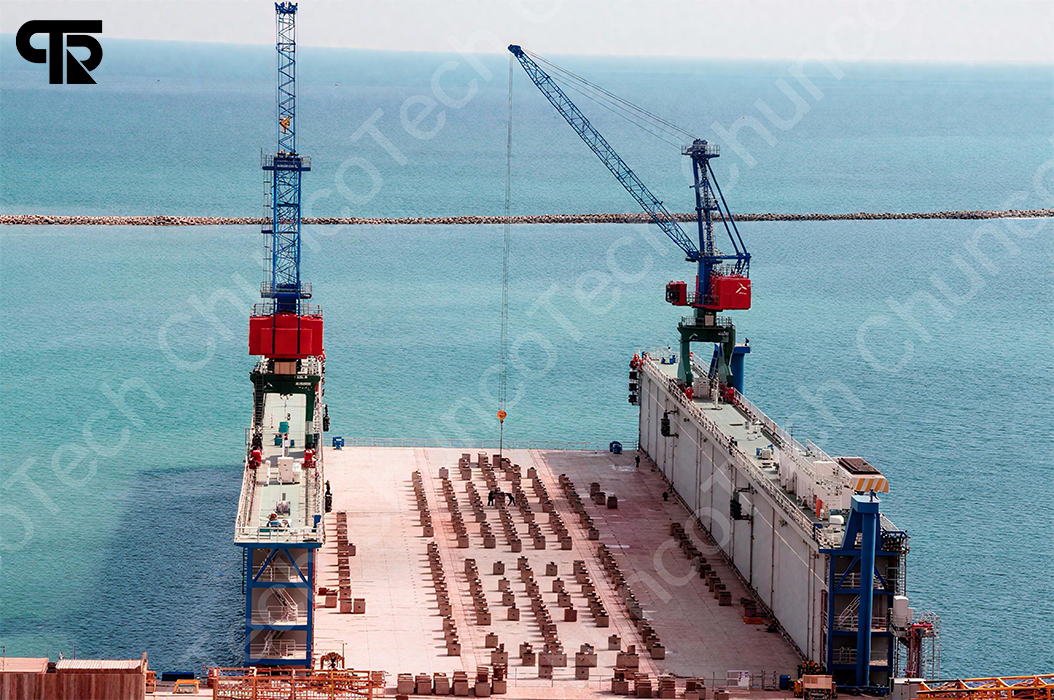
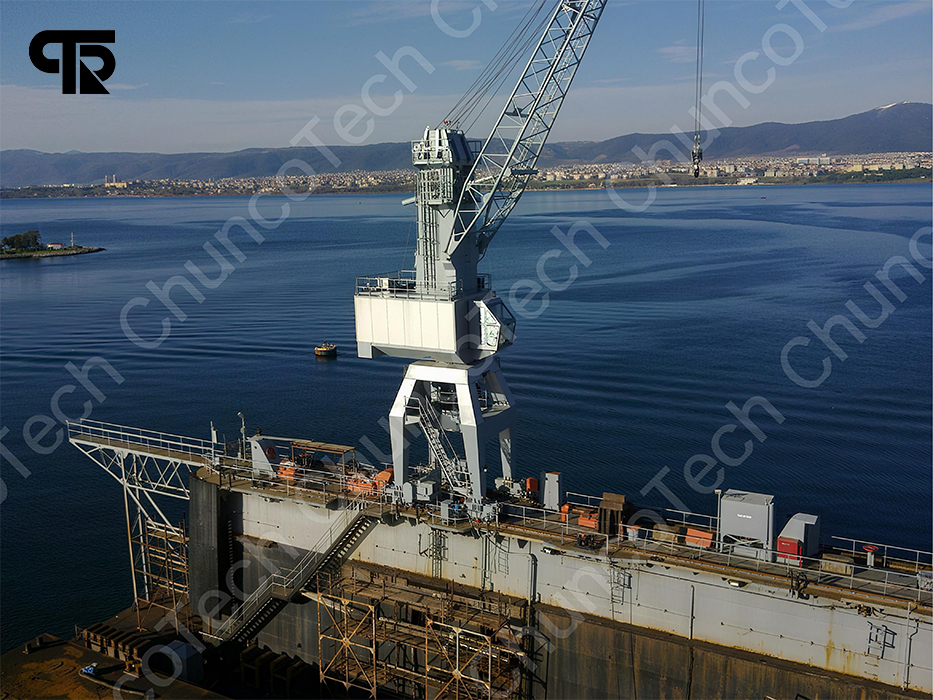
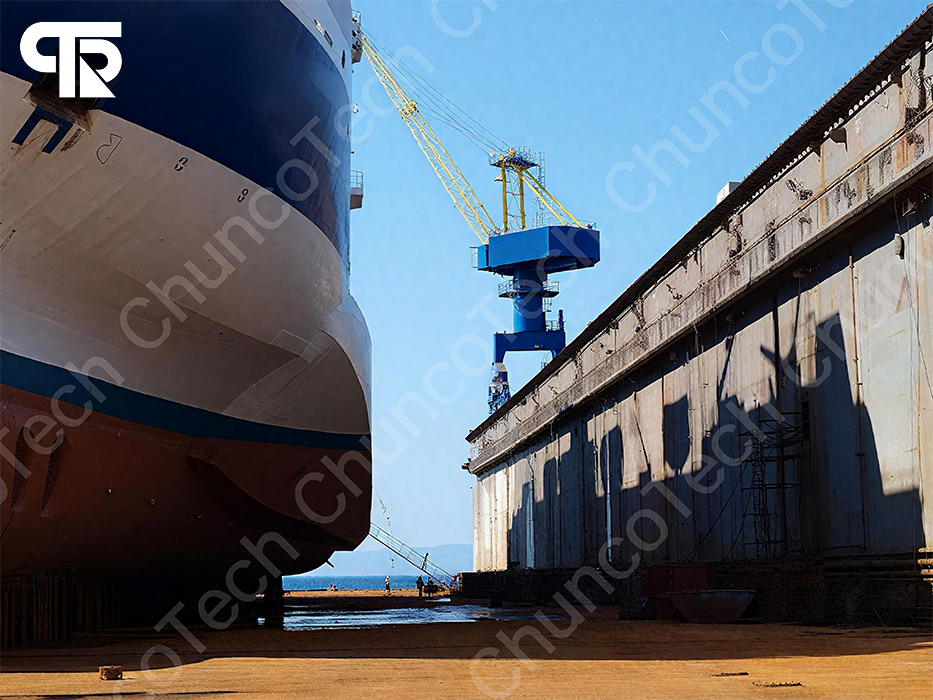
1.Shipbuilding & Ship Repair: Used in dry docks for precise handling, positioning, and joining of large ship sections, as well as equipment removal/installation during vessel overhaul. It is a core piece of equipment in modern shipyards.
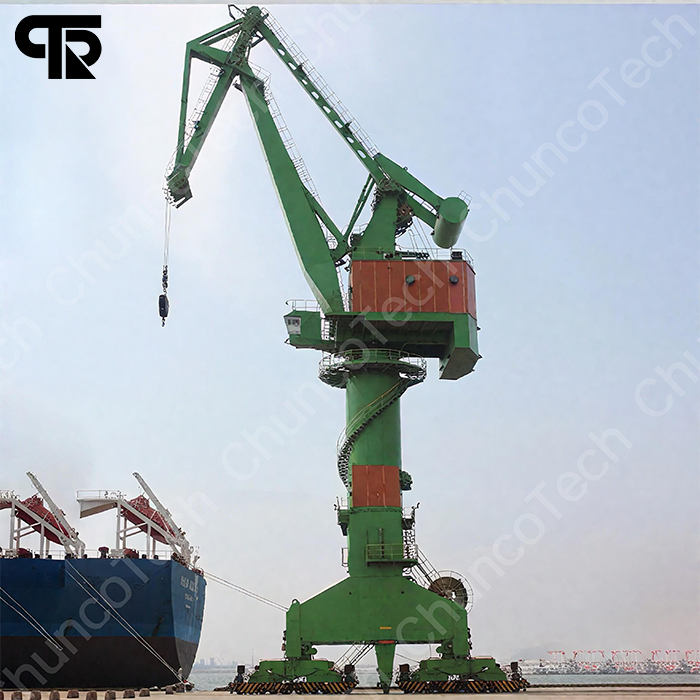
2.Port Construction & Equipment Installation: Used for harbor construction, wharf expansion, installation of large port machinery (like Ship-to-Shore cranes), and lifting of bridge pier and deck segments for cross-sea bridges.
3.Offshore Energy & Salvage Operations: Serves offshore wind farm projects for tower, nacelle, and blade installation, and supports the construction and decommissioning of oil drilling platforms. It is also a key asset for marine accident rescue and shipwreck salvage.
4.Heavy-Lift Cargo Handling & Transshipment: At ports lacking heavy-duty terminal facilities, it directly performs ship-to-ship or ship-to-shore handling and transshipment of project cargo, engineering machinery, and prefabricated components.
5.Inland Waterway/Lake Dredging & Bulk Handling: When fitted with a grab, it functions as an efficient floating grab unloader for sand, coal, etc., used for channel dredging and bulk cargo handling at inland river ports.
IV. Information Required for Purchase
To obtain accurate technical proposals and quotations, potential buyers need to provide suppliers with the following core parameters and operational information for this customized crane:
1.Clear Operational Requirements:
The maximum single-piece weight, dimensions, and type of cargo to be lifted (e.g., containers, bulk, steel structures), along with the required average operational cycle time and productivity.
2.Specific Working Environment Parameters:
● Geography & Climate: Sea/river state grade, maximum wind speed, ambient temperature, tidal range, and water level variation at the worksite. These directly affect the crane's wind resistance stability and mooring system design.
● Port & Waterway Conditions: Berth water depth, seabed/wharf bearing capacity. For non-propelled types, consider channel width impact on anchor cable arrangement.
3.Key Crane Performance Specifications:
● Lifting Capacity: Required maximum rated load and the corresponding working radius.
● Working Range: Maximum lifting height (above/below water) and working radius.
● Mobility Requirements: Whether self-propulsion is needed, and expected shifting and slewing speeds.
4.Regulatory & Certification Requirements:
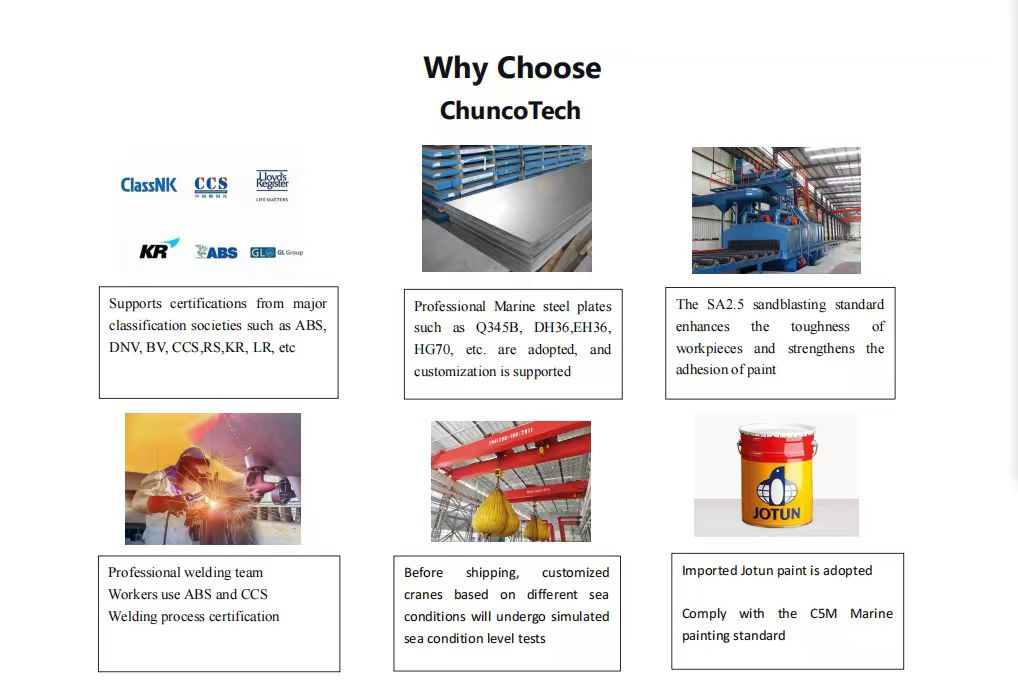
Mandatory international certificationsfor the target market or operating waters, such as ISO, CE, BV (Bureau Veritas) Classification Society certification, etc.
5.Power & Configuration Preferences:
Power supply specifications (voltage, frequency), and brand preferences for core components (e.g., motors, PLCs, braking systems from Siemens, Schneider).
V.Purchase&After-sales Support
Procurement process
1.Sign Quotation&TA & PI&SC
2.Production Drawing confirmation (3Dmodels and Key Drawings)
3.Actual production begin
4.Production process following up and report
5.Factory Assemble &testing (inviting clients to attend in advance)
6.Packing &delivery
7.At end user’s site installation , commissioning &training
8.After sales service
After-sales assembly service
To ensure the safe and efficient commissioning of the equipment, our company hereby provides professional after-sales assembly guidance services, with detailed terms as follows:
1. Service Basis and Scope
Our company will classify service levels and determine the duration of free on-site guidance and installation services based on the model and overall weight of the ship crane. The free service period is 3–5 working days for small-sized cranes, 5–7 working days for medium-sized ones, and 7–15 working days for large and extra-large models, with the specific terms subject to the sales contract signed by both parties. The service scope covers full-process assembly guidance including on-board equipment positioning, component assembly and commissioning, safety device calibration, and operation procedure training.
2. Pre-service Requirements
The customer shall complete the preparation of on-site construction conditions prior to the agreed service time, including the positioning of lifting equipment, clearing of the operation site, and preparation of supporting auxiliary materials (such as fasteners and seals). Meanwhile, the customer shall provide the relevant ship technical drawings and on-site coordinating personnel required for the operation to ensure the smooth progress of the assembly work.
3. Charging Standard for Extended Service Period
If the service duration exceeds the free quota due to non-our-fault reasons such as the customer’s substandard on-site conditions or inadequate coordination, the excess part will be charged at a technical service fee of 200 USD per person per working day, and the travel, accommodation and catering expenses shall be borne by the customer separately.
4. Service Guarantee and Commitment
The technical personnel dispatched by our company all hold qualifications for ship crane assembly and have rich practical experience. The service process strictly complies with international ship equipment installation specifications and our company’s quality standards.
VI.FAQ
Q1: What are the main advantages of purchasing a Floating Dock Crane for marine work compared to using a land-based crawler crane?
A1: The greatest advantage is complete independence from fixed quays or solid shore foundations. A floating crane can navigate to the job site, covering a vast area. It is particularly suitable for offshore projects far from the coast, deep-water operations, or projects where shoreline ground bearing capacity is insufficient. It enables the "equipment to adapt to the project location," not the other way around.
Q2: What size of floating crane do I need? How do I determine the right lifting capacity?
A2: Determine capacity based on the actual weight of the heaviest single piece to be lifted, including a safety factor (typically 1.25x or more). More crucially, specify the working radius at which that capacity is needed (distance from the barge side). For example, installing distant platform modules requires a model with "high capacity at long reach." Also, select a crane with an appropriate duty class (e.g., A4-A7) based on annual usage frequency to ensure durability.
Q3: How is the safety of a floating crane ensured? What are the key safety components that must be inspected?
A3: Safety begins with design and manufacturing. When purchasing, confirm the equipment complies with international safety standards (e.g., FEM). During inspection, focus on: hook safety latches and any cracks; wire rope wear and broken wires; braking system reliability; and the mandatory presence of an overload protection device. Reputable suppliers will provide detailed safety certifications and test reports.
Q4: What are the main daily operational and maintenance costs for a Floating Dock Crane?
A4: Beyond equipment depreciation, major costs include: fuel consumption (for diesel drives); scheduled preventive maintenance (inspections and part replacement for wire ropes, sheaves, gearboxes, hydraulic systems); salaries for specialized crew; and potential costs for tugboat charter (for non-propelled types) and port berthing fees. Choosing a modular, easy-to-maintain design can effectively reduce long-term maintenance costs.
Q5: When purchasing, besides price, what other aspects of the supplier should be prioritized?
A5: Prioritize the supplier's industry reputation and project experience, especially successful projects in similar working conditions. Next is their custom design capability—can they optimize the design for your specific water area and operational needs? Furthermore, evaluate their after-sales service and spare parts support system to ensure quick technical support and genuine spare parts availability in case of breakdown, which is critical for project timelines.
Q6: Can a floating crane also be used for bulk cargo handling? What configuration is needed?
A6: Yes. Many floating cranes are designed for multi-purpose use and can switch functions by quickly changing attachments. For bulk handling, configuration with a heavy-duty grab bucket and corresponding bulk handling control system is needed. This requires the crane's hoisting mechanism to have higher speed and endurance for continuous grab-lift-dump cycles. Clearly state your requirements for grab operation when requesting a quotation.
Certificate