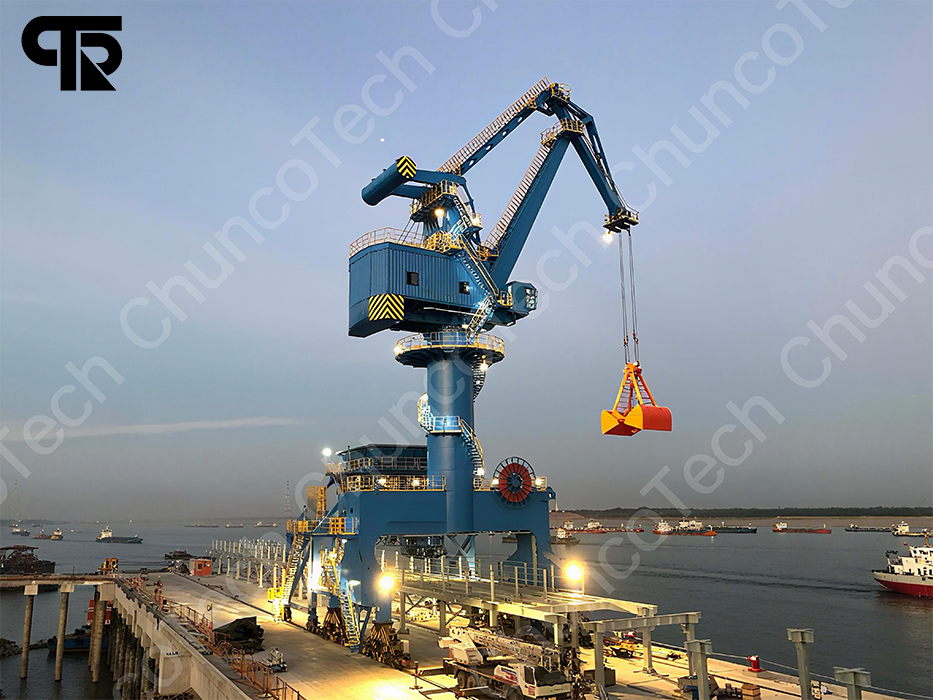
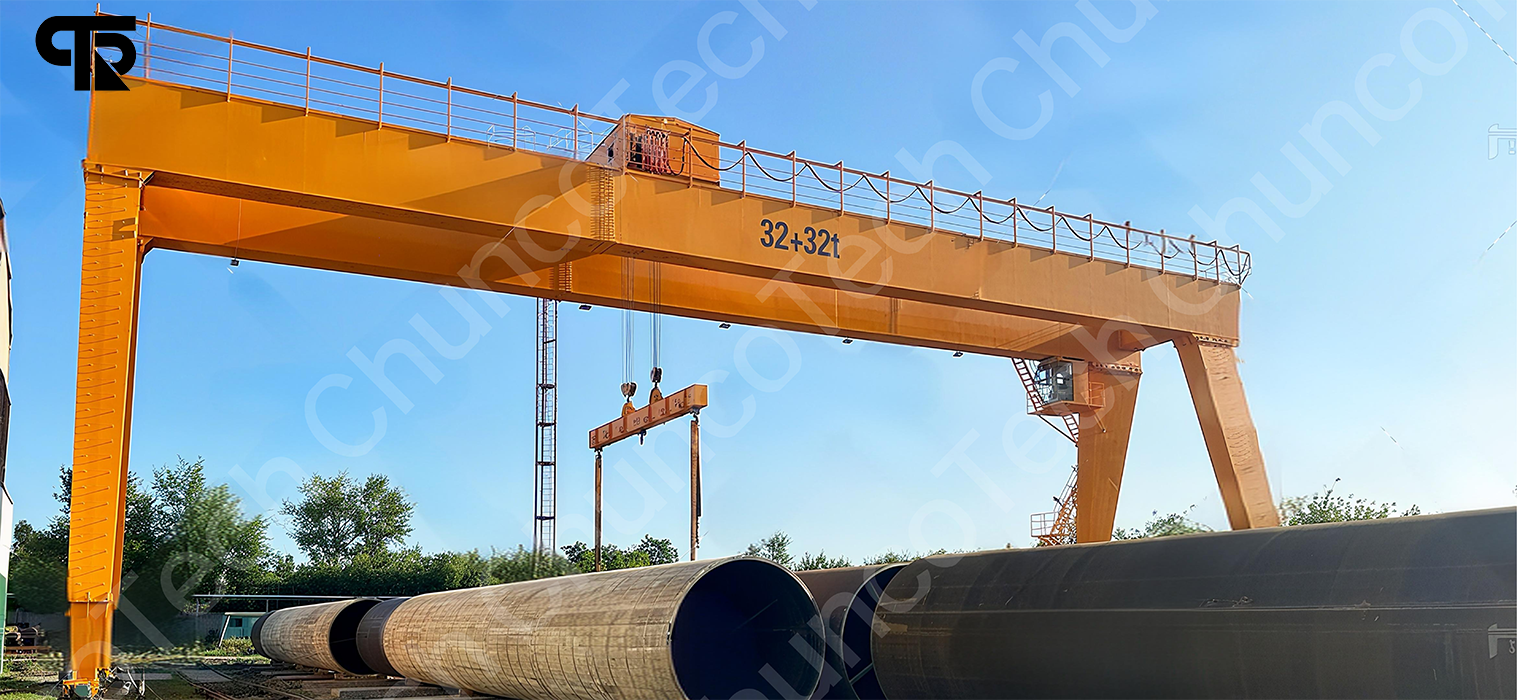
Portal Slewing Crane
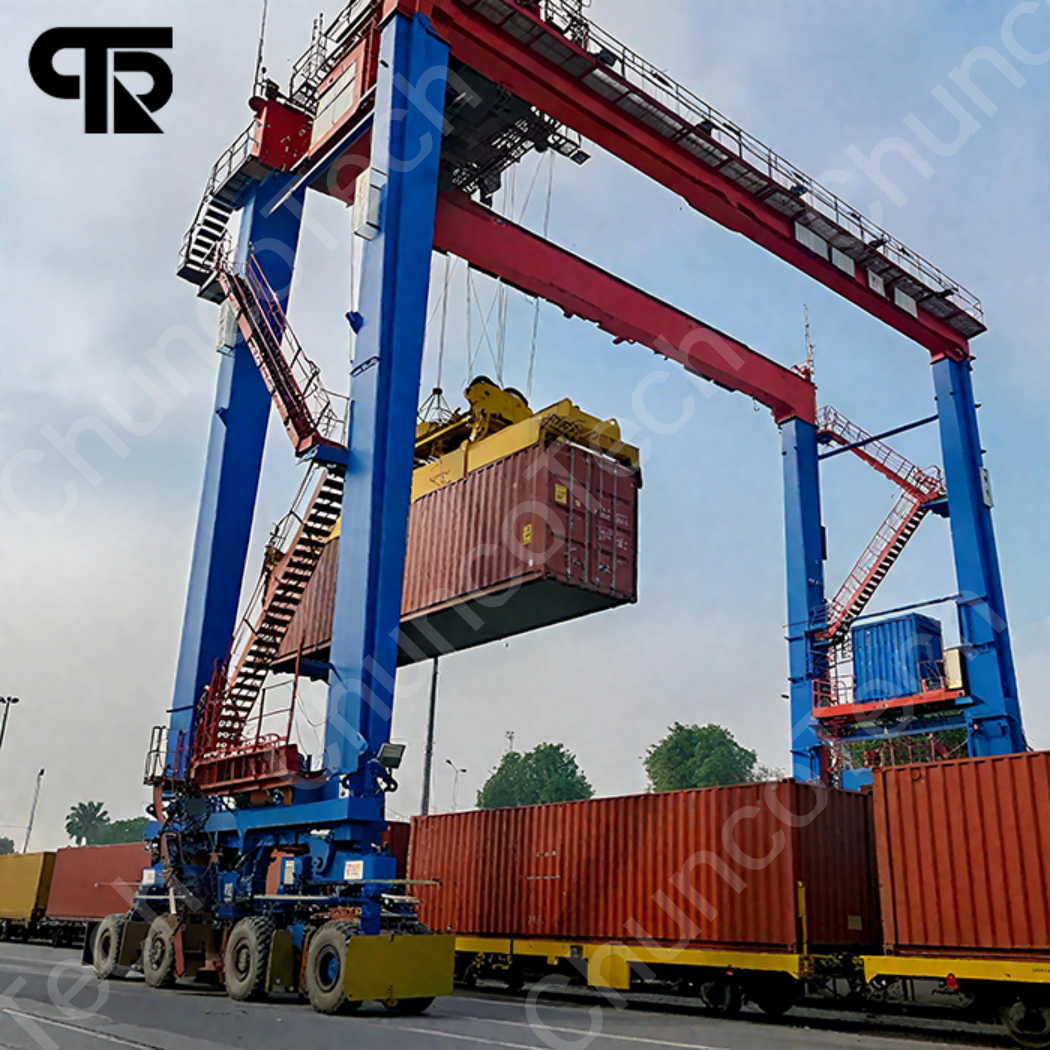
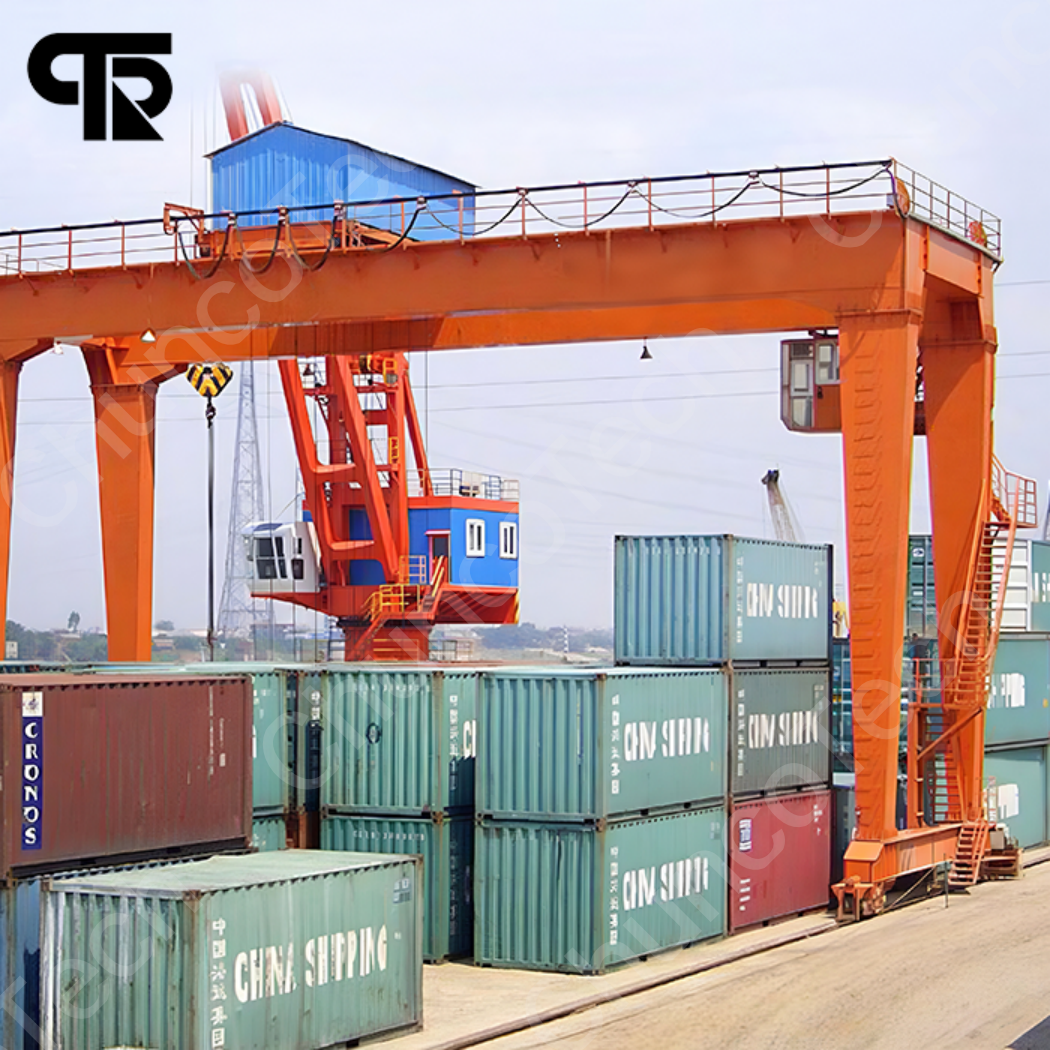
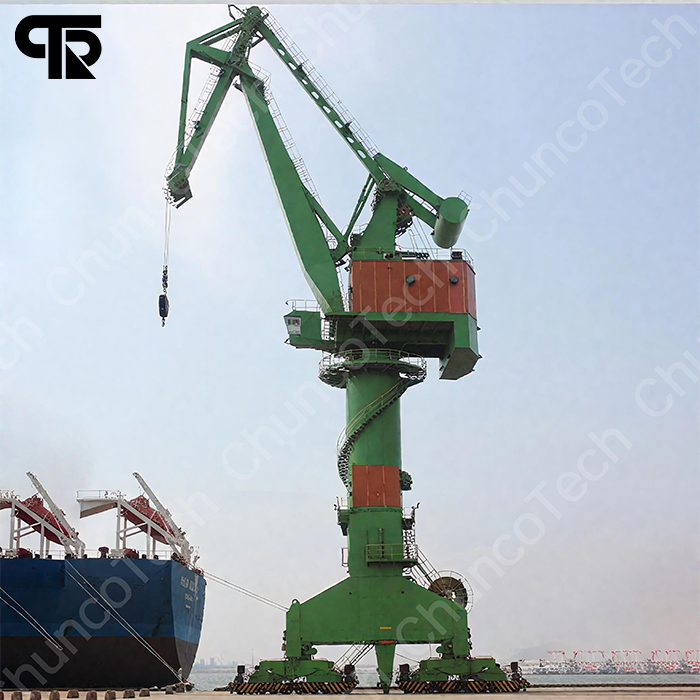
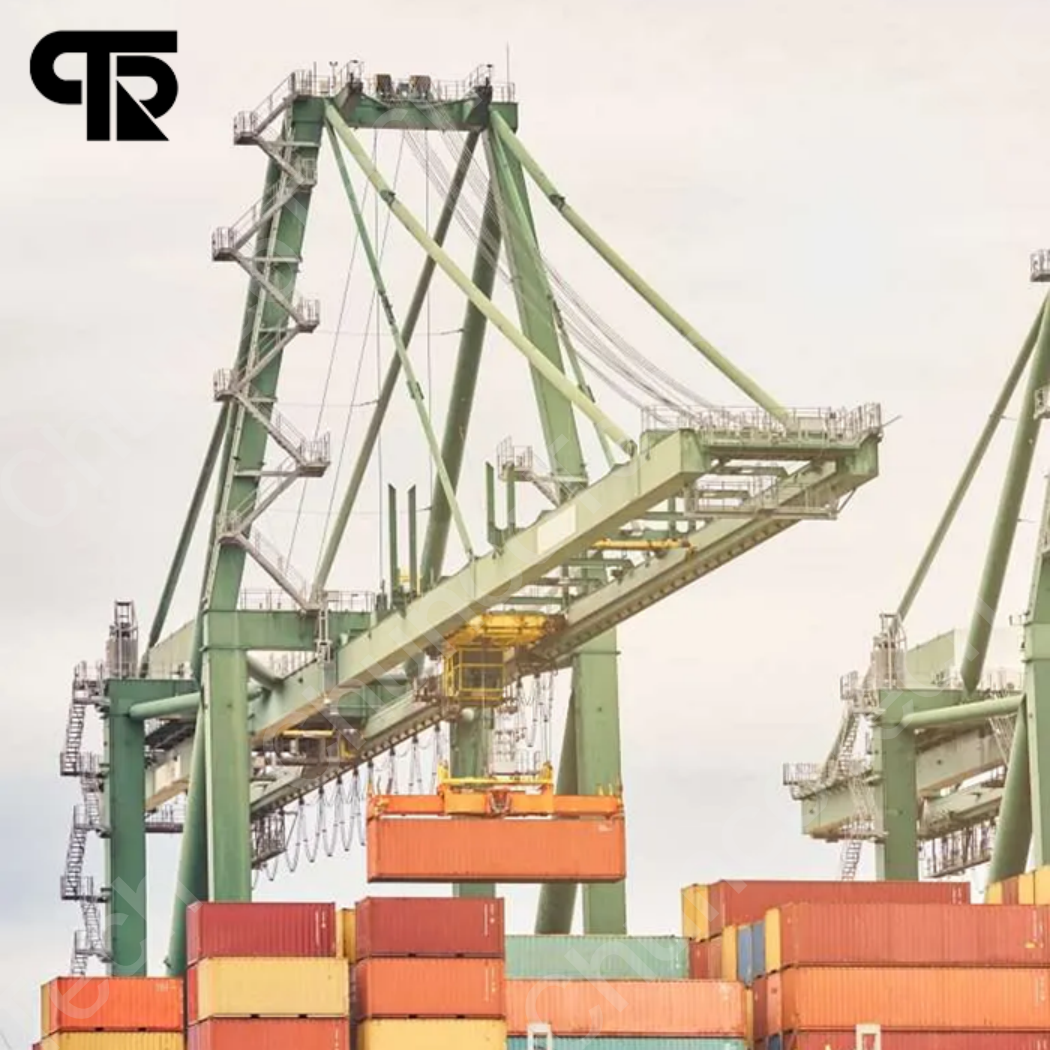
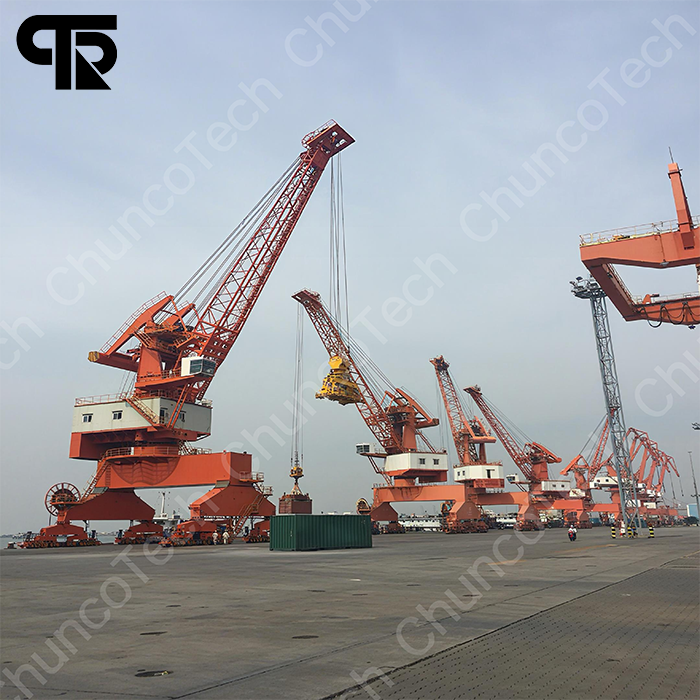
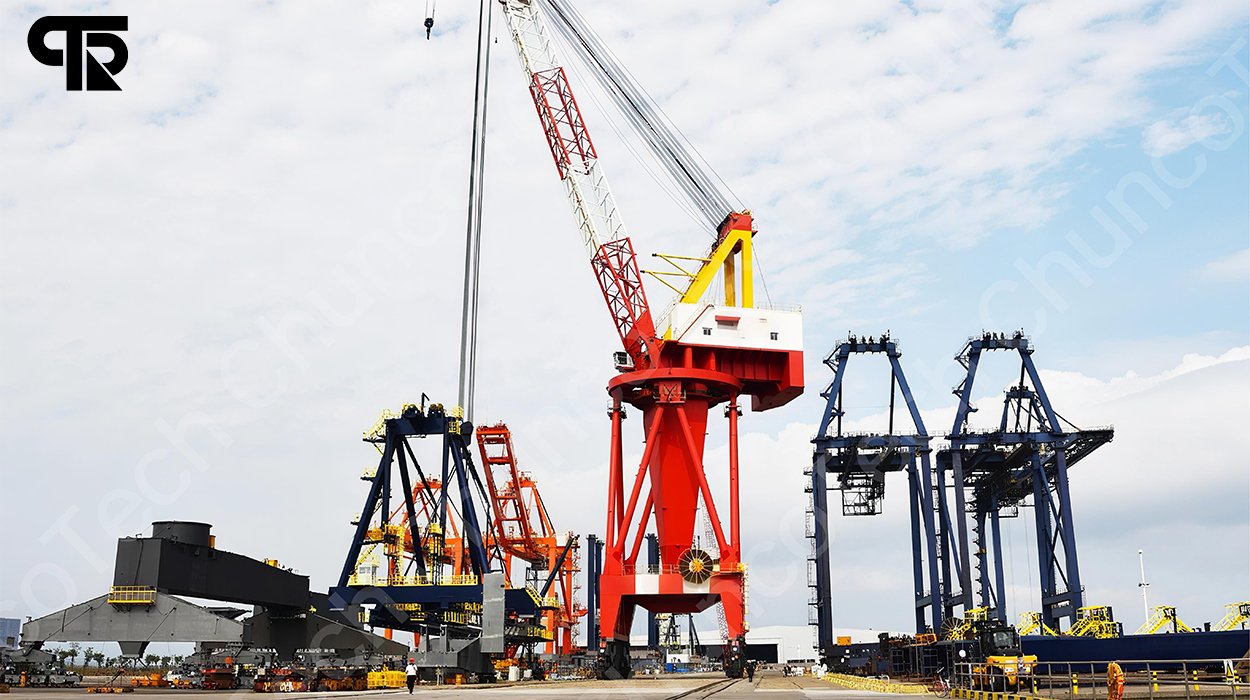
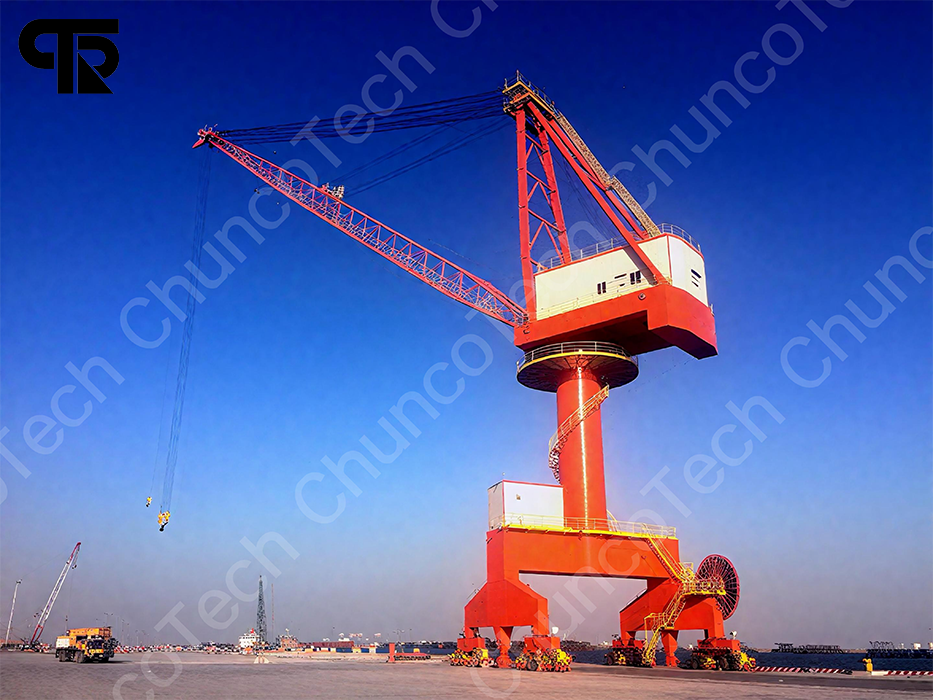
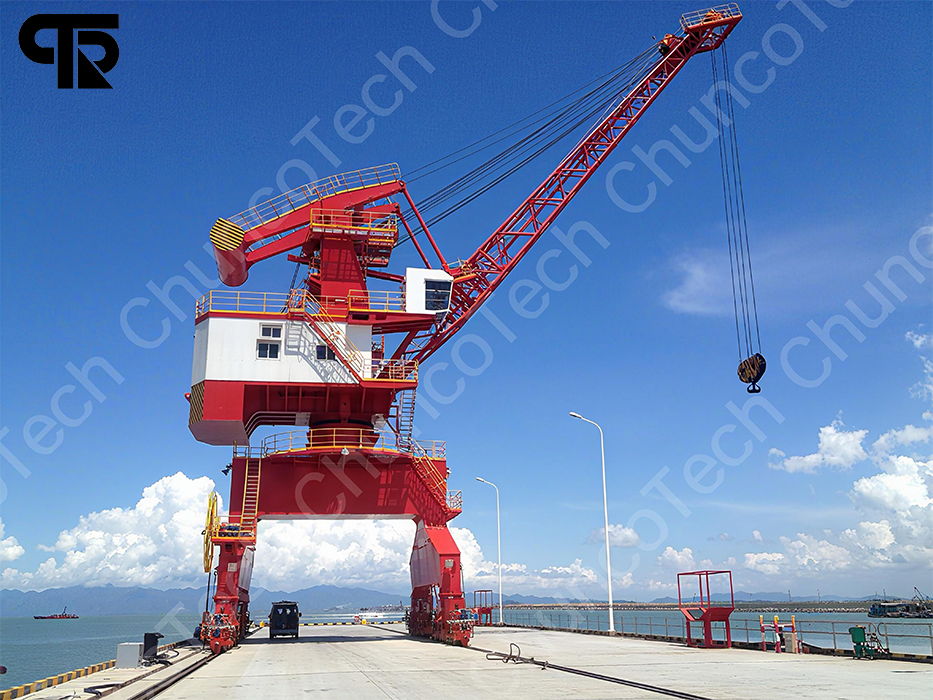
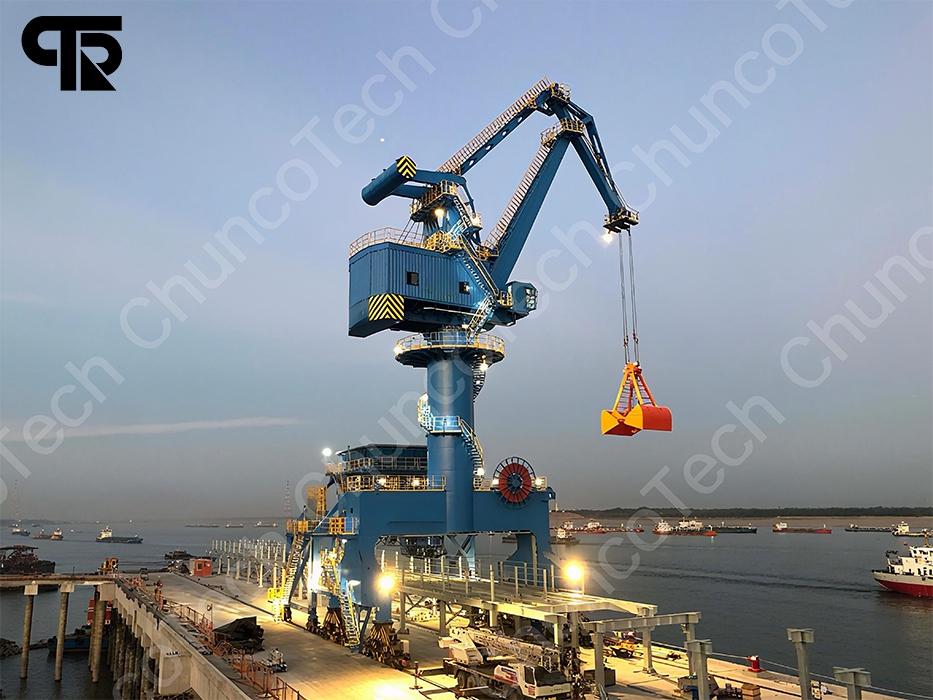
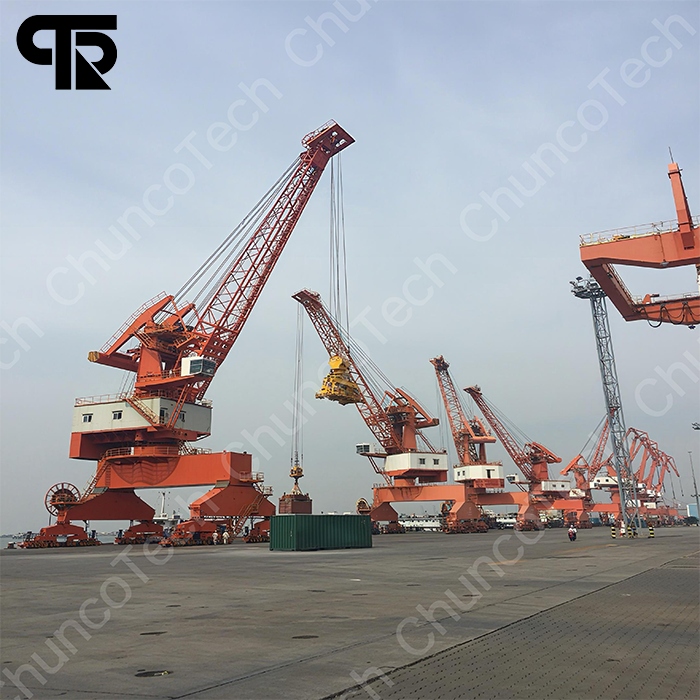
A Portal Slewing Crane is a large-scale, high-efficiency heavy-duty material handling system. Its defining feature is a massive portal-shaped base that spans railway tracks or conveyor belts, with a superstructure capable of 360-degree continuous slewing. This design provides extensive mobility and a wide operating range, making it ideal for precise lifting and moving of heavy loads over large horizontal and vertical distances. As critical equipment in modern ports, large shipyards, and heavy industrial facilities, it is primarily used for container handling, large component assembly, bulk cargo grabbing, and heavy project cargo transport. Electrically powered models—directly connected to the port grid—have become the industry standard, enabling zero local emissions and energy recovery during braking and lowering operations, significantly reducing operating costs and environmental impact.
I. Product Features
1.Efficient Slewing and Luffing System: Equipped with a high-performance slewing mechanism for 360-degree continuous full-circle rotation, combined with a flexible boom luffing system (wire rope or rack-and-pinion driven), it precisely covers every working point from ship corners to rear storage yards, easily handling complex situations like Ro-Ro vessels with high deck stowage.
2.Powerful Lifting Capacity and Working Range: Offers a wide selection of lifting capacities from tens of tons up to 800 tons to meet diverse needs from convention freight to heavy engineering lifts. The maximum working radius can reach 51 meters or more, and the lifting height can exceed 70 meters above rail level, ensuring exceptional job site coverage.
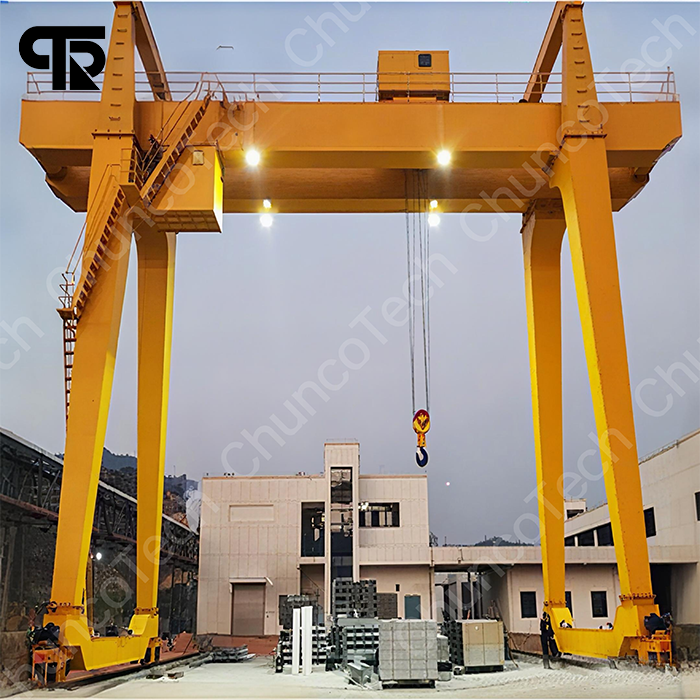
3.Robust Customized Portal Frame Design: The portal frame structure can be customized according to customer requirements for on-site track spacing (span) and clearance height. To adapt to special layouts (e.g., waterfront edges), an asymmetric design can be employed, such as adding more load-bearing wheels on the waterside to maximize working radius and ensure stability.
4.Advanced Drive and Control Technology: Major electrical components often use internationally renowned brands like Siemens or Schneider, ensuring reliability. The application of frequency conversion speed control technology enables smooth, precise starting, running, and braking of all mechanisms, effectively reducing load swing and extending the lifespan of mechanical parts.
5.Enhanced Rope Life and Safety: Innovative design (e.g., patented sheave block arrangement) transforms sliding friction between the wire rope and equipment into rolling friction, significantly reducing wear and extending wire rope service life by more than double, while mitigating safety risks associated with sudden rope failure.
6.High Duty Class and Durability: The pillars duty class is typically A5 to A8, suitable for demanding industrial environments like busy ports and shipyards requiring frequent or near-continuous operation (4-24 hours daily).
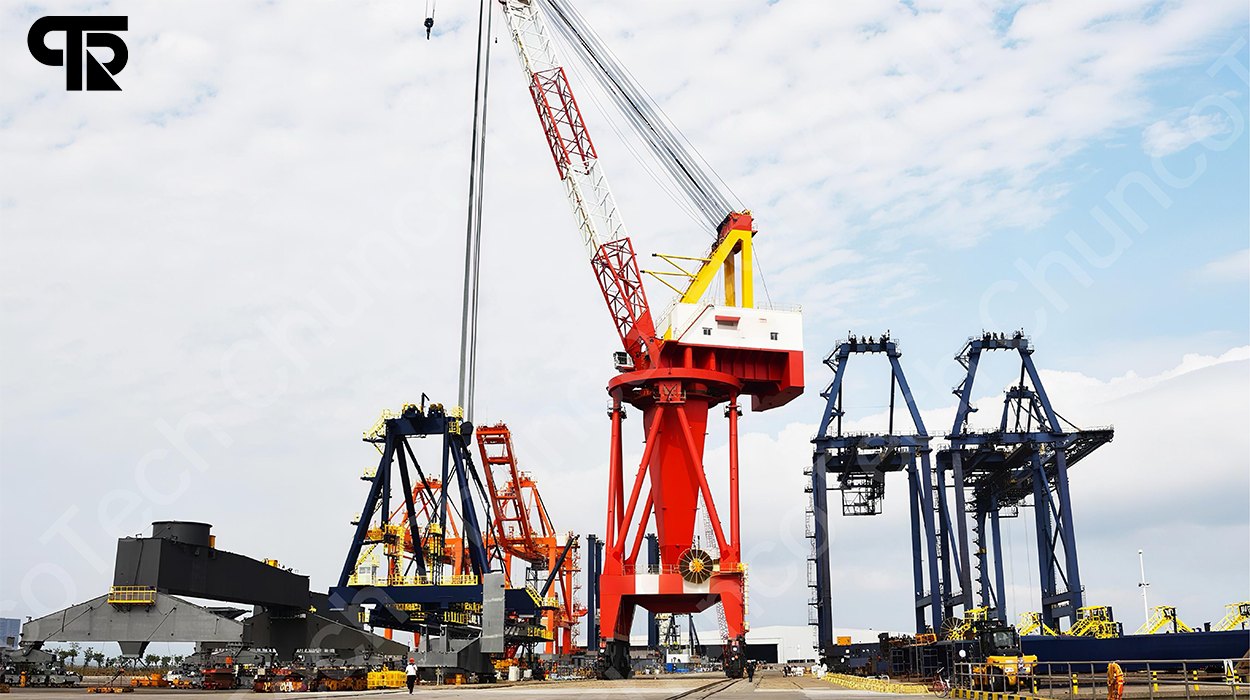
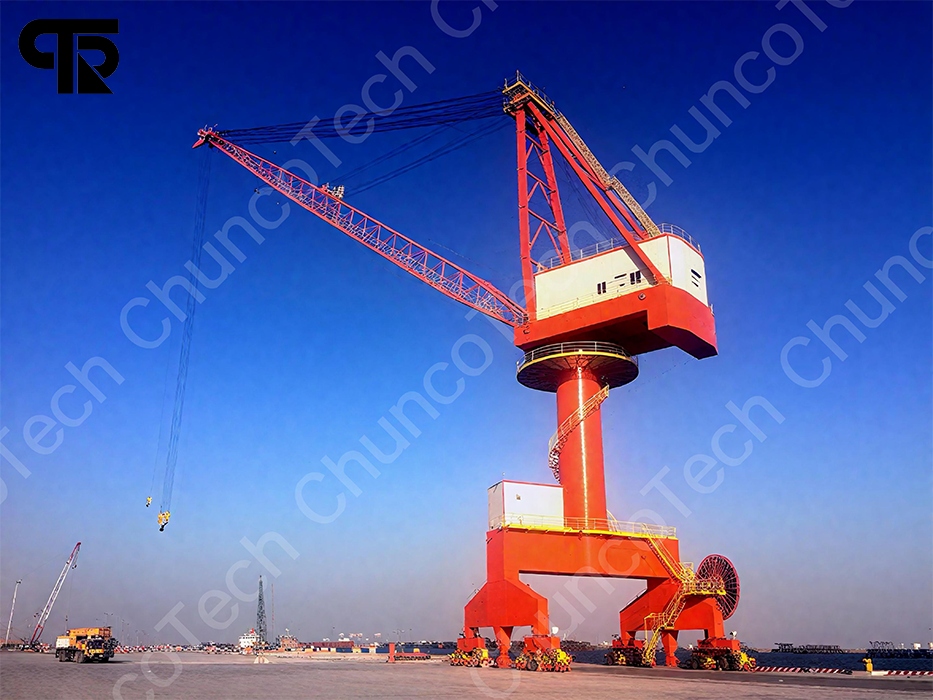
II. Product Advantages
1.Unparalleled Operational Flexibility: The combination of slewing and luffing functions allows it to handle cargo within a vast area in front from a fixed point, eliminating the need for frequent whole-machine movement and resulting in extremely high operational efficiency.
2.Excellent Site Adaptability: The area under the portal frame allows free passage of trains or trucks, enabling seamless connection between multiple transport modes. It can be installed on existing tracks, maximizing the use of existing infrastructure and reducing remould investment and downtime.
3.Sustainable Operational Economy: Electric models have low energy consumption and achieve further energy savings through regenerative systems. Compared to internal combustion engine drives, they reduce noise, heat, and exhaust emissions, complying with stringent environmental permits.
4.Outstanding Safety and Reliability: Standard equipment includes overload limiting devices, interlocking between mechanisms, and condition monitoring systems. The robust design and high-quality core components ensure long-term reliable operation and extended service life under heavy, cyclical。
5.Reduced Total Cost of Ownership (TCO): While the initial investment may be higher, its lower failure rate, longer maintenance intervals, and higher energy efficiency yield a higher return on investment over the equipment's entire lifecycle, avoiding frequent repairs and production losses associated with cheaper equipment.
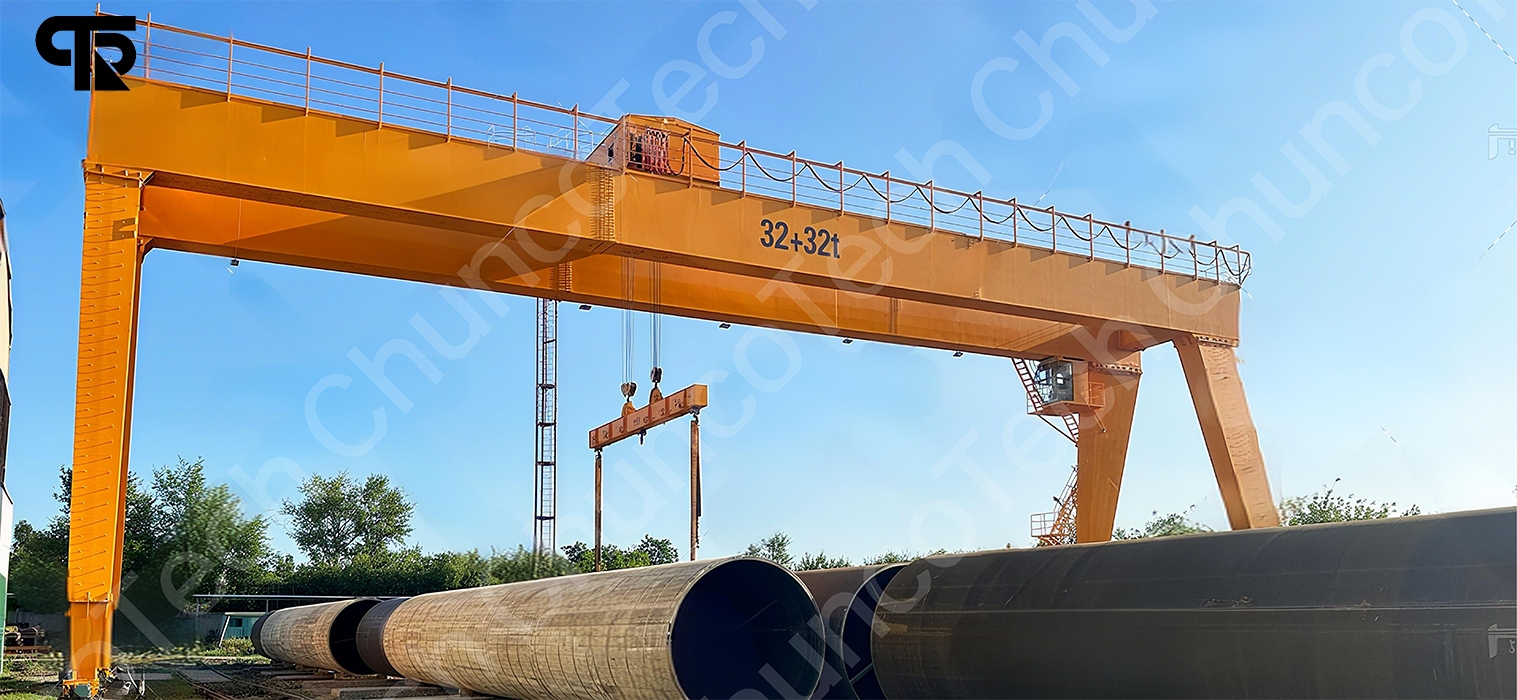
III. Application
1.Port Terminals: Used for container handling, grab unloading of bulk cargo (e.g., ore, coal), general cargo, and heavy project cargo transportation.
2.Shipbuilding and Repair Yards: Lifting large ship blocks, marine engines, shipboard equipment, etc. It is a core lifting for ship construction and repair.
3.Large Industrial Facilities & Logistics Hubs: In steel plants, power stations, heavy equipment manufacturing plants, etc., for handling large raw materials, finished products, and equipment.
4.Bridge & Major Construction Projects: Lifting prefabricated bridge segments, large formwork, and other heavy construction materials.
IV. Information Required for Purchase
To ensure the manufacturer can provide the most suitable technical proposal and accurate quotation, please prepare and provide the following information during your inquiry:
1.Basic Working Conditions: Specify the crane's intended application (e.g., container handling, ship block lifting, bulk cargo grabbing).
2.Performance Parameters: Required maximum lifting capacity (in tons), maximum working radius (in meters), lifting height above/below rail level.
3.Site Conditions: On-site track span (center distance between two tracks), rail gauge (distance between wheels), rail profile, and available clearance height.
4.Power Supply & Environment: Available power specifications (voltage, phase, frequency), and any special environmental requirements (e.g., wind resistance, corrosion protection, temperature range).
5.Duty Cycle: Estimated daily working hours and load frequency to determine the appropriate duty class (e.g., A6, A7, A8).
6.Regulations & Standards: Mandatory safety and technical standards (e.g., ISO, EN, GB) applicable at the project location.
V.Purchase&After-sales Support
Procurement process
1.Sign Quotation&TA & PI&SC
2.Production Drawing confirmation (3Dmodels and Key Drawings)
3.Actual production begin
4.Production process following up and report
5.Factory Assemble &testing (inviting clients to attend in advance)
6.Packing &delivery
7.At end user’s site installation , commissioning &training
8.After sales service
After-sales assembly service
To ensure the safe and efficient commissioning of the equipment, our company hereby provides professional after-sales assembly guidance services, with detailed terms as follows:
1. Service Basis and Scope
Our company will classify service levels and determine the duration of free on-site guidance and installation services based on the model and overall weight of the ship crane. The free service period is 3–5 working days for small-sized cranes, 5–7 working days for medium-sized ones, and 7–15 working days for large and extra-large models, with the specific terms subject to the sales contract signed by both parties. The service scope covers full-process assembly guidance including on-board equipment positioning, component assembly and commissioning, safety device calibration, and operation procedure training.
2. Pre-service Requirements
The customer shall complete the preparation of on-site construction conditions prior to the agreed service time, including the positioning of lifting equipment, clearing of the operation site, and preparation of supporting auxiliary materials (such as fasteners and seals). Meanwhile, the customer shall provide the relevant ship technical drawings and on-site coordinating personnel required for the operation to ensure the smooth progress of the assembly work.
3. Charging Standard for Extended Service Period
If the service duration exceeds the free quota due to non-our-fault reasons such as the customer’s substandard on-site conditions or inadequate coordination, the excess part will be charged at a technical service fee of 200 USD per person per working day, and the travel, accommodation and catering expenses shall be borne by the customer separately.
4. Service Guarantee and Commitment
The technical personnel dispatched by our company all hold qualifications for ship crane assembly and have rich practical experience. The service process strictly complies with international ship equipment installation specifications and our company’s quality standards.
VI.FAQ
Q1. Besides price, what are the most important aspects to consider when selecting a Portal Slewing Crane?
A1:Never base your decision solely on price. Focus on the equipment's long-term reliability, safety design, and maintenance costs over its entire lifecycle. Investigate the brands and warranty terms of core components (e.g., motors, gearboxes). Assess whether the manufacturer offers comprehensive preventive maintenance plans and technical support. A successful investment should focus on the stable production benefits the equipment will deliver over the coming years.
Q2. What are the advantages of electric drive compared to traditional diesel drive?
A2:The advantages of electric drive are significant: substantially lower operating costs (electricity is cheaper and more efficient than diesel), zero local emissions, and reduced noise and heat. Advanced electric systems can also regenerate braking energy for self-use or feedback to the grid, further saving energy. For ports and shipyards with fixed operational areas and access to the power grid, electric models are a more economical and environmentally friendly choice.
Q3. How is safe crane operation ensured?
A3:Safety begins with design. Ensure the equipment complies with international safety standards. Critical safety devices like load limiters, travel limiters for all mechanisms, and emergency braking systems must be complete and reliable. Inquire about the design safety factors and durability improvement technologies for key load-bearing parts like wire ropes and hooks. Furthermore, choosing a crane equipped with an intelligent condition monitoring system enables fault early warning, preventing problems before they occur.
Q4. What does the equipment's duty class (e.g., A5, A8) represent? How do I choose?
A4:The duty class is a comprehensive indicator measuring the crane's usage intensity and load spectrum. Class A5 is suitable for workshops with moderate usage, while Class A7, A8 are intended for demanding, near-continuous operation in ports, metallurgy, or shipyards. Selecting a duty class higher than your immediate needs means the equipment has a larger design margin, offering greater durability and reliability, and is better able to adapt to potential future increases in intensity.
Q5. After purchase, what after-sales service and support does the manufacturer typically provide?
A5:A reliable manufacturer should provide a warranty of at least one year on core components. More importantly, inquire if they can provide on-site installation guidance, commissioning, and operator training services in your region. Understanding their spare parts supply capability and the response speed of their local technical support team is also crucial. These are key factors in ensuring the long-term stable operation of the equipment.
Q6. What is the typical delivery and installation timeline for the equipment?
A6:The delivery time depends on the complexity and customization of the equipment. For standard models, the typical period from order placement to delivery is 40 to 60 days. Installation and commissioning time depend on site readiness and equipment scale, potentially taking several weeks. When planning your project, be sure to clarify the complete timeline with the supplier, including design confirmation, manufacturing, sea freight, customs clearance, installation, and commissioning.
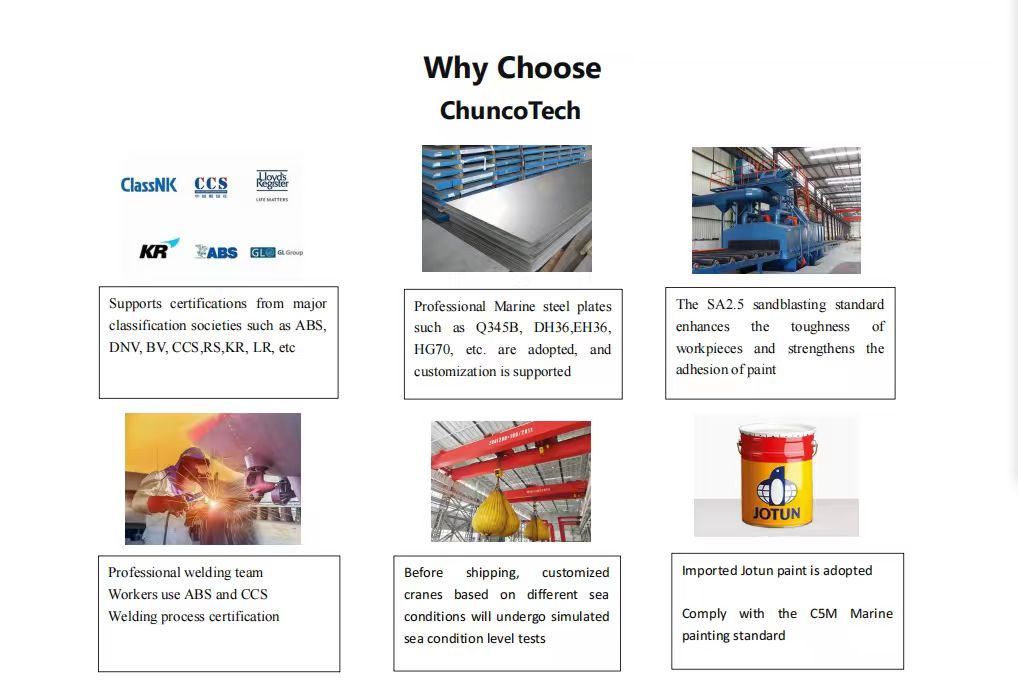
Certificate