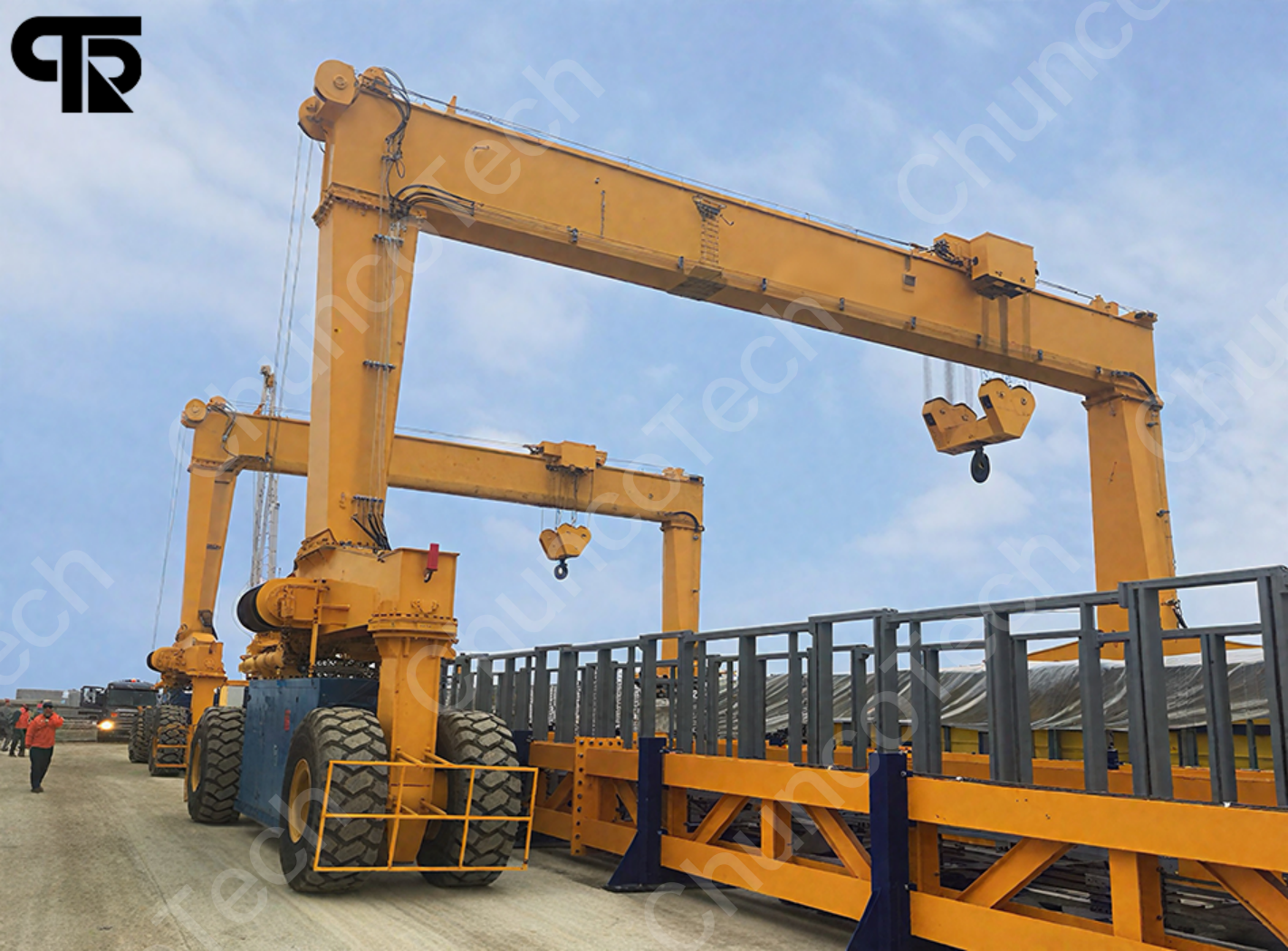
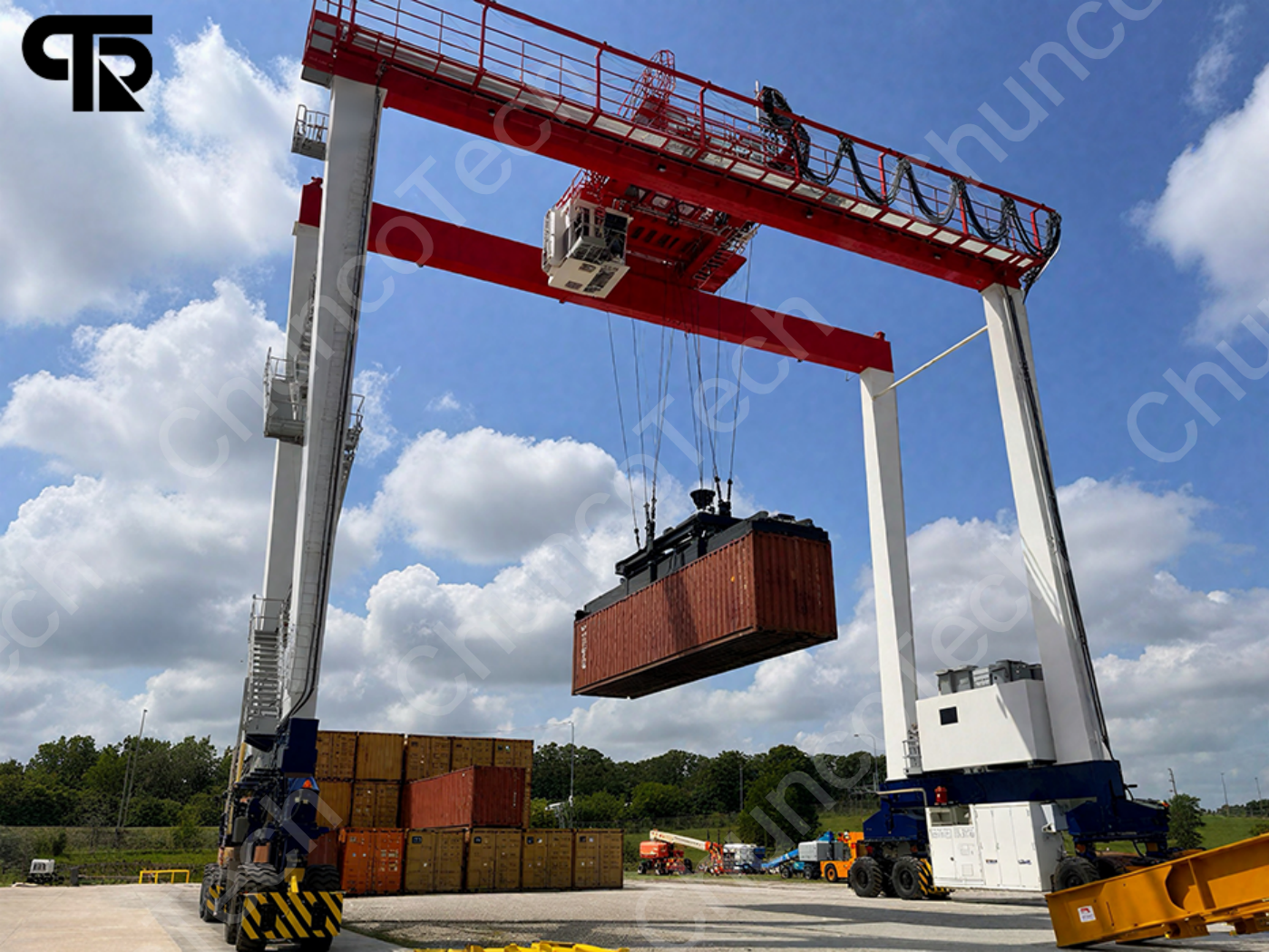
RTG Crane (Rubber-Tyred Gantry Crane)
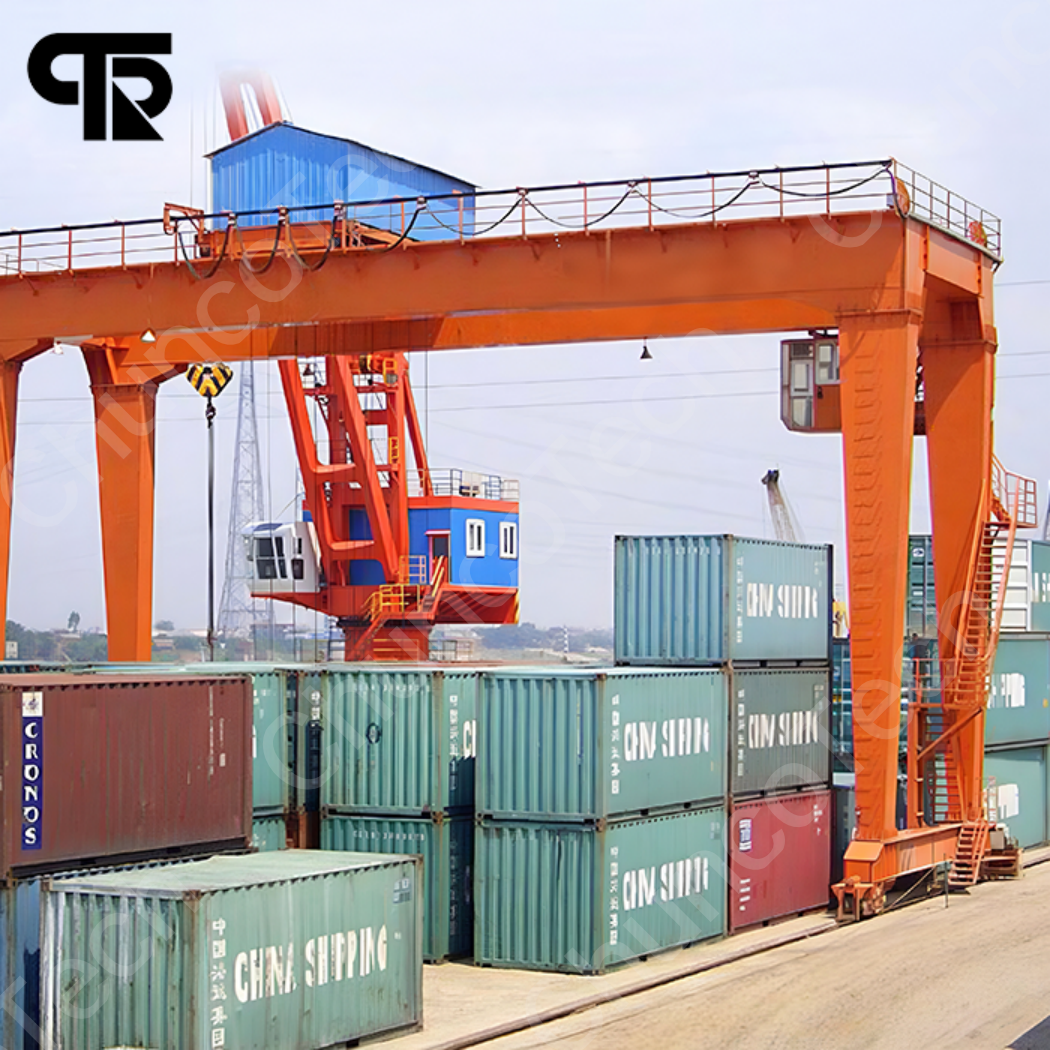
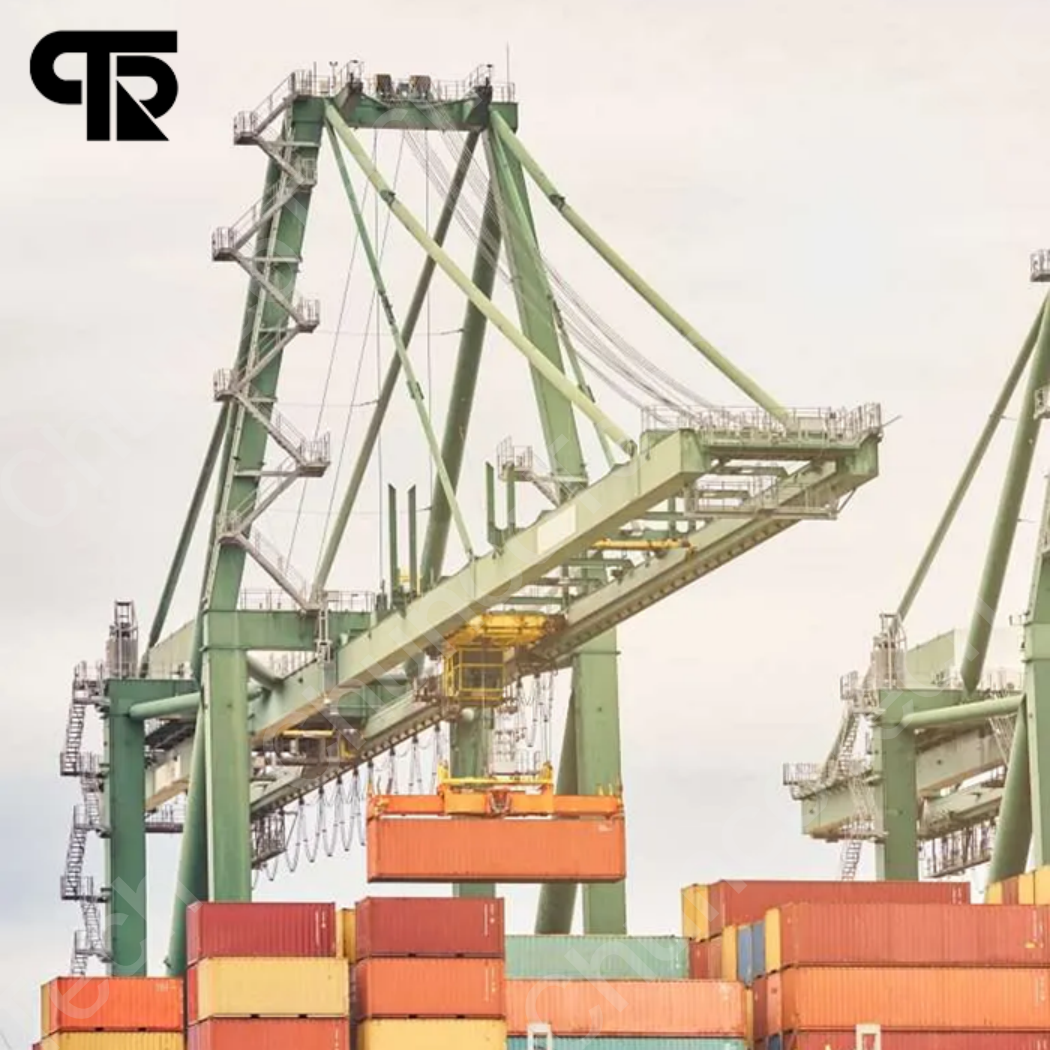
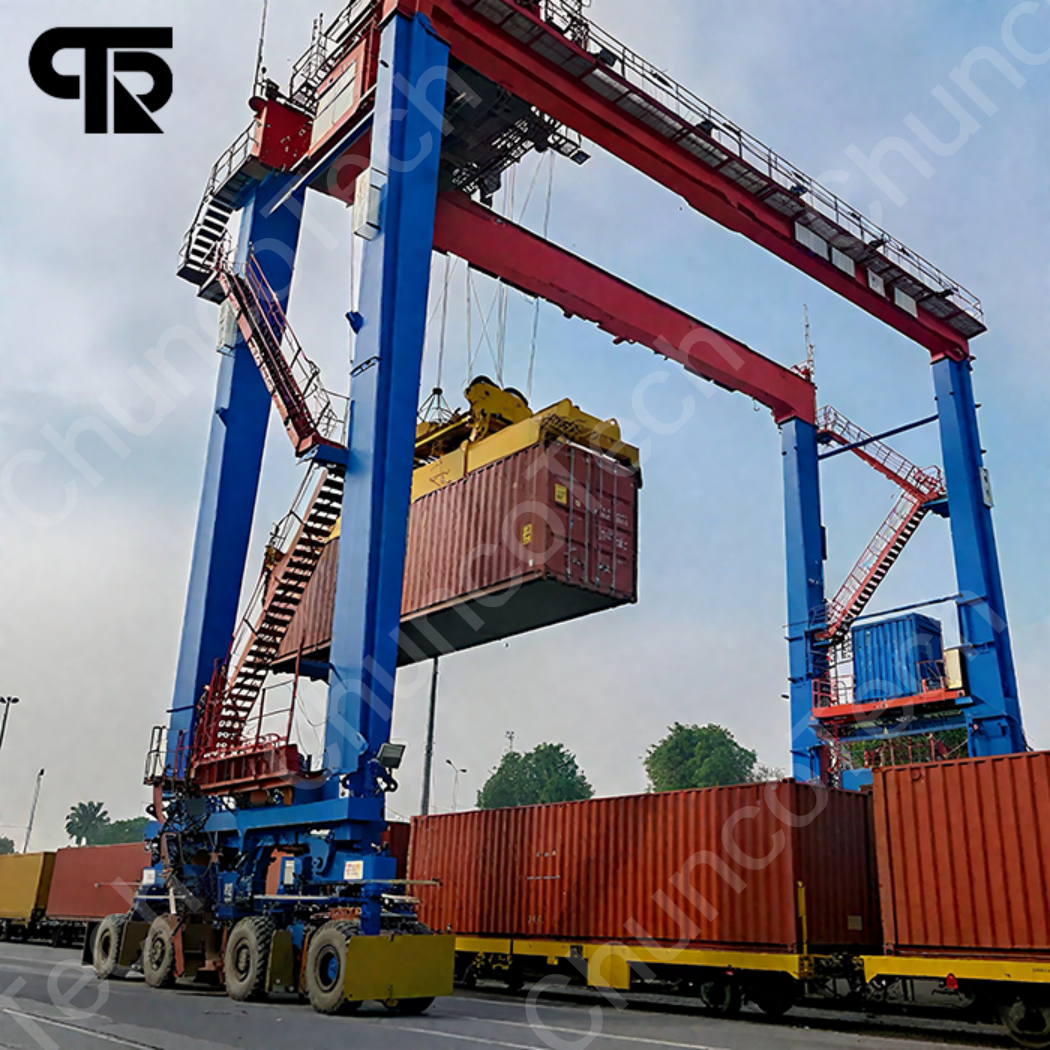
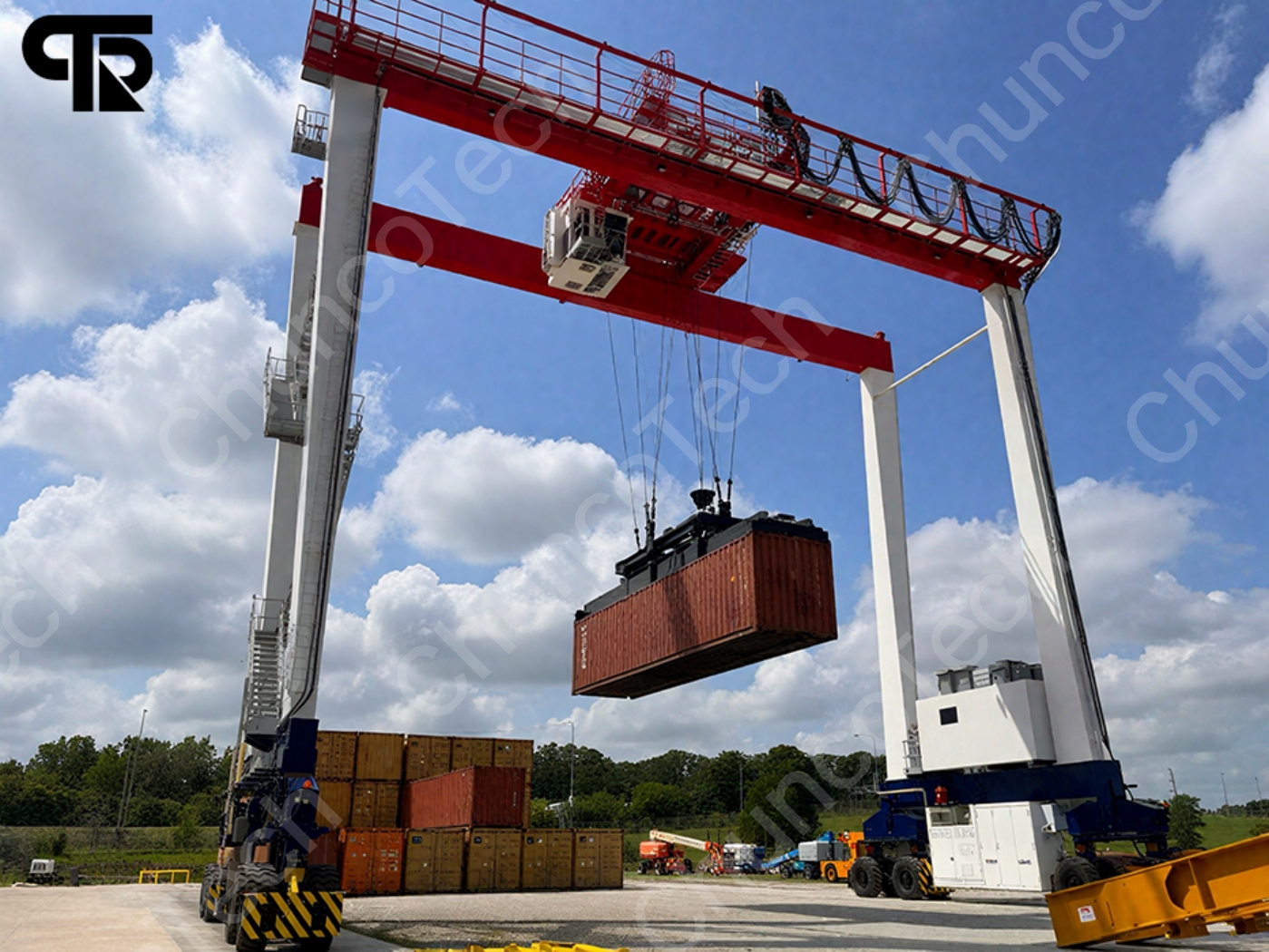
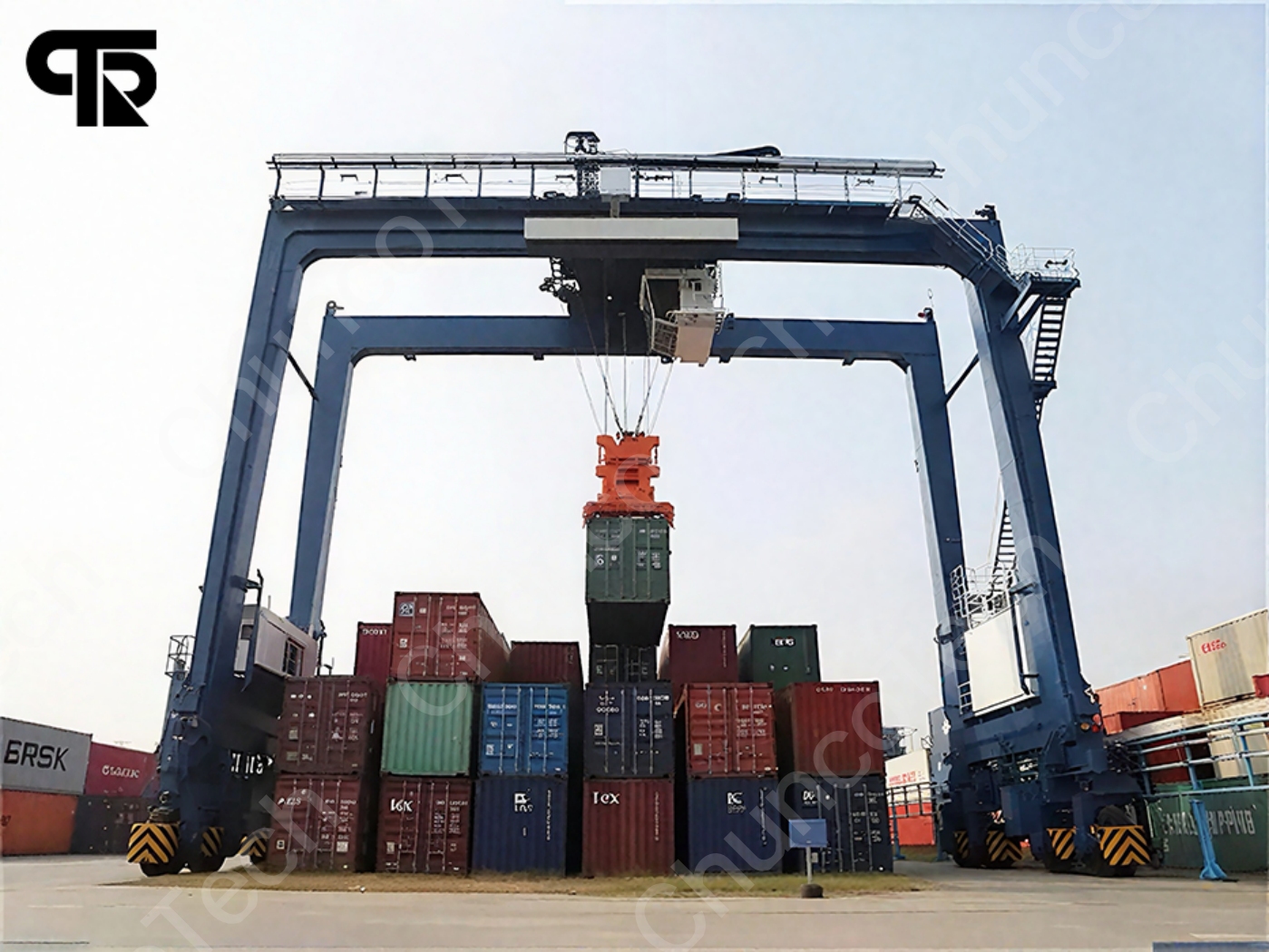
RTG is a core piece of equipment for container handling, stacking, and transfer operations in container terminals and yards. Supported by rubber tires, it offers exceptional mobility and is particularly suitable for small and medium-sized ports, logistics yards, and railway container transfer stations that require flexible layouts and high-density storage. It is a key asset for improving efficiency in modern logistics hubs.
I. Product Features
1.Excellent Mobility and Flexibility:
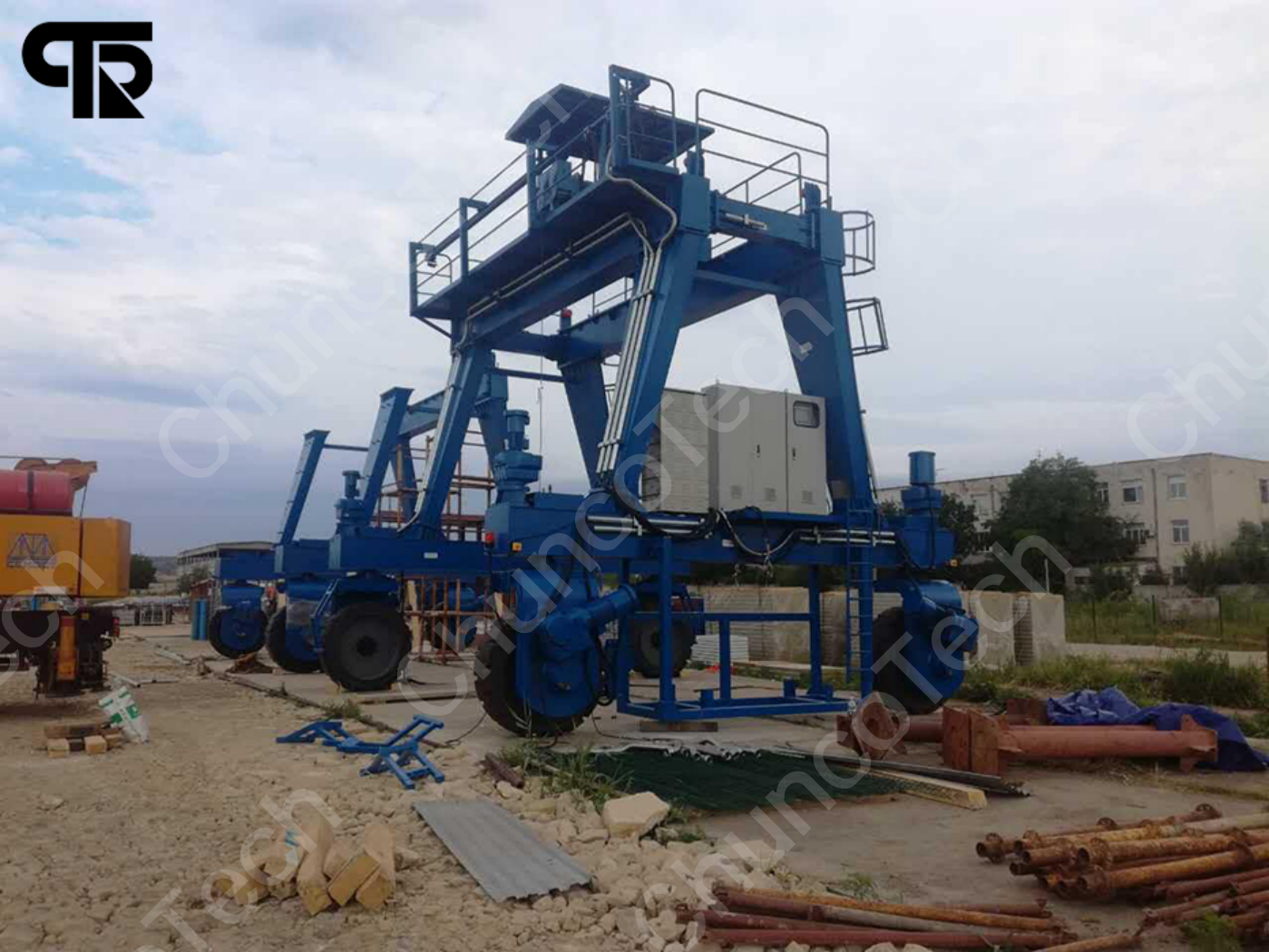
Unlike traditional Rail-Mounted Gantry (RMG) cranes, RTGs travel on large rubber tires and do not require fixed rails. They support 90-degree right-angle steering and can even crab steer, allowing them to move easily between different container blocks and work lanes, quickly adapting to changes in yard layout. This flexibility is crucial for ports with frequent yard expansion plans or significant business fluctuations.
2.Powerful Stacking Capacity and Working Range:
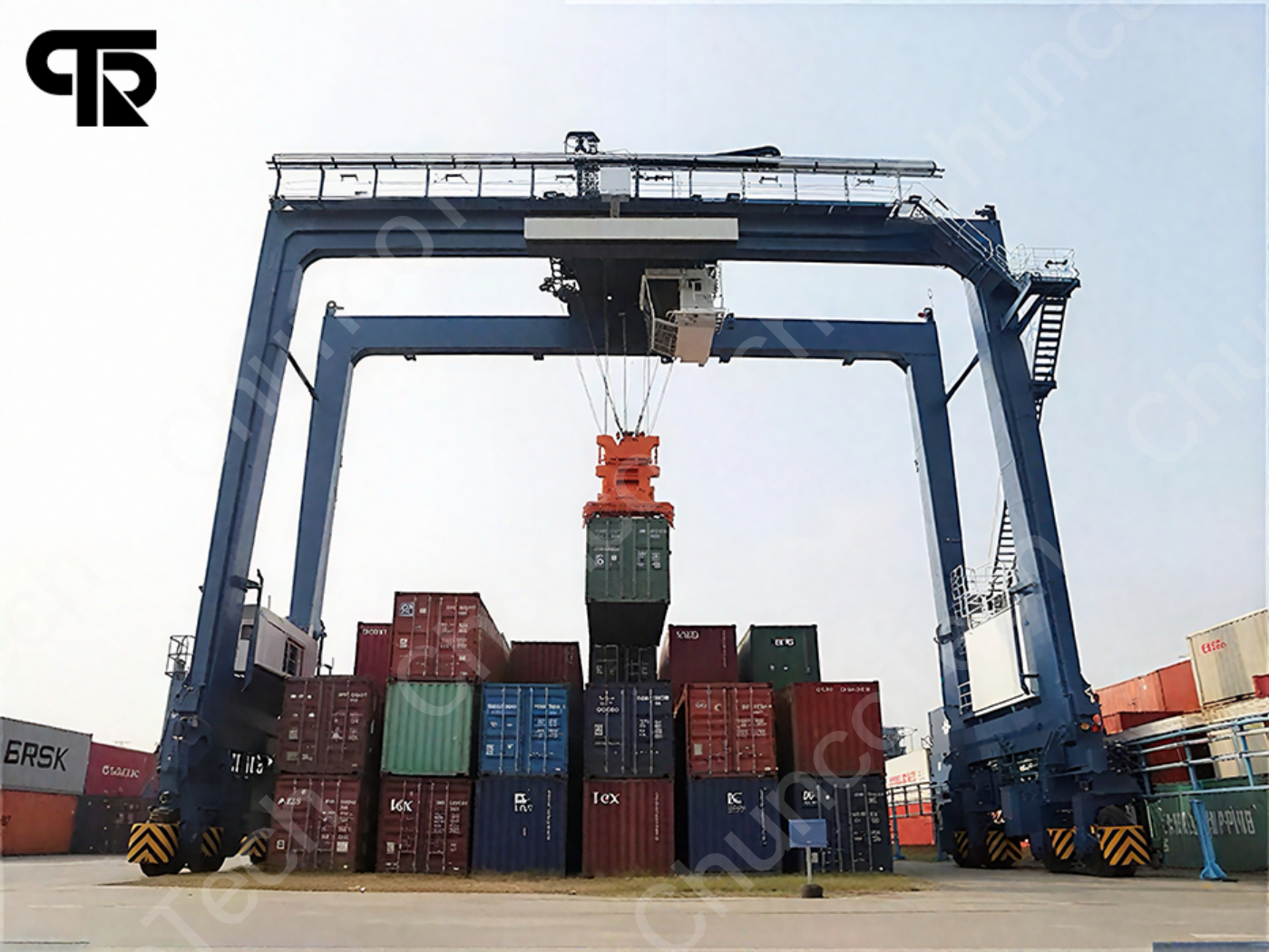
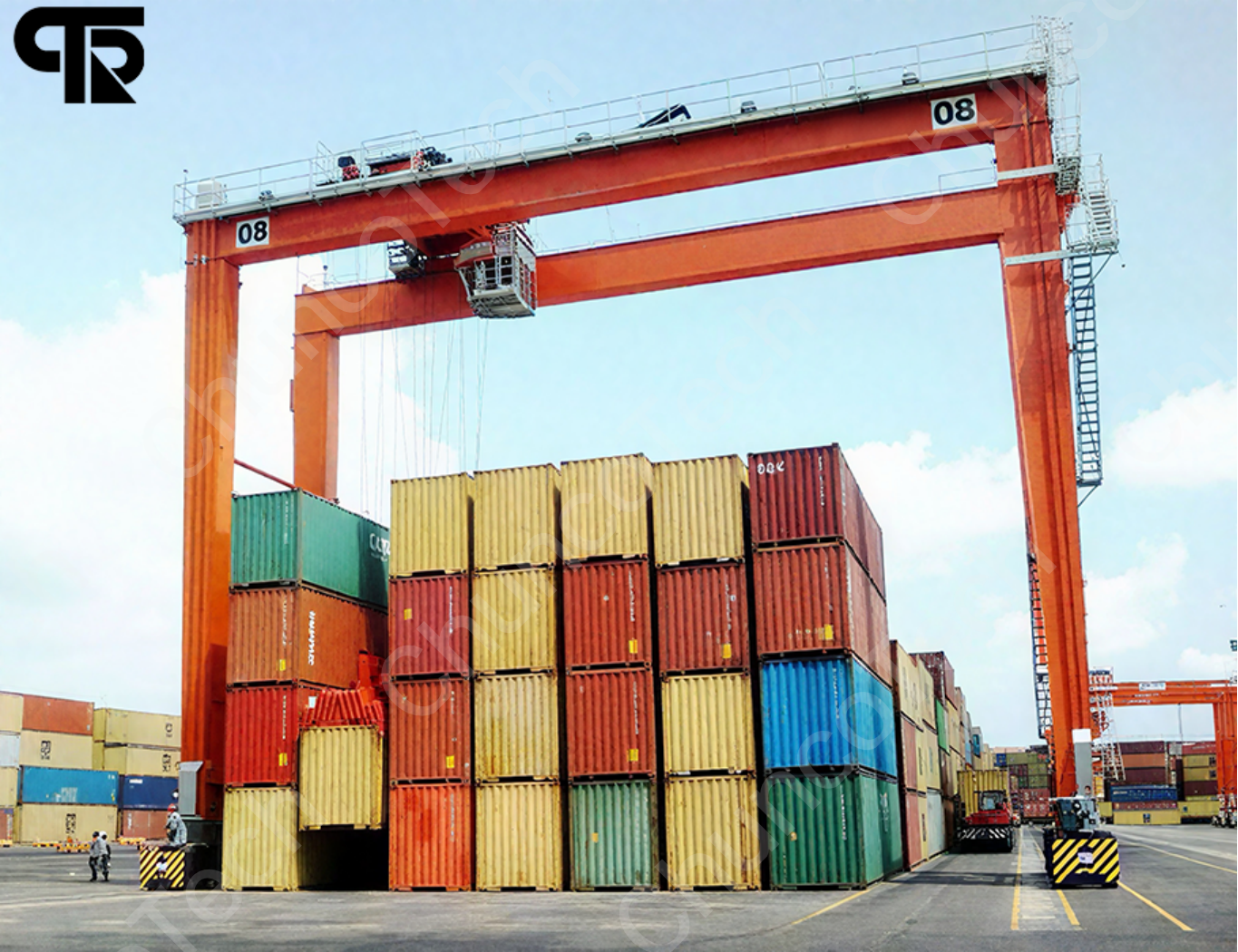
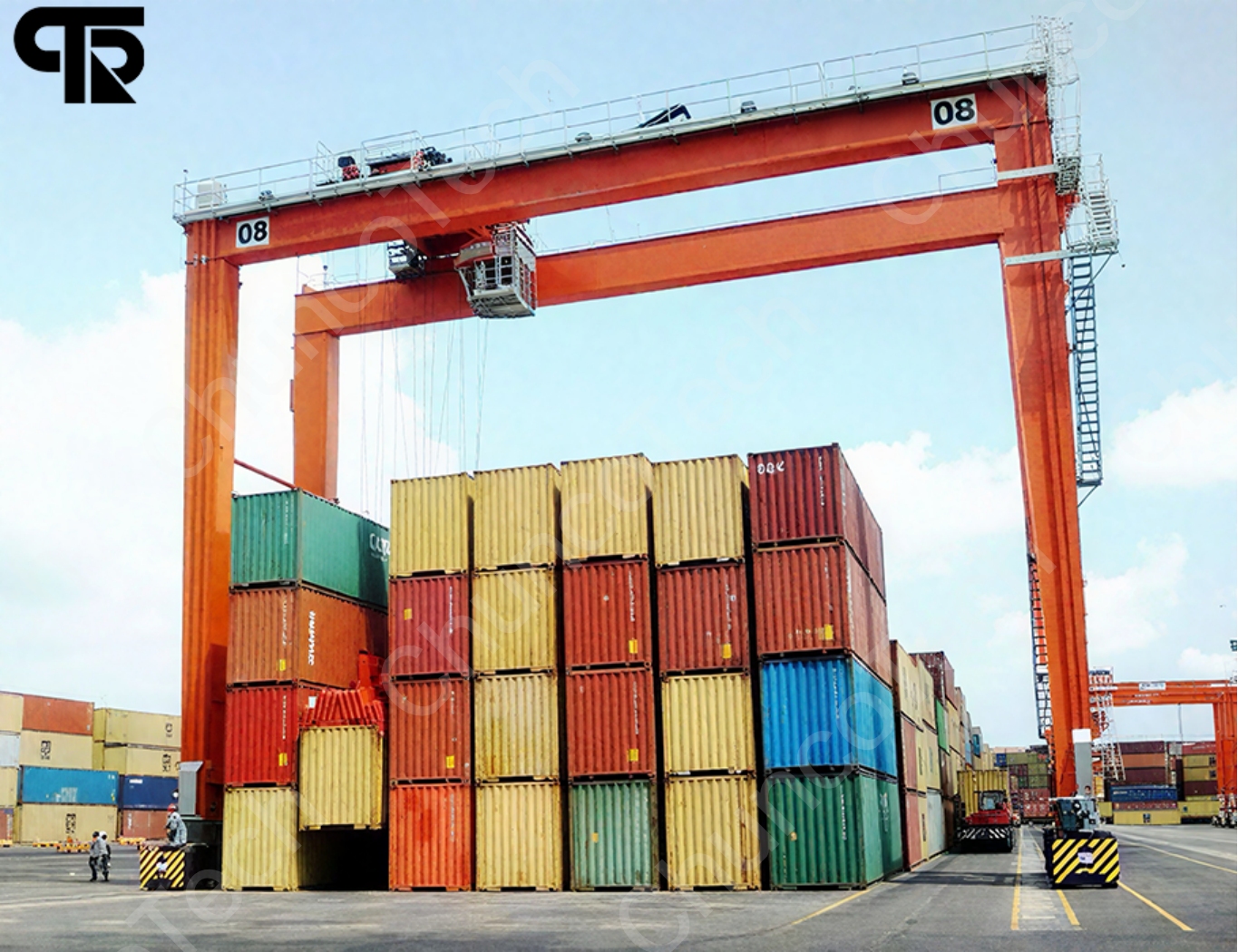
A standard RTG typically has a span of 23.47 meters, enabling it to span 6 rows of containers and one truck lane. Its lifting height can meet requirements for "5 over 1, 5 over 2" or higher stacking configurations, effectively increasing port yard space utilization. The spreader is compatible with standard 20-foot to 45-foot containers and refrigerated containers (reefers).
3.Diverse Power and Eco-Friendly Configurations:
● Traditional Diesel Power: A common early configuration offering high independence.
● Hybrid and Electric Power: The current mainstream trend. Using diesel-electric hybrid systems or pure electric operation via sliding conductor lines or cable reels can significantly reduce energy consumption and emissions. Some newer models are equipped with large-capacity lithium batteries, enabling "Grid Power + Lithium Battery" dual-mode operation for mobile operation on battery power.
4.Advanced Intelligent Control Systems:
Modern RTGs integrate digital variable frequency speed control for smooth and energy-efficient operation. Optional mechanical or intelligent anti-sway systems greatly improve handling precision and efficiency. Furthermore, automation upgrade options (ARTG) are becoming increasingly common, utilizing technologies like DGPS automatic positioning, intelligent deviation correction, and remote monitoring systems to reduce reliance on manual operation and enable safer, more efficient yard operations.
5.Comprehensive Safety Design:
Safety systems include overload protection, limit switches for all mechanisms, emergency stop buttons, and windproof anchoring devices for severe weather. They are also equipped with corner anti-collision systems and manual/automatic steering deviation correction to prevent collisions with containers and protect tires from abnormal wear.
II. Product Advantages
1.Flexible Initial Investment and Deployment: Compared to RMGs, which require laying fixed rails, RTGs have lower infrastructure costs, faster deployment times, and easier repositioning later.
2.Optimized Space and Enhanced Efficiency: By stacking containers in multiple tiers, RTGs can maximize the use of valuable yard land, increasing storage capacity. Their flexible mobility also reduces equipment transfer time, speeding up container turnaround.
3.Smooth Transition to Green and Smart Operations: Existing diesel RTGs can be retrofitted and upgraded to hybrid or fully electric power, helping port operators achieve environmental goals progressively. The modular design also facilitates future integration of more automation and Internet of Things (IoT) technologies.
4.Wide Applicability: Suitable not only for major ports but also ideal for container handling at inland river ports, railway terminals, freight stations, and large logistics parks.
III. Application
RTGs are an ideal choice for enhancing container handling capabilities in the following scenarios:
1.Port Container Yards: For stacking containers after unloading from ships, gathering containers before loading onto ships, and internal container shifting operations within the yard.
2.Railway Container Transfer Stations: For rapid transfer and temporary storage of containers between rail and road transport.
3.Large Logistics Parks and Bonded Warehouses: For handling bulk container storage and distribution operations.
4.Special Cargo Yards: Some RTGs configured with heavy-duty spreaders can be used for handling heavy containers and specialized containers.
IV. Information Required for Purchase
To ensure manufacturers can provide a product and solution perfectly tailored to your needs, please prepare and clarify the following information during inquiries or tendering:
1.Core Operational Parameters:
● Rated Lifting Capacity: Maximum lifting capacity under the spreader (e.g., 40.5 tons, 51 tons).
● Yard Operational Requirements: Specify the required stacking height (e.g., "5 high, 1 lane") and span (number of container rows and truck lanes to be spanned).
● Container Types: Types of containers to be handled (20ft, 40ft, 45ft, reefers, high-cube, etc.).
2.Site and Environmental Conditions:
● Yard ground conditions (flatness, load-bearing capacity) and geotechnical data.
● Local wind pressure, rainfall, salt spray and other climatic conditions to determine wind rating and anti-corrosion requirements.
● Available power supply interfaces (e.g., location of grid power access points) for designing the power supply solution.
3.Equipment Configuration and Compliance Requirements:
● Power Preference: Diesel, diesel-electric hybrid, pure electric (via sliding conductor lines/cable reels), or lithium battery hybrid.
● Automation Level: Need for semi-automatic or fully automatic (ARMG) operation, DGPS positioning, remote monitoring, etc.
● Certifications and Standards: Required national safety standards, environmental regulations, and the necessary Special Equipment Manufacturing License level.
4.Commercial and Service Terms:
● Delivery Time: Desired timeline from contract signing to acceptance.
● Delivery Location: Detailed address for final installation of the equipment.
● After-Sales Service: Clear warranty period (typically not less than 2 years), training content, and preventive maintenance plan.
V.Purchase&After-sales Support
Procurement process
1.Sign Quotation&TA & PI&SC
2.Production Drawing confirmation (3Dmodels and Key Drawings)
3.Actual production begin
4.Production process following up and report
5.Factory Assemble &testing (inviting clients to attend in advance)
6.Packing &delivery
7.At end user’s site installation , commissioning &training
8.After sales service
After-sales assembly service
To ensure the safe and efficient commissioning of the equipment, our company hereby provides professional after-sales assembly guidance services, with detailed terms as follows:
1. Service Basis and Scope
Our company will classify service levels and determine the duration of free on-site guidance and installation services based on the model and overall weight of the ship crane. The free service period is 3–5 working days for small-sized cranes, 5–7 working days for medium-sized ones, and 7–15 working days for large and extra-large models, with the specific terms subject to the sales contract signed by both parties. The service scope covers full-process assembly guidance including on-board equipment positioning, component assembly and commissioning, safety device calibration, and operation procedure training.
2. Pre-service Requirements
The customer shall complete the preparation of on-site construction conditions prior to the agreed service time, including the positioning of lifting equipment, clearing of the operation site, and preparation of supporting auxiliary materials (such as fasteners and seals). Meanwhile, the customer shall provide the relevant ship technical drawings and on-site coordinating personnel required for the operation to ensure the smooth progress of the assembly work.
3. Charging Standard for Extended Service Period
If the service duration exceeds the free quota due to non-our-fault reasons such as the customer’s substandard on-site conditions or inadequate coordination, the excess part will be charged at a technical service fee of 200 USD per person per working day, and the travel, accommodation and catering expenses shall be borne by the customer separately.
4. Service Guarantee and Commitment
The technical personnel dispatched by our company all hold qualifications for ship crane assembly and have rich practical experience. The service process strictly complies with international ship equipment installation specifications and our company’s quality standards.
VI.Case
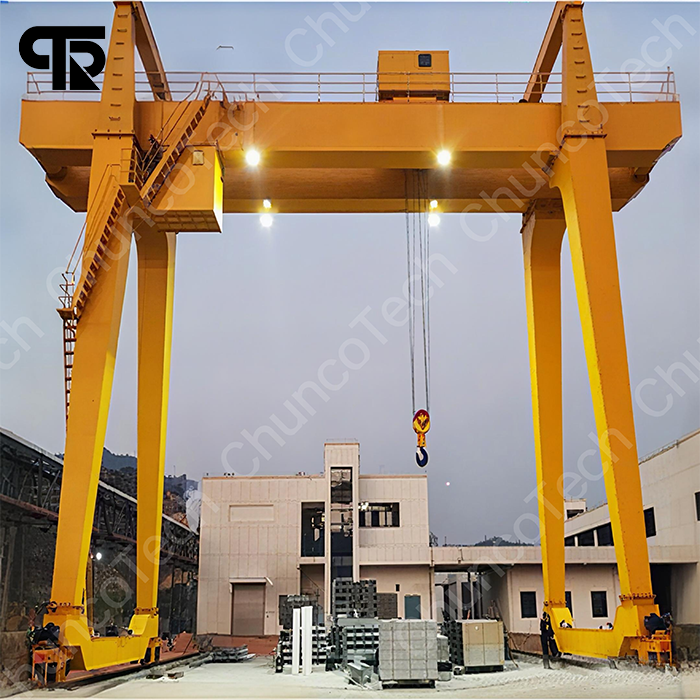
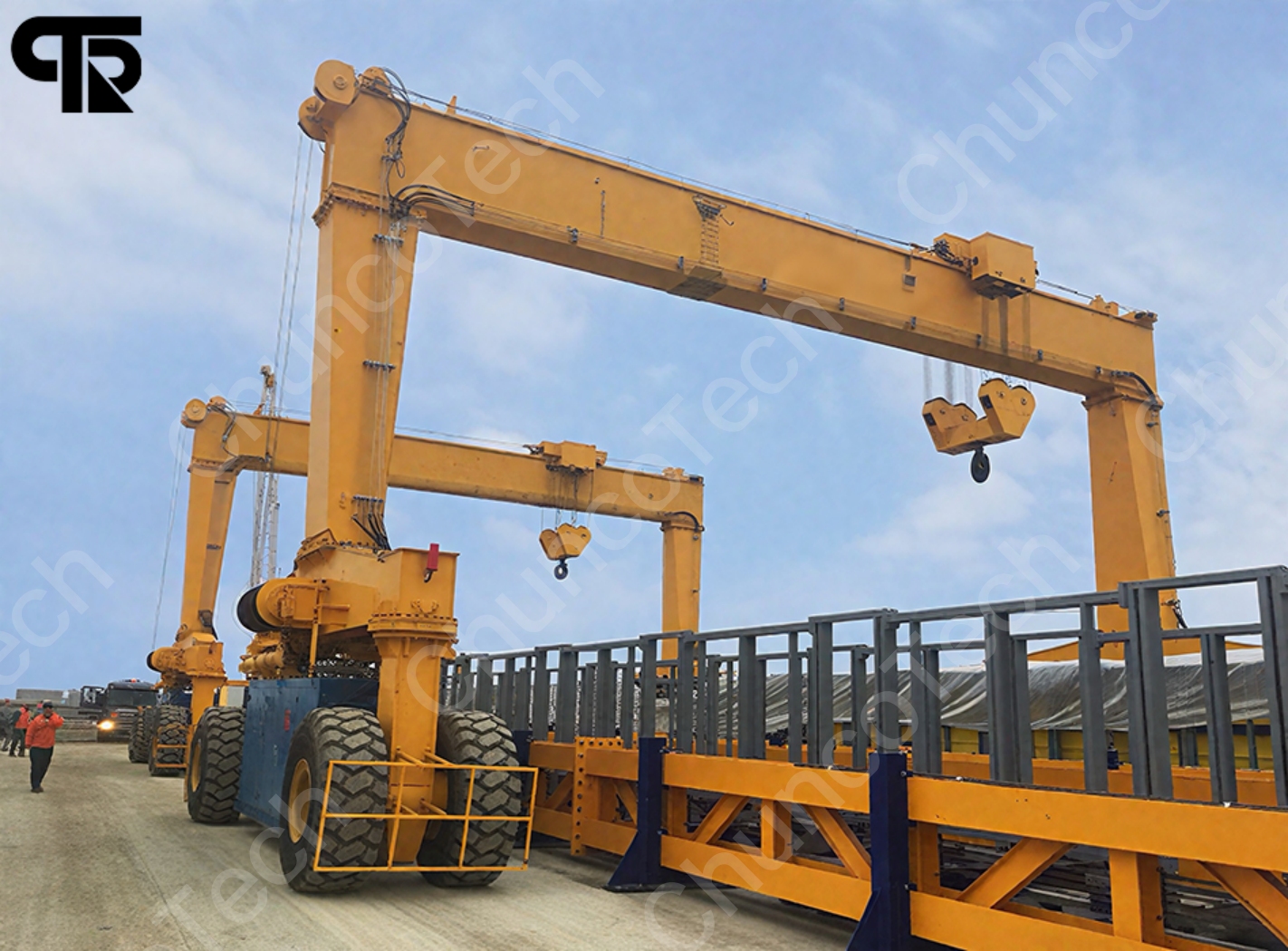
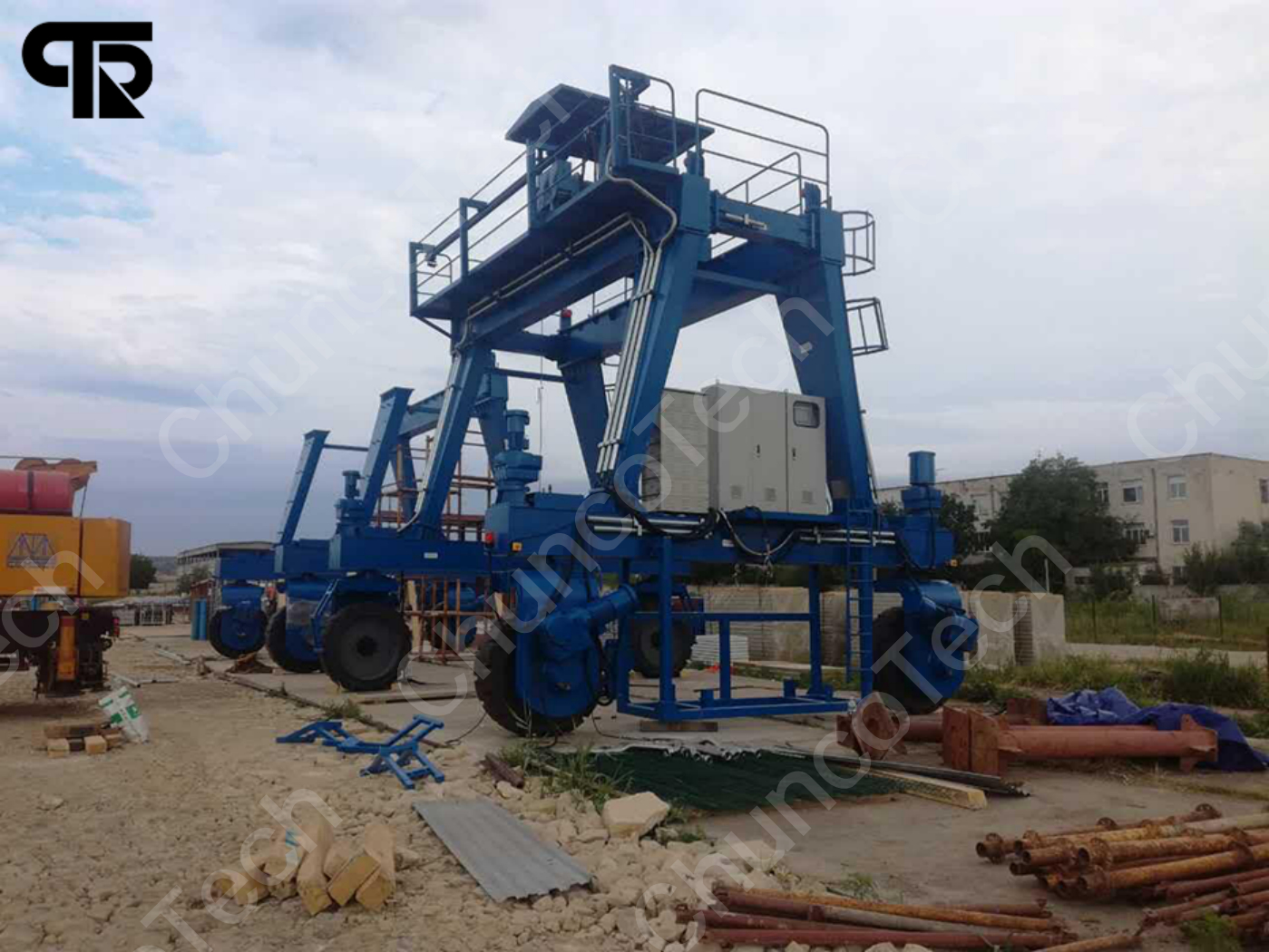
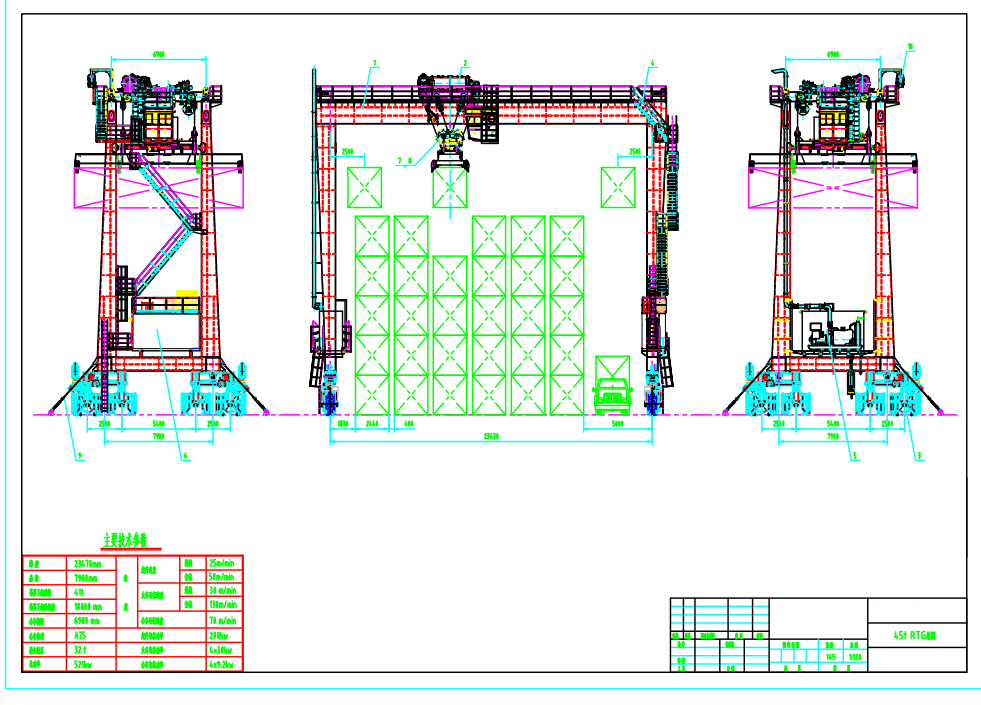
RTG type electric gantry crane with lifting capacity 45t;Load capacity under the spreader: 41 tons;
Lift height under the spreader:18m;
Diesel Engineer
Futher specifcsrefer tothebelow
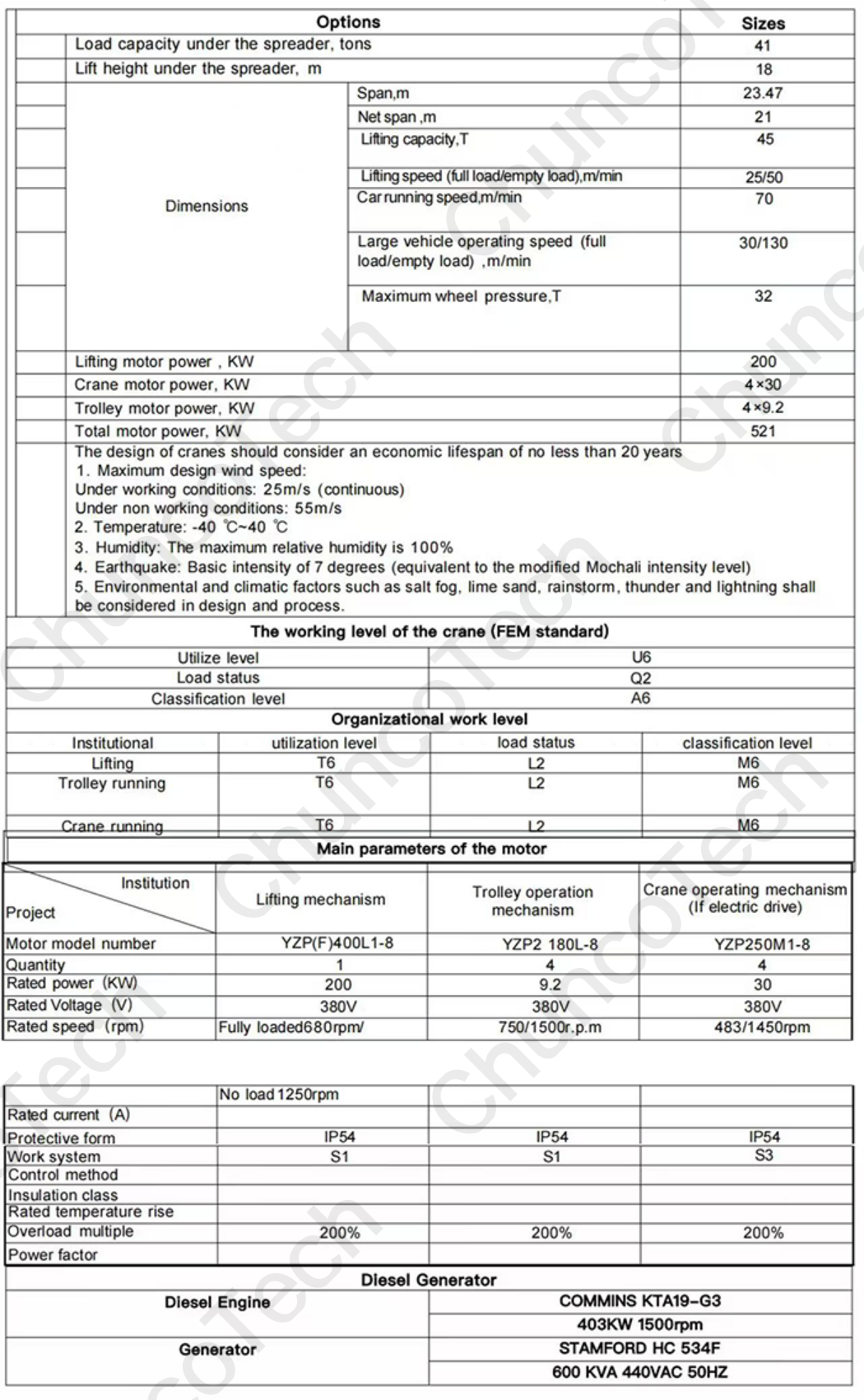
(Specificstable)
Surface Treatment:
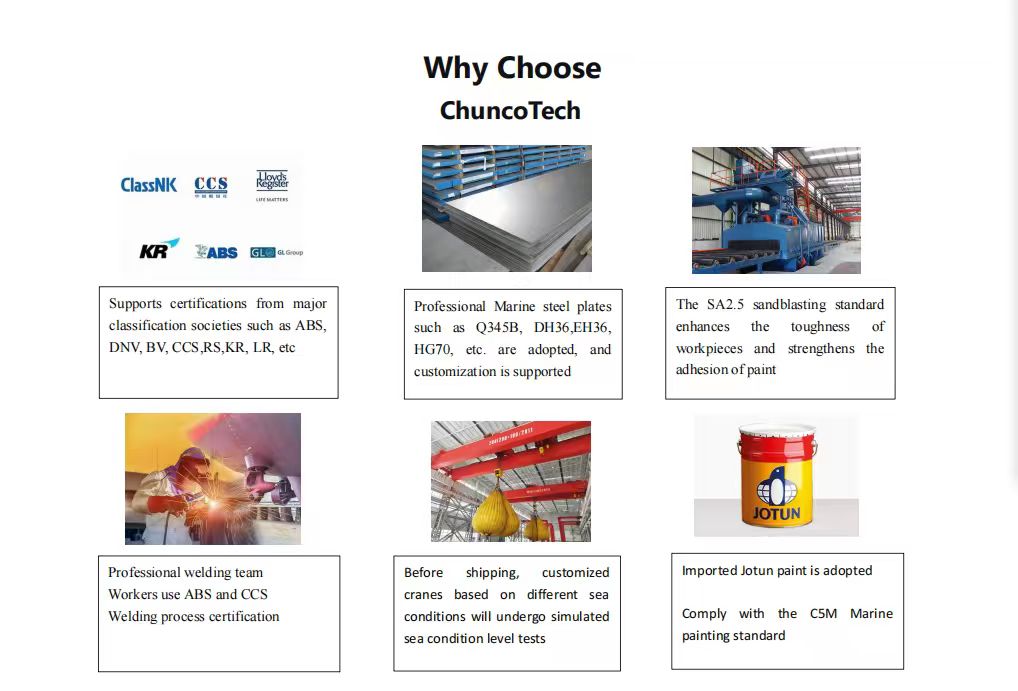
All rust, dust, grease and other dirt on the steel before painting shall be cleaned according to the minimum Sa2.5 specified in Swedish Standard SIS05-5900-1967.
The crane shall be coated with inorganic zinc shop primer, zinc-rich primer and epoxy resin primer, polyurethane intermediate paint and top coat. The paint manufacturer and variety shall be approved by the purchaser to ensure no color change for five years.
The paint process and film thickness shall meet the requirements of the paint manufacturer. The paint quality shall be suitable for Russian climatic conditions and the paint coating quality guarantee period shall be 5 years.
Specific requirements are as follows:
1.Total dry paint film degree of external surface of member shall not be less than 160 μm:
First coating: Epoxy zinc-rich primer: 40μm;
Second coating: Intermediate coating: 40μm;
Third coating: Polyurethane topcoat: 40μm;
Fourth coating: Polyurethane topcoat: 40μm;
2.The thickness of epoxy zinc-rich primer film coated on the inner surface of sealed box shall not be less than 60μm;
3. Inner surface of unsealed box
First coating: Epoxy zinc-rich primer: 40μm;
Second coat: Intermediate coat paint 50μm.
The Supplier shall provide data such as paint process and total surface area of paint, and pay special attention to paint repair process during field welding. All enclosed box-shaped structures shall be painted on the inside surface before closure.
VII.Technical Requirements
The wind speed during operation shall not exceed 20 m/s (Force 6), and the wind speed during non-operation shall not exceed 44 m/s (Force 11). The crane's working class should preferably be A6 or A7. The ground slope of the crane's travel path should not exceed 1%, with local slopes not exceeding 3%. The ground slopes on both sides of the span should be in the same direction, meaning both are uphill or downhill. Tire inflation pressure shall comply with the tire manufacturer's regulations, with an allowable deviation of ±3%. The hoisting mechanism shall not employ open gear transmission. The trolley travel mechanism shall be equipped with a correction device to maintain the crane's straight-line travel; when the trolley travel wheels deviate by 300 mm from the travel centerline, the deviation should be corrected within a travel distance of 9 m. The trolley travel mechanism should be capable of turning 90° and then traveling straight; the 90° turn should be performed under no-load and non-traveling conditions, preferably on a designated surface at a specified location. On cranes not using fixed-axis steering, a manual control device shall be installed to allow each tire to be turned to any angle less than 90°. The crane's power unit may be a diesel generator set, or it may be powered by electricity via cable reels, overhead conductor rails, or similar means, or a combination of both.
If a diesel generator set is used as the power unit, the engine fuel tank capacity should be sufficient to support 36 hours of crane operation, and a clearly marked fuel level indicator shall be provided. When the spreader is 2.4 m above the ground, it should be capable of rotating ±5° around the longitudinal centerline in the horizontal plane. The hydraulic oil tank should have sufficient capacity to ensure a circulation cycle of at least 2 minutes without a cooling system, and the operating oil temperature should not exceed 70°C. Conductors of different voltage levels for AC and DC should preferably be laid separately. The spreader cable should be a special flexible multi-core cable, and multi-core plugs and sockets should be installed between the spreader upper frame and the spreader body to facilitate quick replacement of the spreader. The crane shall be equipped with an anti-collision device for trolley travel; before the crane collides with a container, an alarm signal should be triggered, and the power for forward travel should be immediately cut off, though reverse travel should remain possible.
VIII.FAQ
Q1: What is the main difference between an RTG and a Rail-Mounted Gantry (RMG) crane? How do I choose?
A1: The main difference lies in mobility. RTGs move on tires, offering flexibility and lower initial investment, suitable for yards where layout might change or where land cost optimization is needed. RMGs run on fixed rails, offering potentially faster speeds, higher stacking capability in some configurations, and more stable long-term operational costs, suitable for large, high-volume automated terminals with stable operations. The choice should be based on a comprehensive evaluation of yard planning, throughput, budget, and long-term automation goals.
Q2: What are the pros and cons of electric RTGs compared to traditional diesel RTGs?
A2: Electric RTGs (powered by cable or sliding conductor lines) produce zero emissions and low noise during operation, with significantly lower energy costs, aligning better with green port trends. The downsides include the need for supporting power infrastructure and movement limited by cable length. Traditional diesel RTGs have completely unrestricted mobility but suffer from high fuel costs, emissions, and noise pollution. Hybrid RTGs are a balanced upgrade option.
Q3: Besides the equipment price, what other costs should I focus on when purchasing an RTG?
A3: It's essential to consider the Total Cost of Ownership (TCO). This includes: equipment installation and foundation construction costs; ongoing energy consumption (electricity/fuel) costs; regular maintenance, upkeep, and spare parts expenses; and potential future costs for automation or environmental upgrade retrofits. Lower-priced equipment might lead to higher maintenance costs later.
Q4: Is it difficult to automate an RTG later? Can it be done as a retrofit?
A4: It is possible to retrofit, but the complexity and cost depend on the existing condition of the equipment. Modern RTGs are often designed with automation interfaces. Retrofitting might involve adding systems like DGPS positioning, laser scanning for anti-collision, and remote control systems. It's advisable to discuss future automation plans with the manufacturer during the initial purchase for reserved design considerations.
Q5: How can I ensure the safe operation of an RTG, especially regarding collision prevention and wind protection?
A5: Safety relies on both inherent equipment features and strict management. The equipment should be equipped with corner anti-collision systems, obstacle detection sensors, and deviation correction systems in the cabin. For wind protection, it must have anemometers and automatic anchoring devices to stop operations and anchor when warning wind speeds are reached. Furthermore, standardized operator training and regular safety drills are crucial.
Q6: How should I evaluate a supplier's qualifications and after-sales service?
A6: First, verify that the supplier holds the corresponding grade of Special Equipment Manufacturing License issued by the State Administration for Market Regulation. Second, examine their track record, especially successful projects of similar type and scale. Finally, clarify the specifics of after-sales service, including the warranty period, response time, support from local technical teams, and the feasibility of their preventive maintenance plan.
Certificate