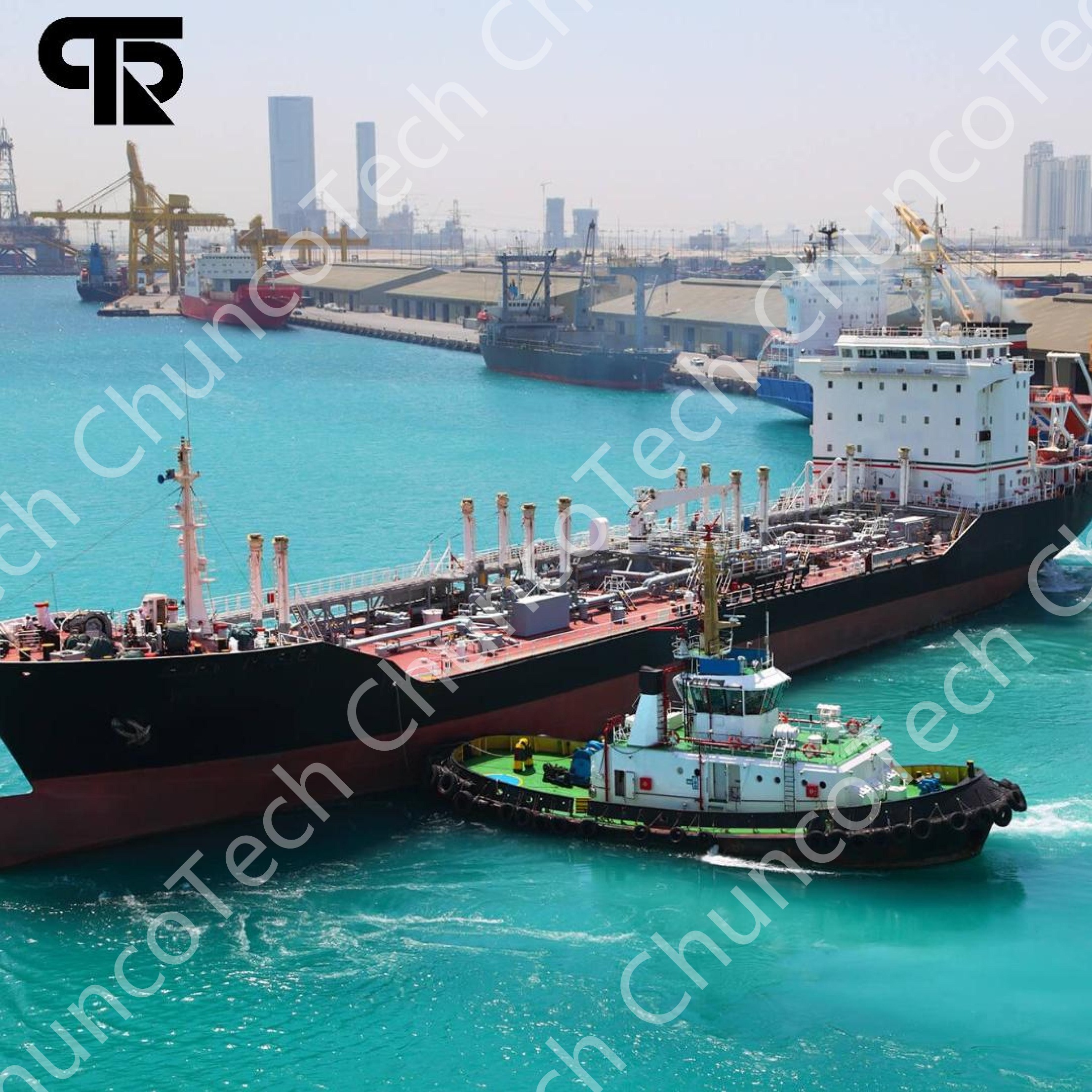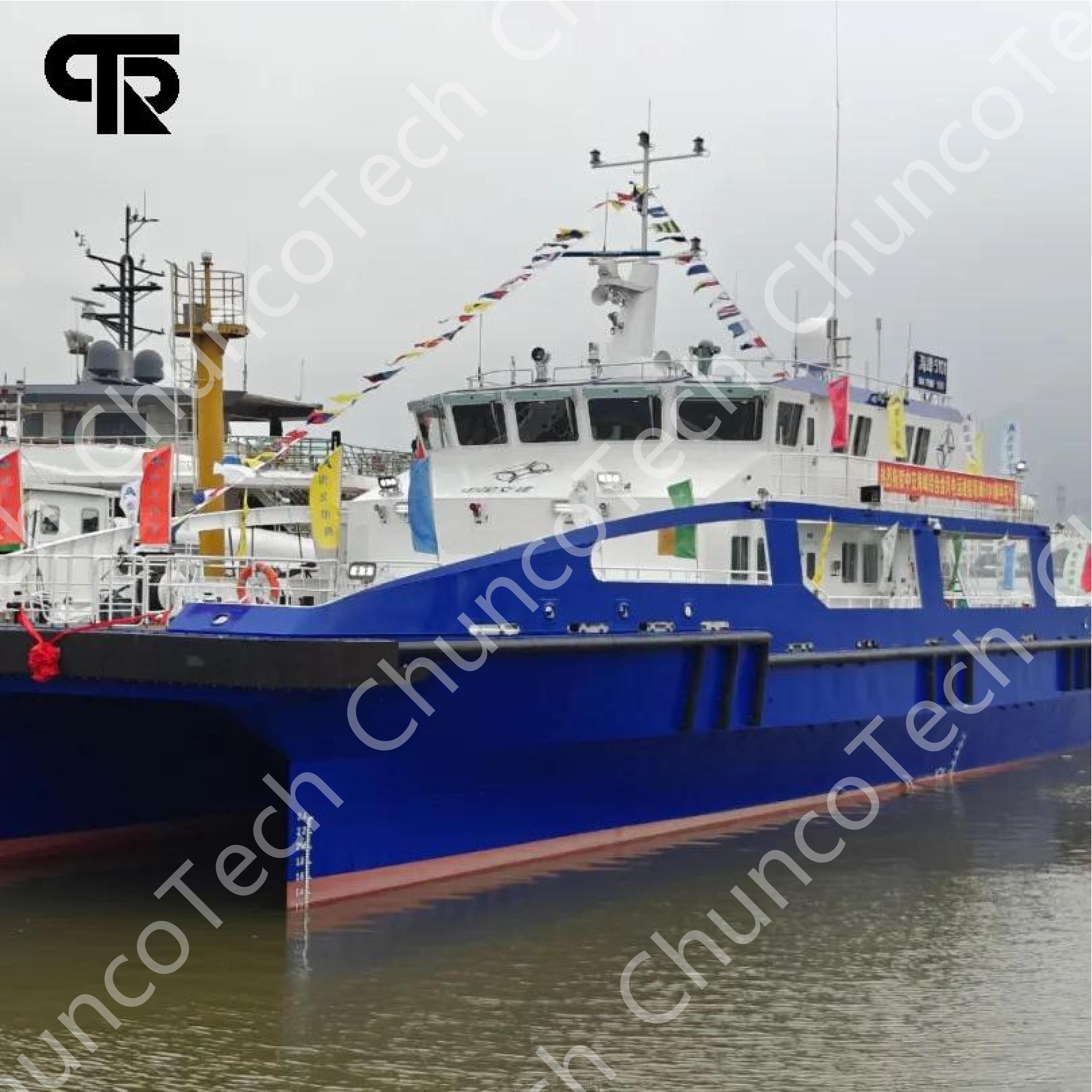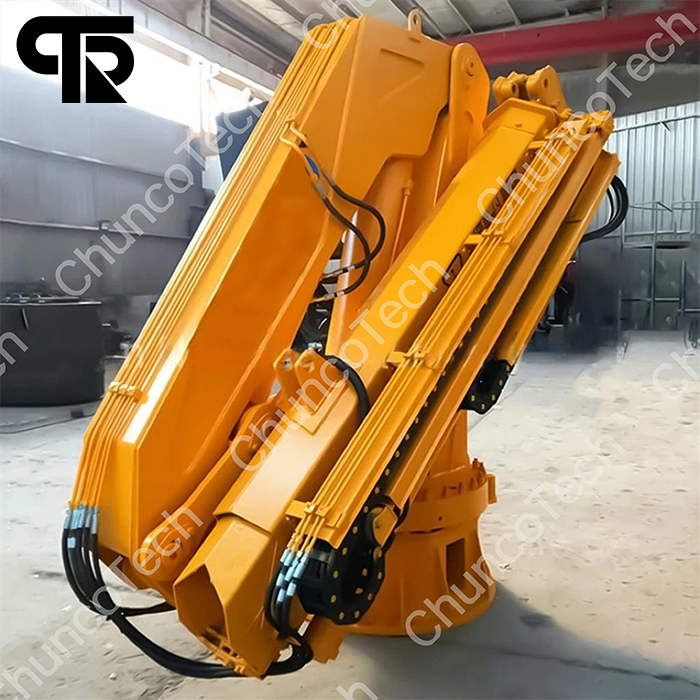
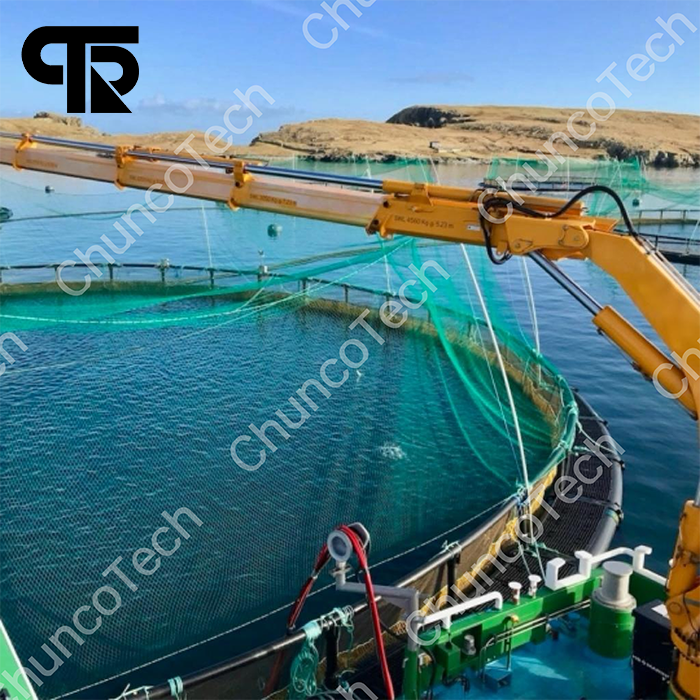
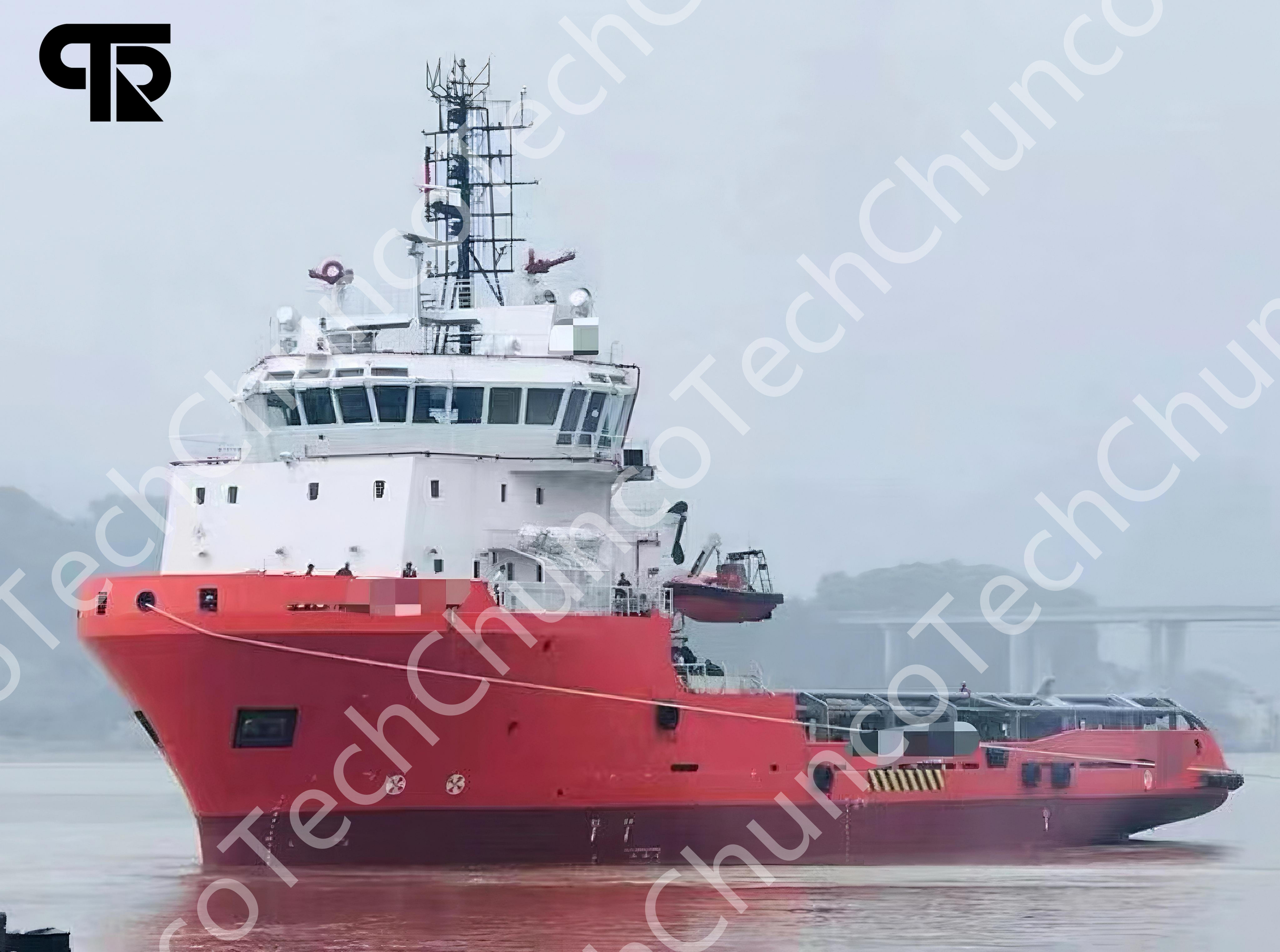
Special operation vessel for oil platforms
The core services include offshore oil and gas exploration, extraction and other links, ensuring the operation of the platform and the advancement of operations. It includes PSV (Platform Supply Vessel, transporting personnel and materials), AHT (Anchor towing vessel, responsible for platform towing and anchoring), AHTS (Anchor towing Supply Vessel, an upgraded version of AHT, featuring towing, anchoring and material supply functions), DSV (Diving support Vessel, undertaking underwater component maintenance of the platform), and MPSV (Multi-functional supply vessel) Providing diversified services such as platform equipment maintenance, Tuna 100/600/1000 (exploration vessels, conducting geological operations related to oil and gas exploration), Tuna WS25000 (large fracturing vessels, suitable for fracturing operations in oil and gas field exploitation).
I. Product Features
1.Multi-Functional Integrated Platform
●Combines offshore engineering support, personnel transfer, cargo supply, platform maintenance, emergency response, and construction assistance.●Typically equipped with Dynamic Positioning (DP2/DP3), heavy-duty cranes (100-400T), large deck space, accommodation modules, and helicopter decks.
2.High Operational Adaptability & Reliability
●Designed for harsh sea conditions with excellent seakeeping, stability, and long-range endurance.
●Features redundant propulsion and advanced power management systems ensuring high uptime and mission continuity.
3.Specialized Mission Equipment
●Integrated with ROV support systems, saturation diving facilities, firefighting equipment, oil spill recovery devices, or wind turbine installation platforms.
●High deck load capacity for transporting large platform modules, piles, and consumables.
4.Personnel & Safety Focus
●Comfortable accommodations (capacity for 80-200 persons), medical stations, and evacuation systems.
●Complies with highest safety and environmental standards (IMO and classification societies like DNV, ABS).
II. Product Advantages
Reduces operational costs: Integrates multiple functions into one vessel, minimizing fleet requirements and optimizing resources.
Shortens project cycles: Efficient logistics and rapid response capabilities accelerate installation, maintenance, and decommissioning.
2.Improved Safety & Emergency Response
Ensures personnel safety: Advanced hull design reduces navigation risks; comprehensive rescue facilities enhance incident management.
Minimizes environmental impact: Eco-friendly equipment and emergency systems effectively address oil spills, fires, and other accidents.
3.High Flexibility & Mission Adaptability
Broad application scope: Suitable for the entire oilfield lifecycle (exploration, development, decommissioning) and offshore wind projects.
Customized solutions: Configurable functional modules meet specific regional regulations and environmental conditions.
4.Advanced Technology & Long-Term Value
Future-ready design: Compatible with new energy technologies (e.g., hybrid power) and digital management systems, enabling remote operations and data analytics.
Strong ROI: Creates long-term value by extending platform lifespan, reducing downtime, and mitigating operational risks.
III. Application
●Core Logistics Support: Acts as the "logistics supply vessel" for offshore platforms, regularly transporting consumables like fuel, fresh water, drilling mud, chemicals, food, spare parts, and pipes.
●Personnel Transfer: Safely and efficiently performs crew rotation and transport for offshore platform personnel.
●Basic Operational Support: Provides continuous supply to drilling rigs and production facilities, serving as the lifeline for daily offshore operations.
●Emergency & Multi-role: Modern PSVs are often equipped with integrated firefighting and limited oil spill recovery capabilities for basic emergency response.


2.AHT (Anchor towing vessel)
●Platform/Towage: Specializes in towing mobile drilling units (e.g., semi-submersibles, drill ships) and large floating production units within oilfields or across sea areas.
●Anchor Handling: Performs professional deployment, retrieval, and adjustment of anchors and chains for vessels or platforms requiring mooring.
●Salvage Operations: Utilizes its high bollard pull to participate in towing and salvage operations for distressed vessels or structures.


3.AHTS (Anchor towing Supply Vessel)
●Combined Operations: Executes the three core functions of anchor handling, towing, and supply simultaneously, ideal for deepwater and harsh environment operations.
●Offshore Construction Support: Provides mooring positioning for construction vessels and on-site supply support during major projects like platform installation and pipeline laying.
●Full-cycle Platform Support: Offers integrated services from platform positioning and mooring to ongoing towage and supply during its operational life.


4.DSV (Diving support Vessel)
●Subsea Inspection, Repair & Maintenance (IRM): Supports saturation or air diving operations for the inspection, repair, cleaning, and installation of subsea structures, wellheads, manifolds, and chains.
●Seabed Engineering: Assists in complex tasks such as installation of small subsea equipment, cable/pipeline connections, trenching, and underwater cutting/welding.
●Rescue & Survey: Provides subsea search and rescue capabilities and supports post-incident underwater investigations.

5.MPSV (Multi-functional supply vessel)
●Advanced Project Support: Goes beyond basic supply to provide complex services like heavy module removal/installation, subsea structure lifting, and flexible pipe laying.
●ROV Operations: Serves as a mothership for large work-class ROVs and AUVs, featuring a large moonpool, heavy-duty crane, and extensive ROV hangar.
●Pre-commissioning & Maintenance: Performs system pre-commissioning before platform startup and executes deep maintenance such as remote replacement of major components.


6.Tuna 100/600/1000
●Geological & Geophysical Survey: Conducts high-resolution 2D/3D seismic surveys to collect data on seabed geology, shallow gas, and geohazards for platform site selection and pipeline routing.
●Geotechnical Investigation: Obtains soil mechanical parameters through drilling, sampling, and Cone Penetration Testing (CPT) to assess foundation bearing capacity.
●Oceanographic Survey: Performs hydrographic, meteorological, and environmental baseline surveys.

7.Tuna WS25000
●Offshore Well Stimulation: Specifically designed to provide large-scale, high-intensity hydraulic fracturing services for offshore oil and gas wells, significantly enhancing per-well production by creating complex fractures in the reservoir rock.
●Deepwater & Ultra-Deepwater Fracturing: Offers a ship-based, integrated fracturing solution for deepwater fields, including fracturing fluid mixing, high-pressure pumping, and real-time monitoring, overcoming space and load limitations of platforms.
●Integrated Services: Typically integrates proppant handling, data acquisition, and real-time analysis systems to perform efficient and precise fracturing operations.
IV.FAQ
Q1: What is the fundamental difference between these vessel types? How to quickly tell them apart?
A1: The key differences lie in their primary designed function and core equipment. An analogy to specialized land vehicles can be helpful:
PSV: The "Heavy-Duty Truck". Its core is transportation, featuring large tank capacities and deck space for bulk liquids, dry cargo, and personnel.
AHT/AHTS: The "Super Tractor + Crane". Their core is high bollard pull and anchor handling capability. An AHT focuses on towing and anchor work; an AHTS is an enhanced AHT that adds the supply functions of a PSV.
DSV: The "Mobile Underwater Hospital & Workshop". Its core is supporting diving operations, equipped with diving bells, decompression chambers, and diver hot water systems.
MPSV: The "Offshore Engineering Swiss Army Knife". Its core is heavy deck load, heavy lifting capability, and a moonpool, enabling complex tasks like ROV operations, subsea construction, and module installation.
Survey Vessel (e.g., Tuna S-series): The "Geological Detective". Its core is sophisticated survey equipment like seismic systems and geotechnical drills for seabed data acquisition.
Stimulation Vessel (e.g., Tuna WS25000): The "Offshore High-Pressure Pumping Station". Its core is ultra-high-power fracturing pumps and fluid mixing systems designed specifically for well stimulation.
Q2: What are the main considerations when selecting support vessels for an offshore platform installation project?
A2: The choice depends on the specific phase and tasks of the project:
Platform Towage & Positioning: Must use AHT or AHTS for their powerful towing and anchor handling capabilities to move the platform to location and set its mooring.
Logistics during Construction: Require PSVs or AHTS to continuously deliver fuel, water, equipment parts, and food to the installation vessel and platform.
Subsea Structure Installation/Inspection: If diver intervention is needed, a DSV is required. If the work primarily uses ROVs or involves heavy subsea lifts, an MPSV is the choice.
Seabed Survey (pre-installation): Must use a specialized Survey Vessel for geotechnical and geophysical investigations.
Q3: What are the advantages of an AHTS compared to an AHT and a PSV?
A3: The key advantage of an AHTS is functional integration and operational flexibility. One AHTS can perform three tasks—towing, anchor handling, and supply—simultaneously or alternately. This provides significant benefits:
Reduces Overall Cost: Completes tasks that might otherwise require two vessels (an AHT + a PSV), saving on mobilization and total charter costs.
Improves Operational Responsiveness: A multi-role vessel can adapt to changing needs on-site without waiting for another specialized vessel to arrive.
Suits Complex Projects: Ideal as the primary support vessel for deepwater or remote projects where tasks are interconnected and far from supply bases.
Certificate