
Following our previous discussion on "Is Your Floating Crane Ready for the Toughest Marine Conditions?", today we shift our focus to the core equipment for bulk cargo handling in ports – the bridge type grab ship unloader. At busy wharves, every minute of downtime translates to significant economic losses. When a 250,000-ton bulk carrier berths, can your unloader maintain continuous and efficient operation at its rated unloading capacity? When the typhoon season arrives, can your equipment be quickly secured? Today, Wuxi ChuncoTech, based on the GB/T 26475-2021 standard, delves into how to select a truly reliable and efficient bridge type grab ship unloader.
The True Core of Efficient Unloading: More Than Just the Grab
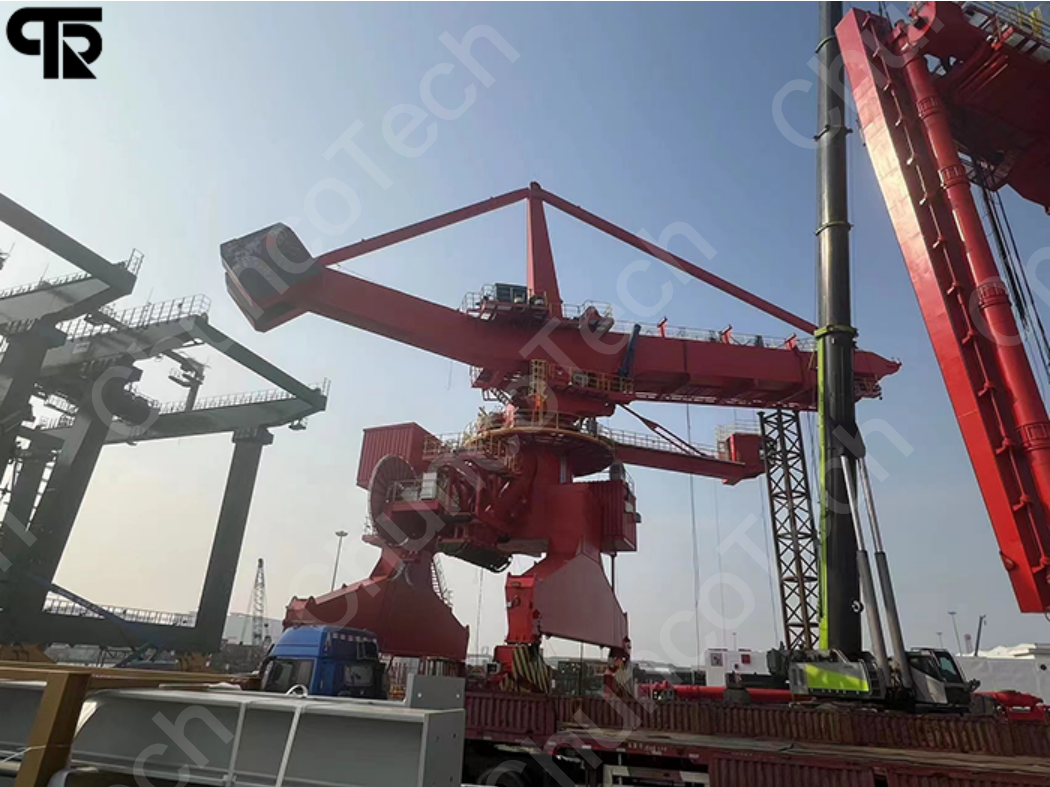
At bulk cargo terminals, the mission of the bridge type grab ship unloader is to continuously and stably transfer coal or iron ore from the ship's hold to the wharf conveyor system. Many users focus on the grab itself, but in reality, the machine's overall classification group and mechanism matching are the critical factors determining long-term efficiency. According to GB/T 26475-2021, the overall classification group for such unloaders is typically A8, and its hoisting and closing mechanisms and trolley traversing mechanism also reach the highest level designed for port continuous operation fatigue – M8.
Wuxi ChuncoTech's bridge type grab ship unloader strictly adheres to this standard in structural design and mechanism selection. We understand that for equipment with rated unloading capacities as high as 400t/h to 5000t/h (suitable for handling coal or iron ore), any unscheduled downtime of any mechanism can cause serious losses. Therefore, our design philosophy focuses on enhancing the redundancy and reliability of each mechanism. This ensures that under complex conditions with material particle sizes of 0-300mm and bulk densities of 0.5-2.5t/m³, the grab fill factor remains within the recommended range of 0.9-1.0, thus achieving the theoretical unloading capacity.
Flexibility and Reliability for Complex Operating Conditions
Port operating environments are harsh, and material characteristics are variable. Whether handling dense iron ore or unevenly sized coal, the unloader needs excellent adaptability. A major advantage of the bridge type grab ship unloader lies in its operational flexibility; by changing grabs of different capacities, it can adapt to bulk cargoes with varying densities and particle sizes.
Wuxi ChuncoTech's unloaders fully consider this from the initial design stage. Our hopper capacity is typically designed to be greater than 5 times the grab capacity, with the inner walls lined with wear-resistant liners capable of withstanding high-volume, high-intensity material impact. Furthermore, the grate above the hopper possesses sufficient strength and rigidity to withstand accidental grab impacts or placement without structural damage.
In actual operation, have you encountered issues like trolley rail deviation, excessive wire rope wear, or electrical control system failure under high temperatures? These problems directly prolong the rated working cycle time, affecting unloading efficiency. Addressing these pain points, Wuxi ChuncoTech employs mature and reliable electrical control solutions and optimizes the trolley travel path and acceleration/deceleration times. Our design goal is to control the rated working cycle time – from the grab loading point to dumping over the hopper and back – within the theoretical design value, ensuring the equipment's actual output matches the nameplate rated unloading capacity.
Safety and Environmental Protection: Non-Negotiable Boundaries for Modern Ports
The development of modern green ports imposes stringent requirements on the dust suppression capability and wind resistance safety of unloaders. Dust control during the dumping process is the primary challenge. GB/T 26475-2021 clearly stipulates that the dust concentration at the grab discharge point (during the mobile operation section) should be ≤100mg/m³, and at various transfer points ≤50mg/m³. To meet these requirements, we typically employ water spray dust suppression, and can equip the system with water hose reel supply, water trough suction, or onboard water tank supply options. This ensures the dust suppression system operates synchronously with unloading activities, controlling dust at the source.
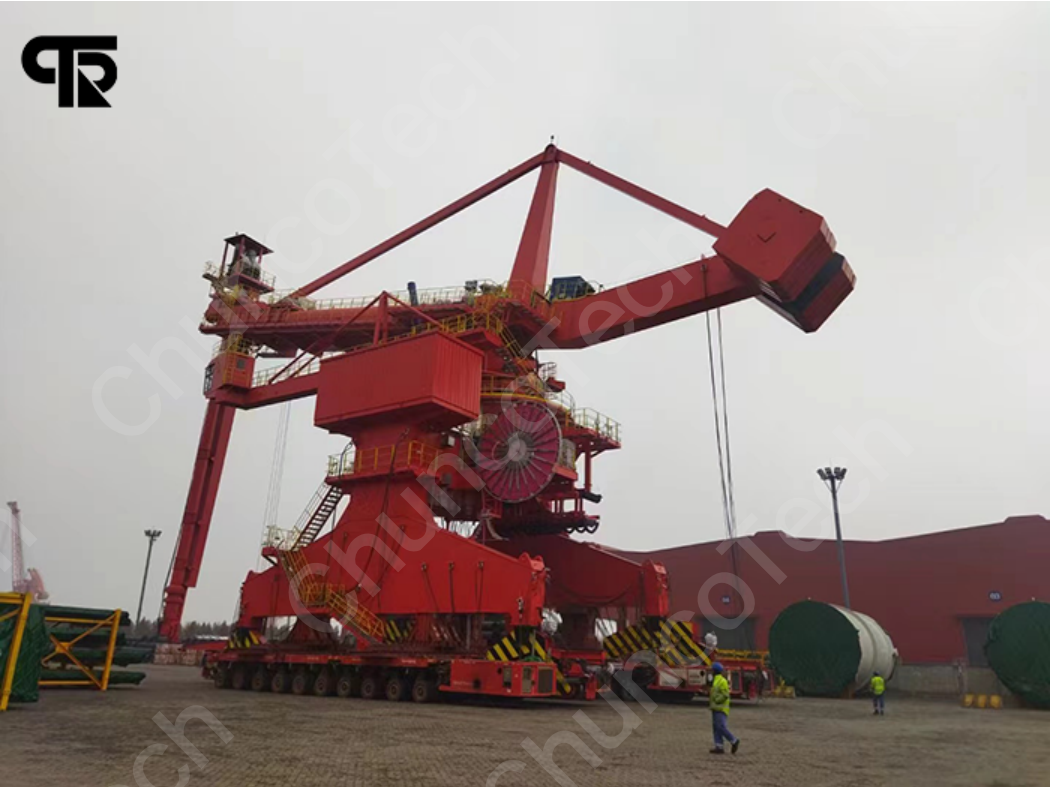
Regarding safety, typhoon and wind protection in ports is paramount. The standard requires that the working condition wind speed should not exceed 20m/s (Beaufort scale 6), and the non-working condition should withstand wind speeds up to 49m/s (Beaufort scale 12). Wuxi ChuncoTech's unloaders come standard with multiple anti-wind and anti-skid devices: in addition to rail clamps (or wheel clamps, rail heads clamps) and sprags (iron wedges), they are equipped with anchor devices and tying devices (tie-downs). Even when anchor devices are not engaged, other anti-skid devices must ensure the unloader does not slip under wind speeds of 35.8m/s (Beaufort scale 10).
When a typhoon warning is issued, our operational procedure is clear and swift:
1.Rapid Anchoring: Move the unloader to the anchoring position, lock the anti-skid brakes, connect and tension the tying devices.
2.Secure Key Components: Stop and lock the trolley at the anchoring position, open the grab and secure it on the hopper grate.
3.Boom Protection: Lower the boom to the designed storm position, stop and lock the operator's cab in its parking spot.
4.Multiple Locking: Insert sprags securely, ensuring rail clamps and rail heads clamps are effectively engaged.
Durable Design and Easy Maintenance
Port equipment demands a long lifecycle and low maintenance costs. Wuxi ChuncoTech deeply understands this. In our design, we follow the standard's recommendation against using couplings that might cause brake wheel (disc) floatation, ensuring absolute braking reliability. All sheaves and drums are equipped with rope slip prevention devices, with the gap strictly controlled within 5mm, effectively preventing accidents caused by wire rope jumping.
To facilitate daily inspections and the handling of hold cleaning machinery, our grab is specifically equipped with lifting lugs. During the handling of hold cleaning machines, the hoisting and traversing speeds are strictly controlled within 20m/min to ensure smooth and safe operation. Simultaneously, a safety distance of no less than 0.5m is maintained between the operator's cab and the grab under all circumstances, maximizing the operator's field of view and safety.
It's worth noting that to meet the automation upgrade needs of different terminals, our equipment supports three optional control modes: manual operation, semi-automatic operation, and fully automatic operation. For terminals aiming to enhance intelligent management levels and reduce operational discrepancies caused by manual control, we can integrate advanced electrical control systems. By optimizing the grabbing and return trajectories of the grab, we can further enhance the single-machine operating efficiency.
Conclusion
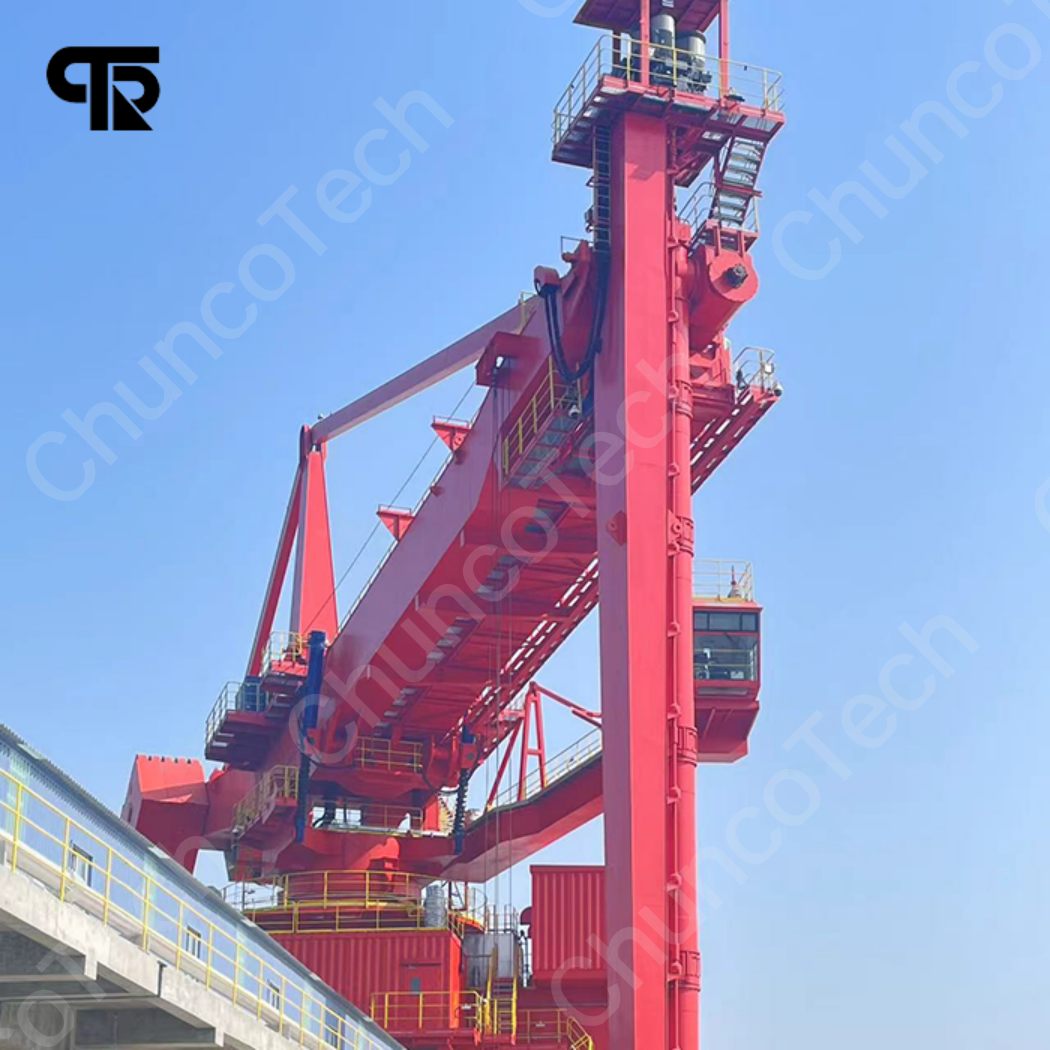
Choosing a bridge type grab ship unloader means choosing a long-term, reliable partner. At Wuxi ChuncoTech, we do not pursue data from laboratories. Instead, we focus on translating mature standards like GB/T 26475-2021 into stable, efficient, and safe port productivity. Whether it's a 400t/h feeder terminal or a 5000t/h main hub port, we can provide proven, practice-validated solutions.
If you have questions about improving the efficiency of your existing equipment or are deliberating over equipment selection for a new terminal, please visit our official website https://www.chuncotech.com/ or contact us directly. Let the professional team at Wuxi ChuncoTech tailor a trustworthy unloading solution for your port.