
In our previous discussion, we explored the adaptability challenges of ship cranes under harsh sea conditions. Today, let's turn our attention to a more massive and complex field—floating cranes. When your operating environment extends from ports to offshore areas, from inland rivers to deep seas, equipment selection directly determines project success or failure. Based on the analytical framework of the latest national standard GB/T 6974.7-2022, combined with Wuxi ChuncoTech's technical accumulation in the floating crane field, let's delve into how to ensure your floating crane truly withstands the severe challenges of complex waters.
Navigation Mode and Power Selection: Balancing Flexibility and Reliability
The primary challenge facing floating cranes is how to move on water and obtain power. According to navigation mode, they can be divided into two categories: self-propelled and non-propelled. Self-propelled floating cranes are equipped with independent propulsion systems and can navigate autonomously to operating waters, offering excellent mobility; while non-propelled floating cranes require tugboat assistance, featuring relatively simple structures and better suitability for fixed-point operations in inland river ports.
In terms of power devices, the choice becomes even more critical. Shore powered electric floating cranes are suitable for long-term fixed berth operations, with low operating costs and environmental friendliness; whereas diesel-hydraulic floating cranes leverage hydraulic stations driven by internal combustion engines to provide powerful force, ideal for remote waters without shore power support. Wuxi ChuncoTech's floating cranes feature modular power designs that allow quick power pack replacement based on operating water characteristics, ensuring efficient and reliable power systems whether for harbor operations or offshore construction. We understand that a single power failure could mean delays in the entire project schedule, which is why redundant design and quick switching mechanisms are our standard configurations.
Overall Structure and Slewing Method: Fundamental Guarantees for Operational Efficiency
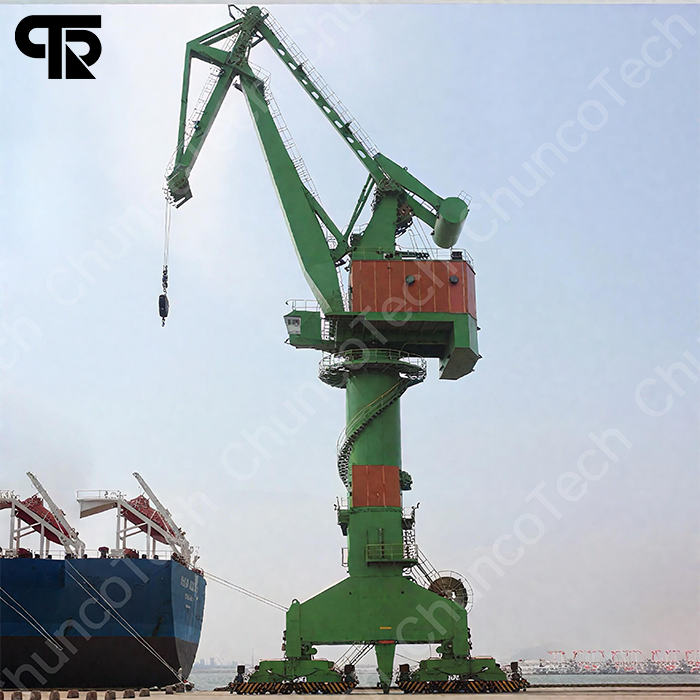
The operational flexibility of floating cranes largely depends on the overall structure type. Slewing boom floating cranes are the mainstream choice for modern floating cranes, capable of 360° full-circle slewing operations, covering extensive work areas without frequent vessel movement. In contrast, although non-slewing boom types have simple structures and lower costs, their limited operating range and frequent vessel repositioning significantly reduce loading and unloading efficiency.
The choice of slewing method is equally crucial for equipment lifespan and operational precision. Slewing ring type utilizes large split slewing bearings, offering significant advantages such as high reliability, balanced force distribution, and convenient maintenance. Wuxi ChuncoTech has introduced advanced manufacturing processes to ensure that slewing rings require no maintenance or replacement throughout their design life, while reserving borescope inspection windows to make later maintenance simple and controllable. For ultra-large floating cranes, we provide roller type and bogie type slewing solutions to meet different tonnage and precision requirements.
Boom Form and Cross-section: Core Secrets of Lifting Capacity
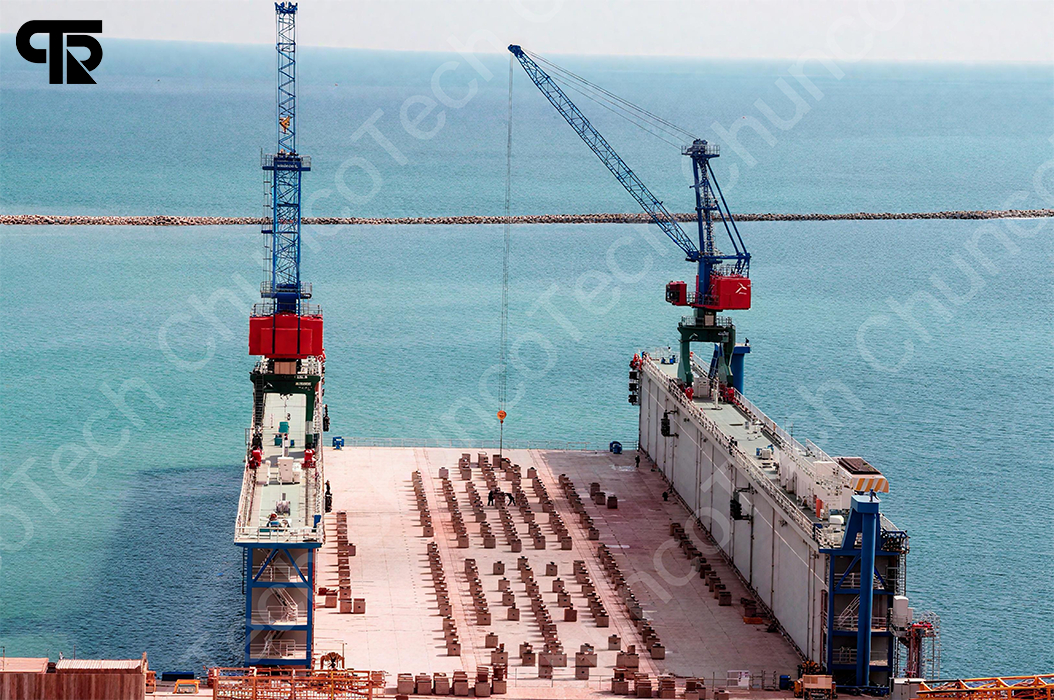
The boom serves as the "arm" of the floating crane, and its form and cross-section directly determine lifting performance and operating range. Single boom type has a simple structure, suitable for general loading and unloading; double boom type provides greater rigidity and stability, making it ideal for large-scale installation projects. Meanwhile, double link boom type achieves near-horizontal load path during luffing through ingenious coordination of the boom, fly jib, and tie rods, significantly improving operational efficiency.
In boom cross-section design, lattice boom features light self-weight and low wind resistance, suitable for tall booms and long-distance operations; box-section boom offers strong bending and torsional resistance, ideal for heavy-load conditions. Wuxi ChuncoTech utilizes finite element analysis to optimize boom structures, minimizing self-weight while ensuring strength, giving your floating crane higher effective lifting capacity and longer working radius.
[Insert product image here: comparative diagram of lattice and box-section booms]
Hoist Device and Specialized Functions: Precisely Addressing Diverse Working Conditions
Different operating scenarios have distinct requirements for hoist devices. Hook floating cranes have strong versatility, suitable for equipment installation; grab floating cranes are efficient tools for bulk cargo handling; container floating cranes are equipped with specialized spreaders for efficient container operations; lifting magnet floating cranes are specifically designed for handling ferrous materials such as scrap steel and steel plates.
Classified by purpose, floating cranes for wind power installation have developed rapidly in recent years, divided into pile-gripping and non-pile-gripping types. Wuxi ChuncoTech has developed specialized models with high-precision positioning and dynamic compensation functions specifically for offshore wind power installation requirements, enabling precise of wind turbine components under complex sea conditions. Whether it's harbor floating cranes for inland river operations or offshore floating cranes for marine engineering, we provide targeted solutions.
Operating Waters and Emergency Protection: The Last Line of Defense Against Extreme Environments
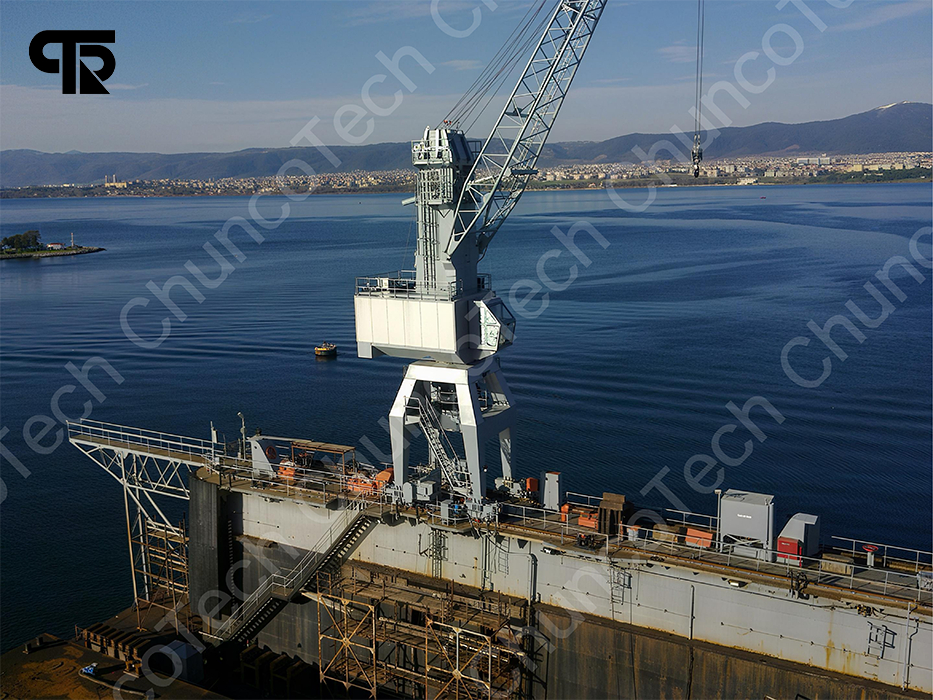
The operating waters of floating cranes extend from inland rivers to deep seas, with environmental complexity increasing exponentially. Deep sea floating cranes must possess stronger wind and wave resistance capabilities and dynamic positioning performance. Boom lowering mechanisms and boom sliding devices are essential configurations for long-distance towing and bridge passage, ensuring safe equipment relocation.
More critical is the ability to respond to sudden failures. The Lebus drum of floating cranes ensures orderly arrangement of steel wire ropes during multi-layer winding, preventing rope damage from disorder. When hydraulic system failures or electrical faults occur, modular design enables quick replacement—critical component replacement can be completed within 2 hours. Wuxi ChuncoTech floating cranes come standard with dual drum redundancy systems, automatically switching to backup systems when the main drum fails; ballast water adjustment systems can quickly balance vessel attitude, even under strong winds, keeping within safe ranges. The AI predictive maintenance system analyzes historical data to warn of potential risks 72 hours in advance, allowing you to transition from reactive maintenance to proactive prevention.
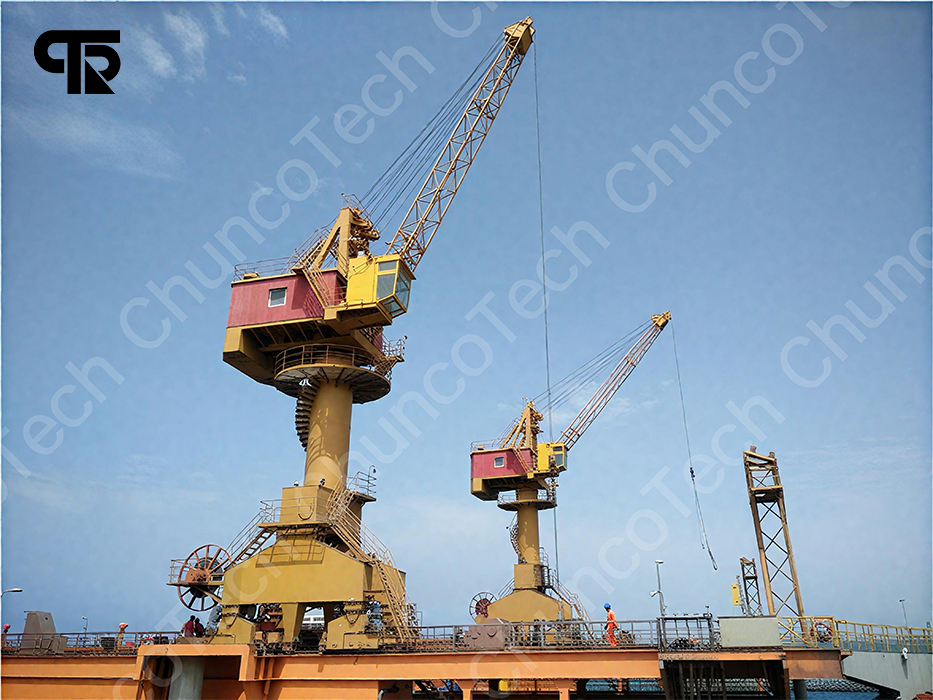
The selection of floating cranes concerns not only the equipment itself but also the safety, schedule, and cost of the entire project. Based on the 9-category classification system of GB/T 6974.7-2022, Wuxi ChuncoTech provides you with a full range of floating crane solutions, from inland rivers to open seas, from general loading and unloading to specialized installation. Visit our official website https://www.chuncotech.com/ for more technical information and case studies.