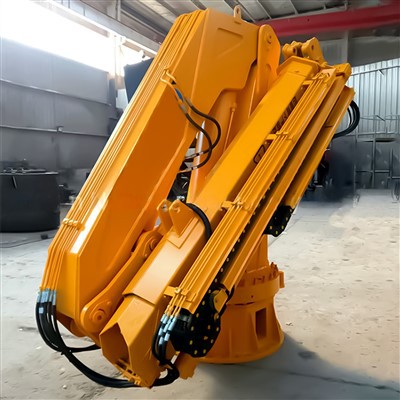
In the previous article, "Why is a Ship Crane Called a 'Kè Lìng Diào'? Comprehensive Analysis and Selection Guide," we explored the classification logic and terminology of marine cranes across different technical and cultural contexts. From the simple lever mechanisms of derricks to the complex hydraulic systems of modern deck cranes, the technological evolution of cargo handling equipment has always revolved around the core principles of safety and efficiency. Today, we will focus deeply on one of the most common types—the single jib crane—and analyze the mandatory specifications you must consider when selecting and using such equipment, based on the GB/T 12932-2010 standard. Wuxi ChuncoTech provides stable and reliable solutions through our profound understanding of the standards and mature production processes.
How Does a "Single Arm" at Sea Hold Up the Sky?
Many ship owners or procurement personnel often focus solely on "how much weight it can lift" when first encountering marine jib cranes, overlooking the complexities of maritime working conditions. Has your crane ever failed to operate properly under combined heeling of 5° and trimming of 2° ? Has control ever become inaccurate at the critical threshold of wind speed 20m/s ? The GB/T 12932-2010 standard clearly specifies that this type of crane is primarily applicable to electric or hydraulically driven single jib cranes for cargo handling. It also clearly defines the standard operating conditions: the crane shall function normally with the ship under a combined heeling of not more than 5° and trimming of not more than 2°, operating in harbor areas or waters with wind forces not exceeding Beaufort scale 6 (wind speed 10.8-13.8m/s, corresponding wind pressure) . If you have experienced difficulties in hoisting due to vessel motion during actual operations, it is highly likely that the design basis of your equipment does not match your actual working conditions.
As a professional equipment supplier, Wuxi ChuncoTech always prioritizes ship motion parameters during the selection and recommendation process. The knuckle boom cranes and straight boom cranes we provide strictly adhere to the performance requirements specified in the standard during design. For example, concerning Safe Working Load (SWL) , we focus not only on its static value but also integrate the performance parameters from Table 2. This ensures that the maximum hoisting height and working radius under the specified nominal size fully meet your vessel's deck layout requirements . Whether it's special scenarios requiring 134-meter ultra-long booms or high-precision operations in confined spaces, our mature knuckle boom or slewing structural designs ensure your single jib crane truly achieves pinpoint accuracy.
The "Invisible Killers": Overload and Stability
During the operation of marine jib cranes, what often troubles operators the most is not the heavy load itself, but the unseen risks. Overloading is a primary cause of crane accidents, potentially leading to motor overload, structural deformation, or even boom fracture and complete overturning in severe cases . While many older or non-standard pieces of equipment may have a stated rated capacity, their overload tolerance often fails to meet national standards. GB/T 12932-2010 mandates graded requirements: when SWL ≤ 20kN , the overload tolerance shall be 25%; when SWL ≥ 50kN , it shall be 10% . This means your equipment must not only handle precise lifts under normal conditions but also possess sufficient safety margin to withstand instantaneous impact forces during critical moments.
Wuxi ChuncoTech deeply understands the importance of this safety redundancy. Our products undergo rigorous load testing before shipment according to the standards, ensuring the maximum hoisting brake force reaches 1.5 times the safe working load, and the maximum slewing brake torque reaches 1.25 times the crane's slewing torque (the revised standard even increases this to 1.5 times) . Furthermore, we have optimized the hydraulic system by selecting high-quality hydraulic oil and seals, effectively preventing vibration or creeping of the telescopic boom caused by air in the hydraulic system . When your crane smoothly transfers cargo across the ship's rail amidst wind and waves, that composure is the best testament to our accumulated expertise in marine hydraulic jib cranes.
From "Functional" to "Excellent": The Wisdom of Features and Maintenance
At sea, every malfunction translates to costly downtime. Have issues like boom failing to lift/lower , slewing getting stuck , or electrical system water ingress ever troubled your technical crew? The standards not only specify design parameters but also mandate requirements for functionality and environmental adaptability. For instance, electrical equipment installed on open decks must have an enclosure protection rating of at least IP56, meaning the equipment must be dust-proof and resistant to powerful water jets . Additionally, to accommodate different cargo types and operational workflows, the hoisting speed of the crane hook and the luffing range of the boom must be adjustable .
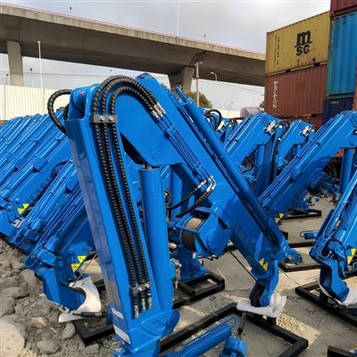
Addressing these common operational pain points, Wuxi ChuncoTech has incorporated numerous detailed optimizations into the design and production of our single jib cranes.
•First, regarding the hydraulic system, we employ mature piping layouts and double-sealing technology, significantly reducing the risk of oil leakage and hydraulic pipeline leakage . Even during frequent telescopic boom operations, properly designed balance valves and lubrication systems prevent telescoping failures caused by lack of lubricating oil or slider damage .
•Second, concerning the control system, we support multiple modes including manual/foot operation and remote control, and mandate the installation of an emergency stop device to ensure the safe release of the working load in emergency situations .
•Third, focusing on maintenance convenience, our reference to standards like CB/T 3883 for test methods ensures verification of key indicators such as r during factory tests . This means that when your equipment enters its maintenance cycle, whether replacing wire ropes or servicing winches, ample working space and parts support are readily available.
Conclusion
Choosing the right marine jib crane is essentially choosing respect for the rules of maritime operations and a guarantee of stable performance for years to come. The GB/T 12932-2010 standard and its ongoing revision provide us with clear technical boundaries. While Wuxi ChuncoTech is not involved in R&D design, our expertise lies in transforming mature electric or hydraulic drive technologies and single jib structural processes into reliable partners for your deck through rigorous production procedures. Our value lies in ensuring that every piece of equipment you receive precisely complies with national standards regarding classification, marking, technical requirements, and performance parameters, turning the "non-special equipment" classification into a reason for flexible application, not an excuse to neglect safety .
If you are seeking marine jib cranes for your fleet operating in harbor areas or coastal waters—equipment that balances efficiency and stability—please visit our official website https://www.chuncotech.com/ or contact the Wuxi ChuncoTech team directly. Let us solve your most practical lifting challenges with mature products.