
In our previous discussion, we delved into the reliability of electric hoist gantry cranes based on the JB/T 5663 standard. Today, we shift our focus from land to sea, turning our attention to the indispensable loading and unloading equipment on ship decks—the marine deck crane. You might wonder why this type of crane has such a distinctive name in Chinese. "Kè Lìng" is a direct transliteration of the English word "Crane," and "Diào" graphically represents its lifting function. Combined, they form this professional term that is both concise and memorable, much like other loanwords such as "Kā Fēi" (Coffee) and "Shā Fā" (Sofa).
At Wuxi ChuncoTech, we don't just provide marine cranes that meet national standards; we are also committed to interpreting the technologies and specifications behind these devices, helping you make more informed procurement decisions. Today, based on the industry standard CB/T 4289-2013 for shipboard cranes, we will provide a comprehensive analysis of the core aspects of this essential marine loading equipment.
What is a Shipboard Crane and What Types Are There?
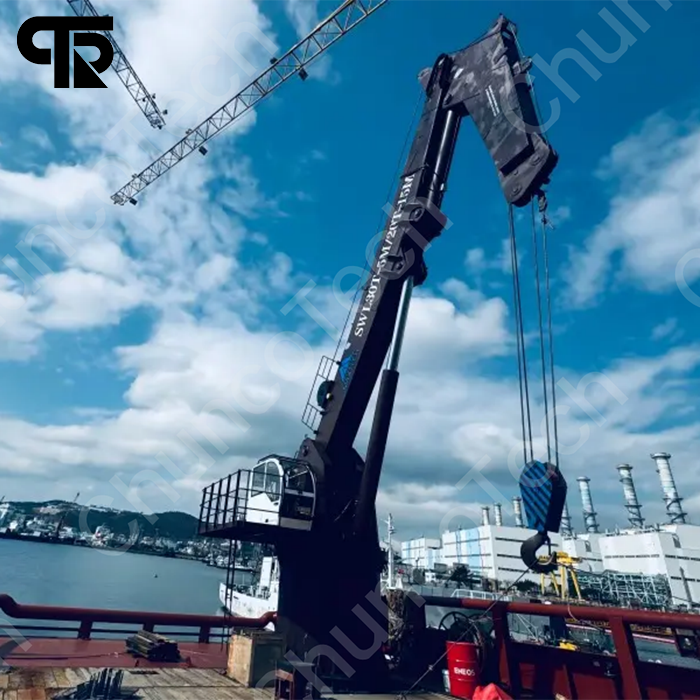
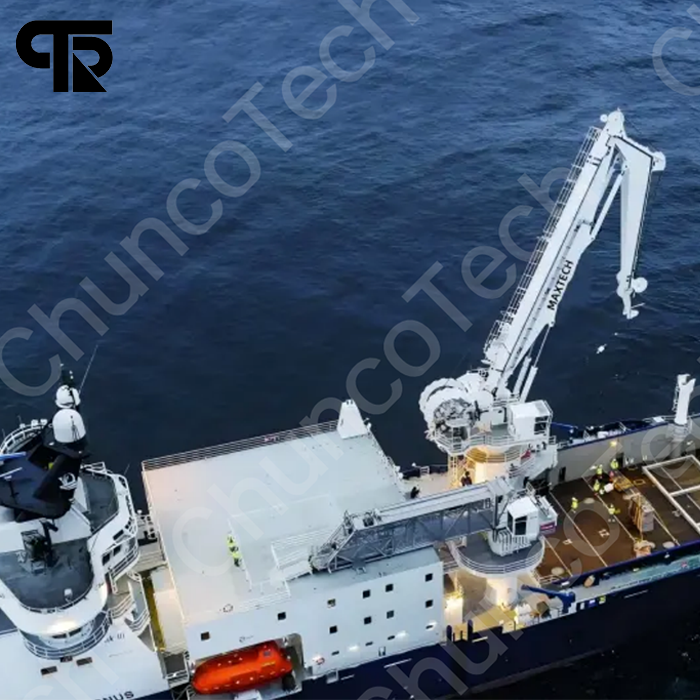
According to CB/T 4289-2013, a shipboard crane, often referred to as a deck crane, is a type of luffing and slewing crane installed on a ship's deck for efficient and safe cargo handling. It is specifically designed for various cargo vessels like bulk carriers and container ships, possessing the capabilities to lift, luff (change radius), and slew (rotate). It is also built to withstand wind, rain, and sea conditions. In the national standard GB/T 20776-2023, it is classified as deck machinery with the code Q10900.
Shipboard cranes are primarily divided into two categories:
• By Structural Type:
·Single Crane: Consists of a single tower and jib, the most common form of marine hydraulic cranes or marine electric cranes. Based on the luffing mechanism, they can be further divided into rope luffing cranes and cylinder luffing cranes.
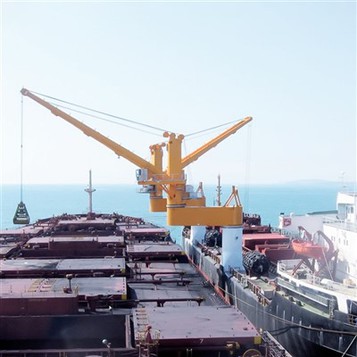
·Twin Crane: Comprises two identical single cranes mounted on a common base pedestal. They can operate independently or in tandem. When working together, their combined safe working load (SWL) is double that of a single unit, making them ideal for handling heavy cargo.
• By Drive Type:
·Electro-hydraulic Type: i.e., the marine hydraulic crane. An electric motor drives a hydraulic pump, using hydraulic oil as the medium for power transmission, resulting in smooth operation and excellent speed control.
·Electric Type: i.e., the marine electric crane. Each mechanism is directly driven by electric motors, offering a relatively simpler structure.
How to Interpret Crane Product Markings and Core Specifications?
The CB/T 4289-2013 standard provides a clear crane model designation system. For example, the model "2E40t-26m" represents an electric twin crane with a Safe Working Load (SWL) of 40 tons and a maximum working radius of 26 meters.
Selecting the right marine crane hinges on understanding its core parameters:
• Lifting Capacity / Safe Working Load (SWL): This is the key indicator of lifting capability, with the standard providing a series of parameters ranging from a few tons to over a hundred tons.
• Maximum Working Radius: Determines the coverage area of the crane's jib on the deck.
It's important to note that the CB/T 4289-2013 standard has been in effect for over a decade. With the evolution of the global shipping industry and cargo types, the market demand for shipboard cranes with higher tonnage and longer working radii is growing. Wuxi ChuncoTech keeps pace with market trends. Our marine loading equipment has been optimized and upgraded based on standard parameters, better meeting the operational needs of modern large-scale vessels.
Crane Design and Technical Requirements: How Do We Ensure Reliability?
Reliability is paramount in harsh marine environments. CB/T 4289-2013 sets strict design requirements:
• Environmental Adaptability: Cranes must operate safely under conditions with a ship list of 5° and a trim of 2°, and withstand ambient temperatures ranging from -20°C to +45°C. Our marine cranes at Wuxi ChuncoTech are designed from the outset with various severe sea conditions in mind, ensuring stable performance in any environment.
• Safety Redundancy: The standard specifies strict safety factors for brakes on hoisting and luffing mechanisms. For instance, the safety factor for a single brake must be no less than 1.5. This means our equipment incorporates ample safety margins in both design and manufacturing, providing a solid guarantee for the safety of your personnel and cargo.
• Materials and Workmanship: Primary structural steel subjected to strength calculations must be marine steel plates approved by classification societies, such as A36 or E36. Wuxi ChuncoTech strictly adheres to this requirement. All structural components are made from high-quality marine-grade steel, ensuring the durability and strength of the equipment from the source. For example, A36 steel plate is marine-certified and reliable, while thicker plates utilize higher-performance E36 steel plate (equivalent to domestic grade Q355) to guarantee structural safety under different stress levels.
• Ease of Operation: The standard encourages variable speed control and allows for remote control options. We deeply understand the importance of operational convenience for the crew. Therefore, our marine hydraulic cranes and marine electric cranes are equipped with user-friendly control systems that offer responsive performance and excellent inching capabilities. Even complex combined operations (simultaneous hoisting, luffing, and slewing) can be easily managed.
• Details Matter: The standard specifies every detail, from anti-slack devices for wire ropes and rope-spooling designs on drums to limits on the number of rope layers. For example, to maximize wire rope service life, it generally requires no more than three layers of rope on the drum, with the rim extending sufficiently above the top layer. These seemingly minor details are precisely why Wuxi ChuncoTech products deliver long-term, stable performance.
As a professional marine crane manufacturer, Wuxi ChuncoTech, while not directly involved in R&D, focuses on transforming proven, market-validated technologies and standards into stable, high-quality products at reasonable prices. We meticulously study and apply core standards like CB/T 4289-2013, ensuring every shipboard crane we ship strictly complies with specifications. Leveraging our deep market understanding, we select optimal, mature configurations to provide you with cost-effective marine cranes and deck crane solutions. Whether you need the smooth operation of a marine hydraulic crane or the efficiency of a marine electric crane, we have the solution. Choose Wuxi ChuncoTech for reliable assurance grounded in standards. Visit our website at https://www.chuncotech.com/ to learn more.