
Following our previous discussion on "How to Extend the Service Life of Portal Cranes by 30% Through Professional Maintenance?"(https://www.weidamaterials.com/show-18-1243.html), we recognize that relying solely on traditional maintenance methods can no longer meet the high demands of modern shipbuilding for equipment reliability. In shipbuilding, lifting equipment handles the transport and assembly of numerous critical components, and its operational status directly impacts the smoothness and efficiency of the entire production process. Unexpected equipment failures can lead to production halts lasting hours or even days, resulting in significant economic losses—for instance, one large shipyard suffered a direct loss of 5 million RMB and severe project delays due to a gantry crane failure. Faced with such challenges, more companies are turning to advanced, intelligent predictive maintenance solutions.
The Real Challenges of Current Predictive Maintenance Practices
In practice, many shipyards still face significant shortcomings in their predictive maintenance systems. The limitations of monitoring technology are a prominent issue: common vibration sensors are susceptible to electromagnetic interference and environmental factors like temperature and humidity in complex industrial settings, leading to degraded accuracy and distorted data that fails to reflect the true state of the equipment. For example, in some workshops, about 20% of vibration sensors experience over a 10% drop in accuracy after one year of use, making it difficult for maintenance teams to make accurate judgments. Additionally, immature multi-parameter fusion monitoring technology hampers early fault detection—relying on single parameters or simply combining multiple parameters often fails to identify early signs of complex failures.
The lack of scientific basis for maintenance decisions is another common challenge. Currently, about 70% of equipment remaining useful life (RUL) prediction models have errors exceeding 30%, making it difficult to accurately determine the optimal timing for maintenance and often leading to either "under-maintenance" or "over-maintenance." Many shipyards still rely on fixed annual maintenance schedules, ignoring differences in equipment usage frequency, load conditions, and environmental factors. This approach often results in frequent failures of high-usage equipment within the cycle, while low-usage equipment undergoes unnecessary maintenance, increasing costs and creating potential safety risks.
Intelligent Monitoring: The Key Shift from Reactive to Proactive Maintenance
To address these challenges, Wuxi ChuncoTech has introduced a next-generation intelligent monitoring system designed to overcome the shortcomings of traditional monitoring methods. Our system utilizes high-precision fiber optic sensors, which offer strong resistance to electromagnetic interference and long-term stability. Even in harsh shipyard environments with humidity up to 80% and temperatures exceeding 40°C, these sensors consistently provide accurate and reliable data on vibration and temperature, enabling maintenance teams to make truly data-driven decisions.
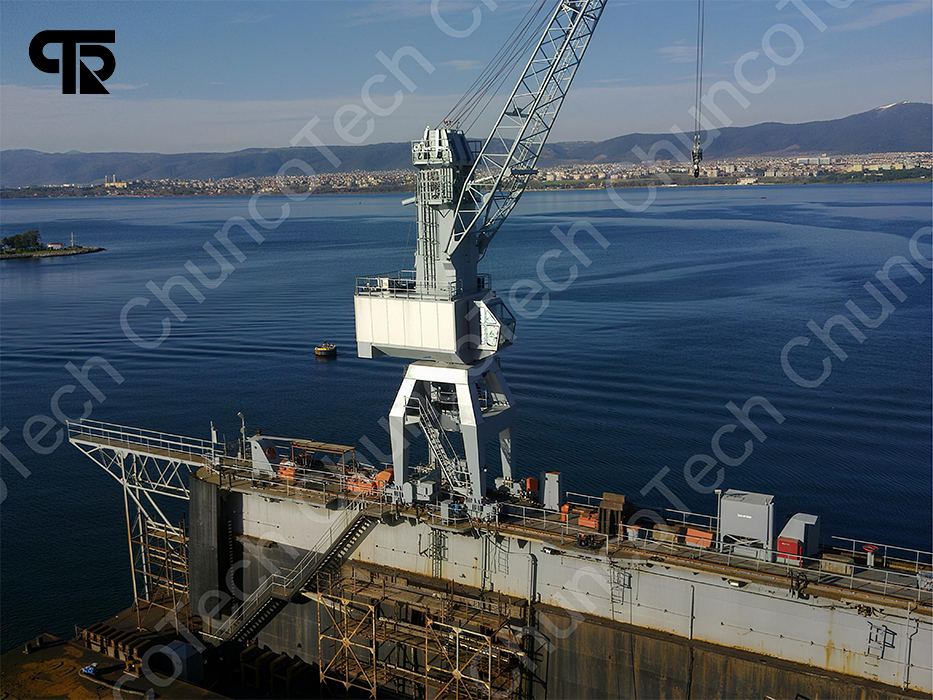
Furthermore, our system employs neural network-based multi-parameter fusion analysis algorithms to deeply correlate and analyze multi-dimensional data such as vibration, oil temperature, current, and pressure. In one customer case, for example, the system provided early warning of potential faults in the transmission system by fusing and analyzing these parameters, preventing unplanned downtime. Compared to traditional methods, our monitoring system reduces response time by 50% and increases diagnostic accuracy by 30%, ensuring that hidden faults are effectively detected.
Accurate Prediction and Personalized Maintenance: Maximizing the Value of Every Maintenance Investment
To tackle maintenance decision-making challenges, Wuxi ChuncoTech has developed a machine learning and deep learning-based equipment remaining useful life (RUL) prediction model. This model fully incorporates actual operating conditions such as lifting loads, operating frequency, and environmental corrosion factors. Through continuous learning from historical equipment data, the model dynamically optimizes itself, keeping prediction errors within 10%. One shipyard reported a 25% reduction in equipment failure rates and an 18% decrease in maintenance costs after implementation, truly transitioning from "time-based maintenance" to "condition-based maintenance."
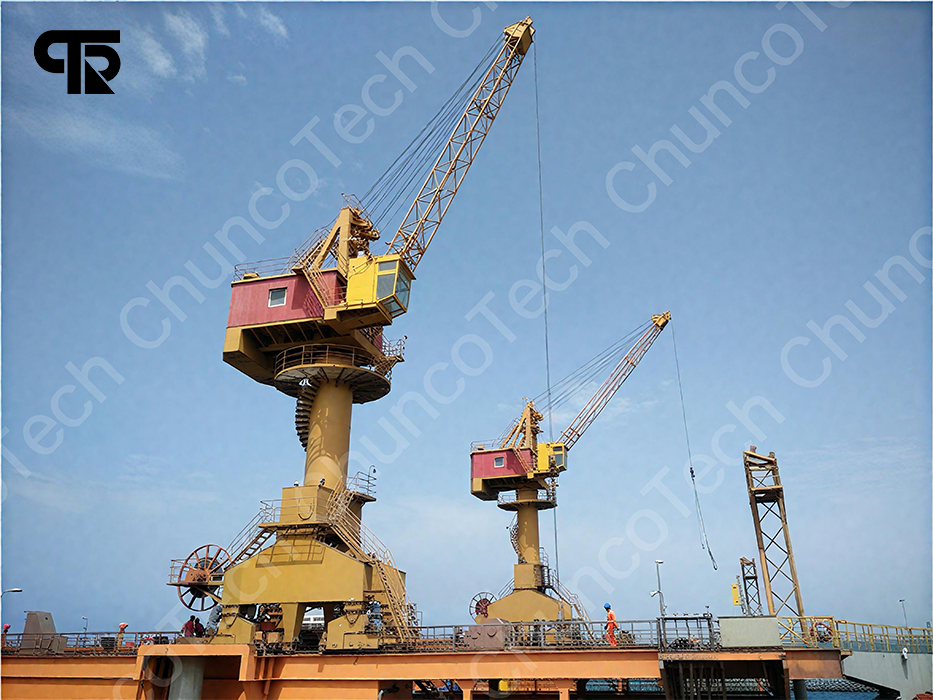
More importantly, we advocate and implement personalized maintenance strategies. Using a risk assessment model, we classify and manage various crane components: components with high failure impact and probability (e.g., hoisting motors) receive intensified monitoring and more frequent maintenance, while lower-risk components follow optimized schedules to conserve resources. The system also dynamically adjusts maintenance plans based on peak and off-peak production seasons—intensifying key inspections during high-load periods and scheduling in-depth maintenance during idle times—ensuring scientific and economical allocation of maintenance resources.
Empowering Teams: Ensuring Technology Delivers Long-Term Value
Advanced technology requires effective human execution. Wuxi ChuncoTech not only provides systems but also focuses on empowering customer teams. Through multi-level training and knowledge sharing via our online technical platform (learn more at our official website: https://www.chuncotech.com/), we help maintenance personnel master intelligent diagnostic tools and data analysis skills. Additionally, we assist companies in building a maintenance knowledge base to accumulate fault cases and solutions, creating reusable organizational assets that continuously enhance the team's autonomous maintenance capabilities.
Conclusion: Moving Toward an Era of Zero-Unexpected-Downtime Intelligent Operations
The stability of shipbuilding lifting equipment is a core factor in ensuring production schedules and cost control. By addressing the shortcomings of traditional predictive maintenance through the deployment of high-reliability intelligent monitoring systems, the construction of accurate predictive maintenance models, and the implementation of dynamic, personalized maintenance strategies, companies can shift from reactive repairs to proactive prevention. The integrated solution from Wuxi ChuncoTech is designed to help shipyards achieve this transformation—significantly reducing the rate of unexpected lifting equipment failures, minimizing unplanned downtime, and optimizing lifecycle maintenance costs—ultimately building a more efficient, reliable, and intelligent production support chain for shipbuilding enterprises.