
Wire ropes are typically classified by their lay direction as either left lay or right lay. Over the years, the letters S and Z have been adopted to represent the lay direction and pattern of wire ropes. Many people memorize these letters without understanding their origin, often assuming they are initials of English or German words. In fact, S and Z are not abbreviations or acronyms—they are pictographic letters. Just take a look at the diagram below, and you’ll see how instantly recognizable they become.
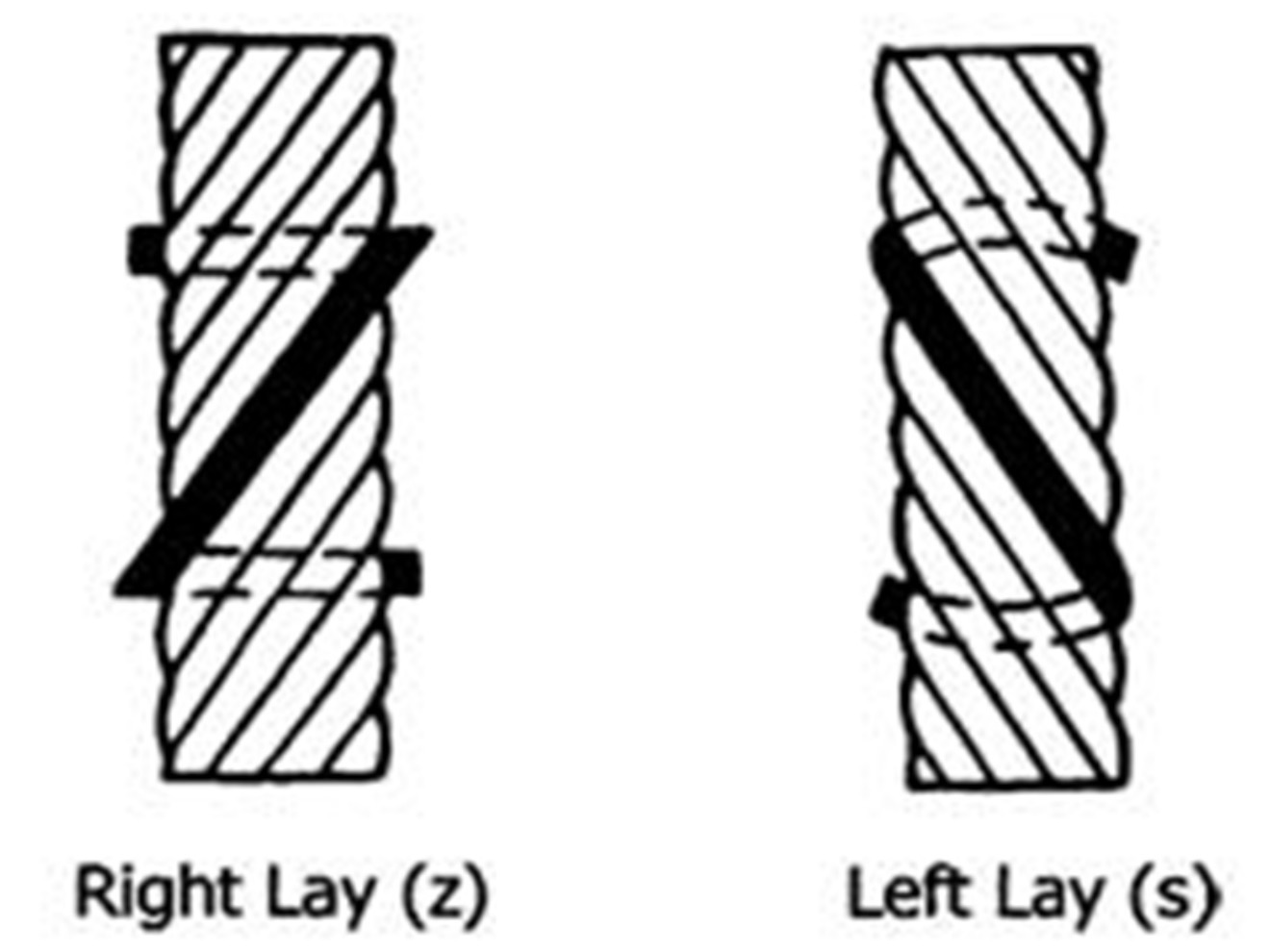
The lay direction of a wire rope depends on the twist direction of its inner strands. As shown in the diagram above, if the strands twist upward and to the left, it is a left lay rope (indicated by S); if the strands twist upward and to the right, it is a right lay rope (indicated by Z). By combining the lay direction of the strands with the twist direction of the wires inside the outer strands (also represented by S for left and Z for right), four possible combinations can be derived, as illustrated in the diagram below: zZ, sS, sZ, and zS. Here, the lowercase letter indicates the twist direction of the wires inside the outer strands, while the uppercase letter indicates the lay direction of the strands in the rope.
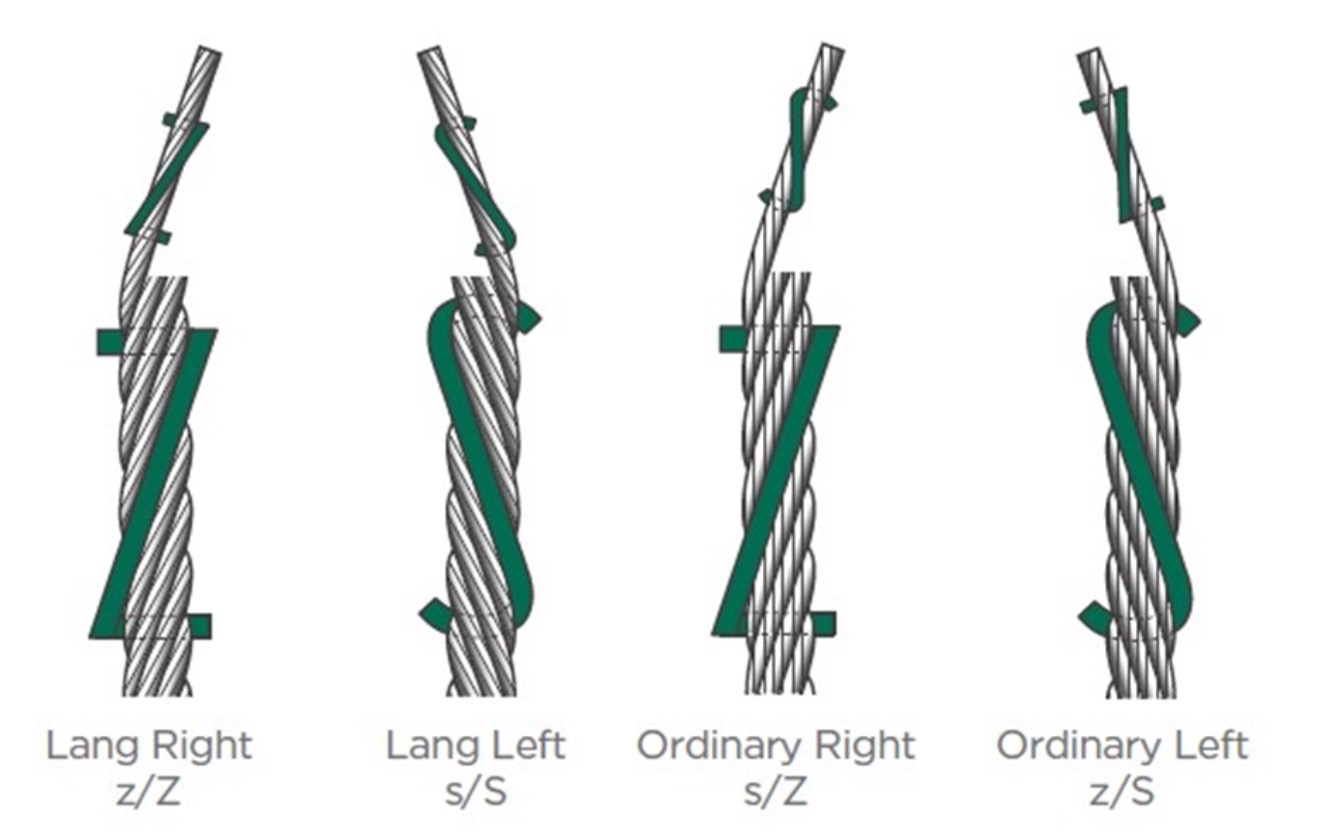
When the lay direction of the strands and the wires inside them is the same, it is referred to as a lang's lay or same lay. When the lay directions differ, it is called an ordinary/regular lay or reverse lay. These two types can be distinguished visually: in an ordinary lay wire rope, the outer wires run almost parallel to the longitudinal axis of the rope.