
Container shipping is the cornerstone of global trade, and the container spreader is the critical interface connecting lifting equipment to the container itself. Whether it's an STS quayside crane at the forefront, an RTG or RMG in the yard, or various types of mobile cranes, their ultimate task boils down to one action – grab the container and move it from Point A to Point B. The core component that completes this "grabbing" action is the container spreader. If the spreader's positioning is off, the container cannot be lifted smoothly; if the locking is unreliable, the consequences are unthinkable. The performance of the spreader directly determines the safety, efficiency, and reliability of container handling operations.
The container spreader is the specialized equipment for this "grabbing and locking" process. Installed at the lower end of the crane's hoist wire ropes, it achieves rapid connection and release with the container's four corner castings through twistlock mechanisms, serving as the only safety guarantee for the container "in the air." However, many spreaders on the market suffer from chronic issues such as "difficult positioning, sticky twistlocks, high electrical failure rates, and excessive weight," turning what should be "grab it right the first time" handling operations into "repeated positioning and frequent breakdowns." Wuxi ChuncoTech's answer is: A true "universal hand" is not "just being able to grab," but rather "regardless of where the container is or at what angle, it can quickly align, lock reliably, and lift smoothly."
The "Universal Hand" Connecting Lifting Equipment to Containers
A container spreader (also known as a container lifting frame or twistlock spreader) is a specialized lifting tool installed beneath the crane's hoist mechanism. Its main structure consists of a spreader frame, twistlock mechanisms, telescoping mechanism, guide devices, and electrical control system. The spreader frame is typically made of high-strength steel and bears the full weight of the container. The twistlock mechanisms are the core actuating components, achieving locking and release with the container's corner castings through rotation. The telescoping mechanism enables the spreader to accommodate different container sizes (20 feet, 40 feet, 45 feet, etc.). Based on the type of container handled, they can be classified into fixed spreaders (suitable for a single container type) and telescopic spreaders (adjustable to multiple container types, currently the mainstream configuration). Based on twistlock drive method, they can be classified into hydraulic-driven and electric-driven types.
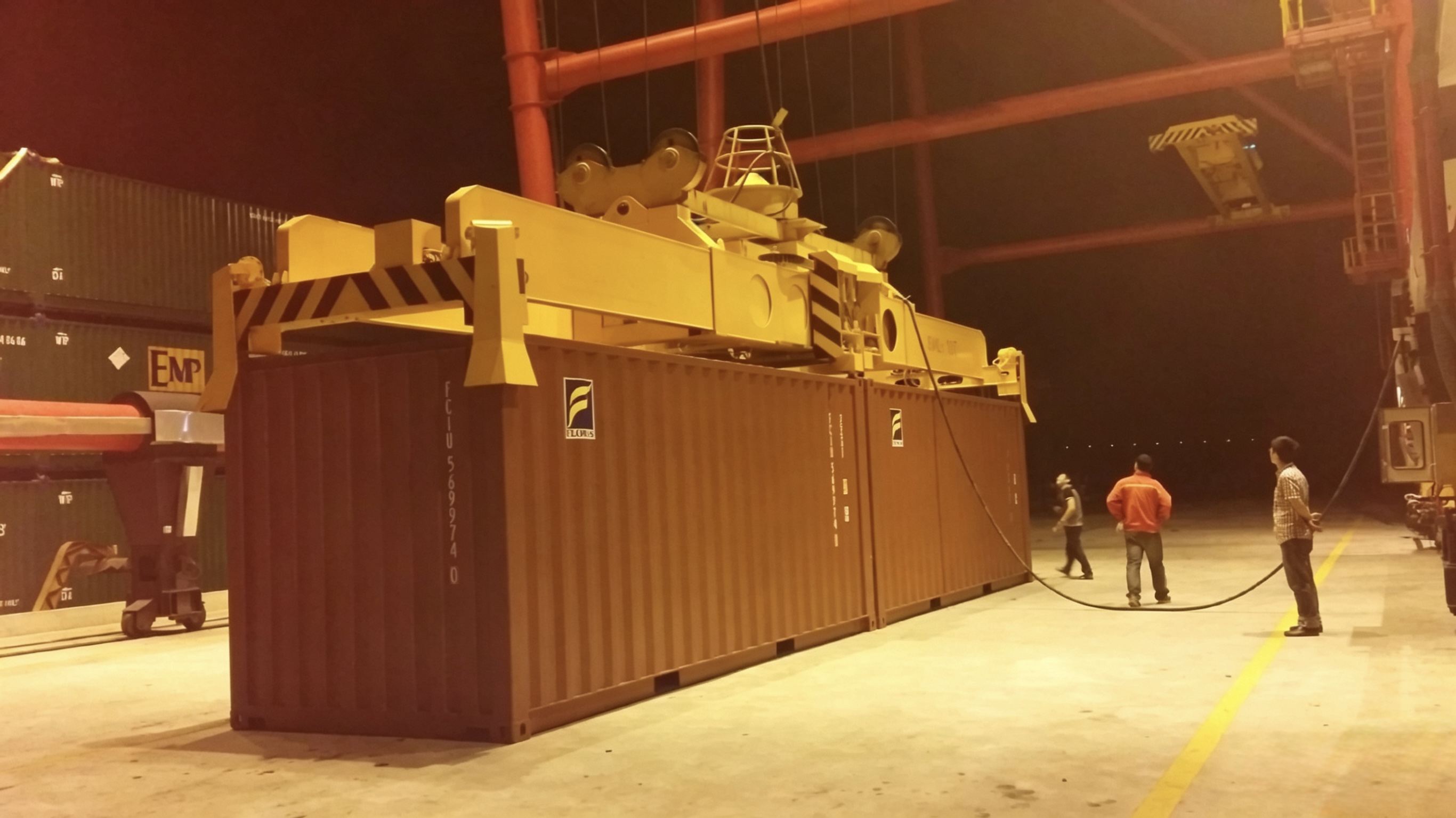
The core value of a container spreader lies in this: It is not the "crane itself," but rather "the only link between the crane and the container." A large STS quayside crane can handle millions of TEUs annually, meaning the spreader's twistlock mechanisms must perform millions of locking and release cycles each year. Every cycle must be precisely positioned, reliably locked, and smoothly released – any single mistake could result in a container falling or equipment damage. In the design and manufacturing of container spreaders, Wuxi ChuncoTech takes precision positioning technology, twistlock reliability design, telescoping mechanism durability, and lightweighting with high-strength balance as its four core technical areas.
Solving the Three "Spreader Challenges"
In container handling operations, operators and terminal managers are most frustrated by three things: difficult spreader positioning, especially when the vessel is swaying or when stacking at high tiers, with repeated adjustments wasting time; sticky twistlocks or incomplete locking, creating safety hazards during lifting; and frequent electrical system failures, consuming maintenance time and affecting operational efficiency.
1.Precision Positioning and Guide Technology: Positioning efficiency of the spreader directly affects single-cycle time. We equip our spreaders with guide plates or guide claws that automatically guide twistlocks into the container corner casting holes during descent. Laser or camera-assisted positioning systems display the relative position between twistlocks and corner castings in real time, assisting operators in completing positioning quickly. For automated terminals, an optional fully automatic positioning system is available, using vision recognition or laser scanning to automatically complete positioning without manual intervention. For night operations, an optional LED lighting system is available to ensure clear visibility for positioning.
2.Twistlock Reliability and Intelligent Detection: Twistlocks are the core actuating components of the spreader, and their reliability directly determines operational safety. We use high-strength alloy steel twistlocks that undergo heat treatment and surface hardening for excellent wear resistance and long service life. Equipped with twistlock position sensors that monitor the open and locked states of the twistlocks in real time. An intelligent detection system automatically alarms and prevents hoisting when twistlocks are not fully engaged – completely eliminating "lifting with hidden defects." For extra-large spreaders, an optional twistlock force sensor is available, monitoring the load on each twistlock in real time to ensure balanced force distribution across all four corners.
3.Electrical System Reliability and Modular Design: The electrical system of a spreader is a high-failure-rate area. We use redundant PLC controls and modular electrical design, with critical signals subject to multi-channel acquisition and redundant verification. Vibration-proof, waterproof, and salt-spray-resistant electrical components are designed to withstand harsh port environments. Quick-connect electrical interfaces make spreader replacement and maintenance more convenient, significantly reducing repair time. For spreaders already in operation, we also offer electrical system upgrade services to enhance equipment reliability.
From Quayside Cranes to Yards: Full-Scene Coverage of Spreaders
Wuxi ChuncoTech's container spreaders are widely used on STS quayside cranes, RTG rubber-tyred gantry cranes, RMG rail-mounted gantry cranes, portal slewing cranes, mobile cranes, and various other container handling equipment, covering seaports, inland river ports, rail container centers, and highway freight stations. By container type adaptability, they can be classified into fixed spreaders (suitable for a single container type) and telescopic spreaders (adjustable to 20-foot to 45-foot multiple container types, currently the mainstream configuration). By twistlock drive method, they can be classified into hydraulic-driven and electric-driven types. When quayside cranes, RTGs, and RMGs handle "lifting and moving," and the spreader handles "grabbing and locking," Wuxi ChuncoTech builds for its customers a complete container handling operation chain ranging from lifting equipment to spreader, from lifting to grabbing.
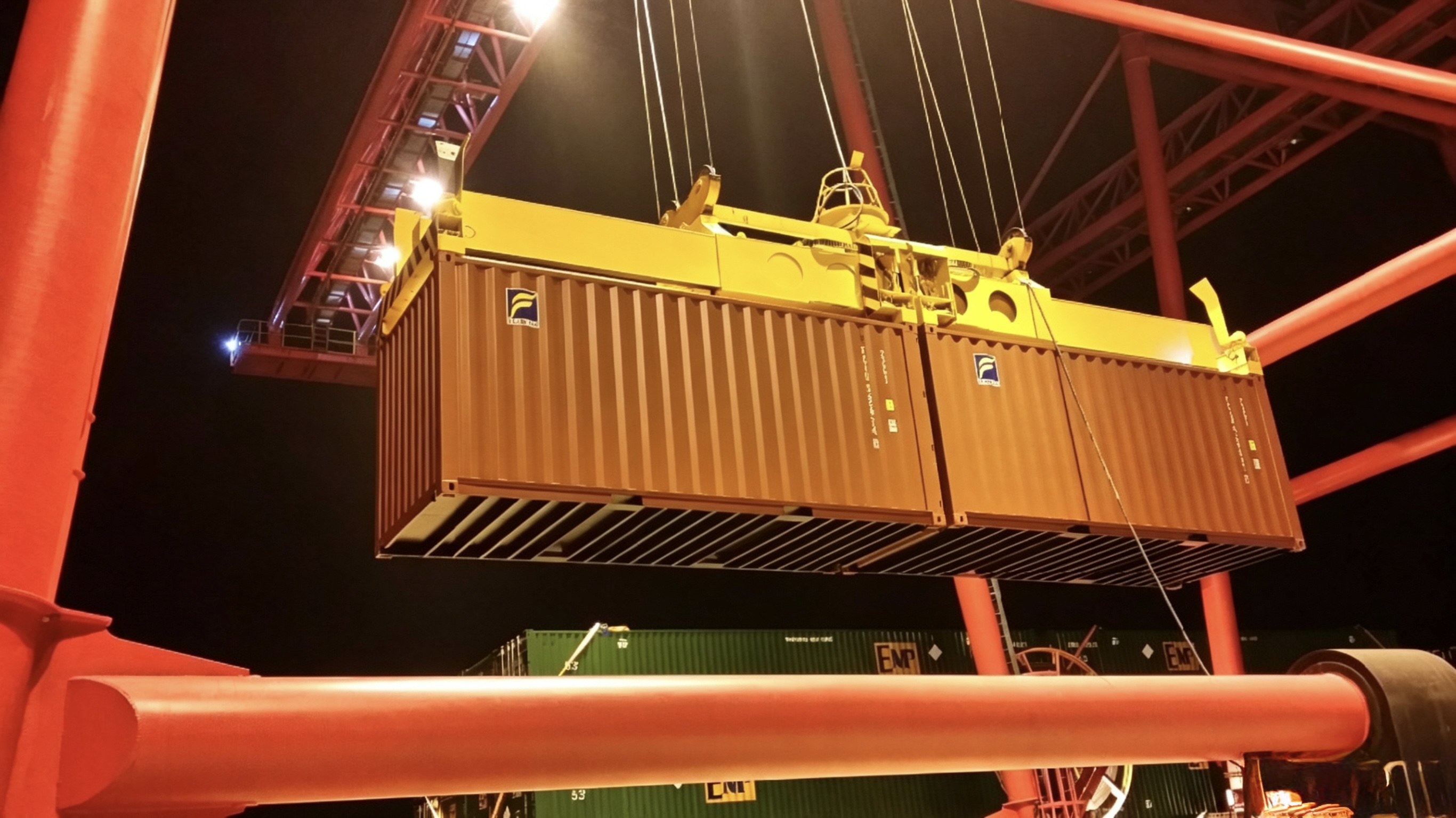
Choosing Wuxi ChuncoTech means you receive not just a container spreader, but a mature solution validated by multiple large terminal projects. All our products are mature models already in volume production with highly reliable structures and control systems. Whether you need fully automatic telescopic spreaders for a new automated terminal or a spreader upgrade and replacement for existing equipment, please visit our website at https://www.chuncotech.com/ to obtain a professional solution for core components of container handling.