
In our previous article, “Is Your Quay Crane Still a Bottleneck in Your Container Terminal?”, we discussed how quay cranes, as critical nodes, can face potential efficiency bottlenecks. When we shift our focus from macro-level handling processes to specific equipment details, a common yet often underestimated issue comes to light: spalling on crane rails. Many on-site engineers instinctively attribute this to “insufficient hardness,” but the truth behind crane rail tread spalling is far more complex.
The Complex Mechanism Behind the Surface
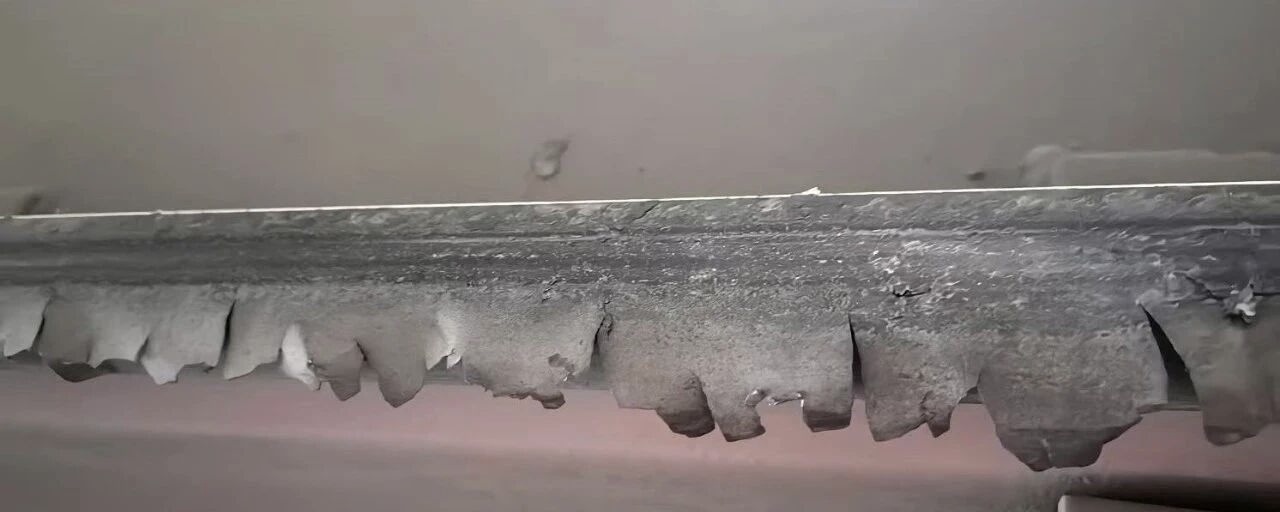
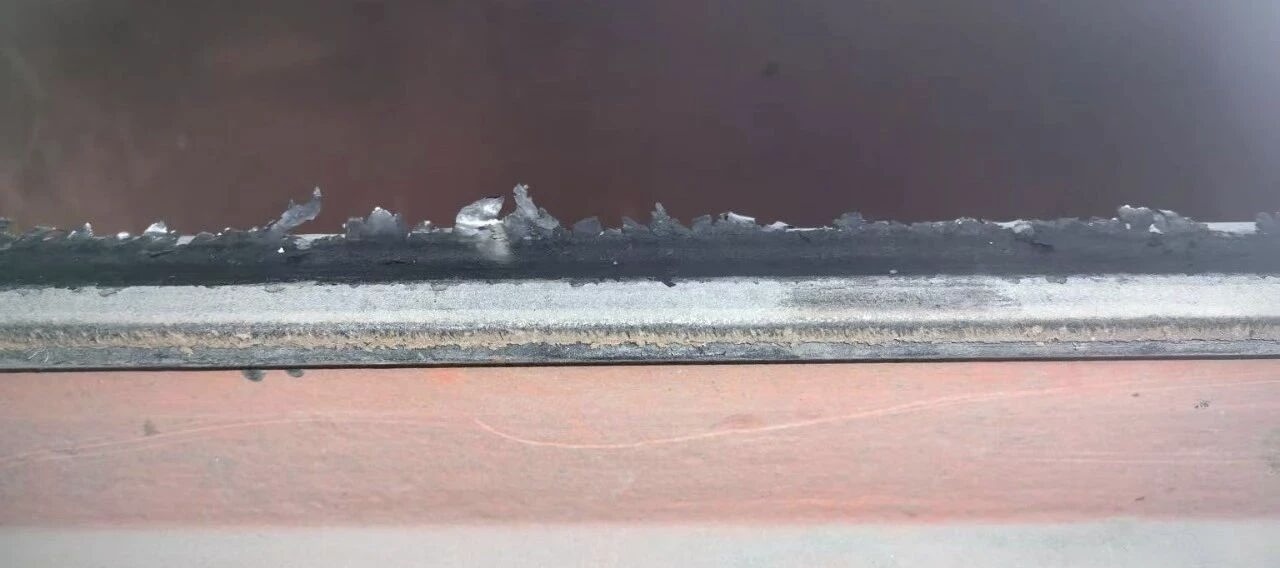
We often see thin, flake-like extrusions on the rail tread, characterized by irregular cracking and spalling—a phenomenon not uncommon in ports, metallurgical plants, and large manufacturing workshops. Intuitively, this appears to be plastic deformation extrusion caused by insufficient rail hardness under repeated wheel rolling. However, if insufficient hardness were the sole culprit, the first sign would be rail flattening, not this layered spalling reminiscent of “rolling out dough.”
From a metallurgical perspective, the root cause of this thin-layer extrusion is contact fatigue and shear stress concentration. The contact area between wheel and rail is extremely small, especially with a convex rail profile, resulting in immense pressure per unit area. This contact stress distributes parabolically within the rail, with the maximum shear stress occurring near the contact ellipse’s edge and at a certain depth below the surface. Under repeated rolling, micro-defects in these internal stress zones gradually evolve into micro-cracks, which propagate and eventually separate from the base material. The separated layer is then repeatedly rolled and thinned between the wheel (acting as a “rolling pin”) and the rail body (acting as a “cutting board”), ultimately extruding toward the side of least resistance, forming the observed flake-like spalling.
Engineering Factors That Trigger Spalling
Problems with crane rail systems often arise from a combination of factors:
•Improper Material Matching: The hardness compatibility between wheel and rail is crucial. If the wheel is excessively hard (e.g., HRC > 50), repeated impact will accelerate rail damage. Common rail materials like U71Mn, if they have surface decarburization or improper heat treatment, significantly lose their fatigue resistance and become prone to spalling.
•Initial Defects and Stress Concentration: The initial condition of the rail tread directly impacts its service life. Whether it’s unevenly ground welded joints, poorly chamfered rail ends, or inherent rail laminations, these minor defects act as stress concentration points. Under repeated contact stress, they rapidly induce micro-cracks and accelerate spalling.
•Foundation Settlement and Dynamic Impact: Uneven settlement or imprecise installation of the crane rail foundation subjects specific areas to additional dynamic impact loads each time a wheel passes. The destructive force of these impact loads far exceeds static loads, easily causing stress accumulation in localized zones and accelerating the propagation of spalling cracks.
•Environmental and Operational Challenges: Rails exposed to dust, moisture, or salt spray for extended periods are prone to surface rust, which increases the coefficient of friction. Combined with frequent rapid starts and stops during operation, sliding contact can occur between wheel and rail. This dramatically increases the shear force acting on the rail’s surface layer, creating ideal conditions for spalling.
Why Choose Wuxi ChuncoTech’s Solution?
Faced with such complex failure mechanisms, simply “replacing the rail” does not fundamentally solve the problem. Wuxi ChuncoTech deeply understands this reality. We specialize in providing high-performance crane rail clips, rail welding materials, and comprehensive rail repair and replacement services. We understand that rail longevity depends not only on its own hardness but also on the stress distribution and stability of the entire wheel-rail system.
When your equipment encounters challenging issues like rail fatigue spalling, rail gnawing, or rail joint fractures, Wuxi ChuncoTech can provide rails that meet or exceed national standards in material properties and performance. Every rail we supply undergoes strict quality control to ensure its hardness gradient and fatigue resistance are optimized. More importantly, we offer professional on-site inspections and technical support to accurately diagnose the root cause of spalling—whether it’s a foundation issue, a compatibility problem, or an operational habit. We then tailor a comprehensive solution covering rail selection, welding processes, and installation to prevent spalling from recurring at the source.
From Reactive Maintenance to Proactive Prevention
The most straightforward approach to addressing rail spalling is to replace the damaged section. However, if the underlying engineering causes are not resolved simultaneously, the replacement rail will face the same fate. Wuxi ChuncoTech champions a philosophy of “proactive prevention.” By providing high-precision rail installation, professional rail welding techniques, and reliable rail accessories, we help our clients build a more durable and dependable crane operating rail system. Choosing us means more than just purchasing a rail; it means securing long-term, stable operational reliability for your crane’s travel mechanism. This significantly reduces unplanned downtime caused by rail issues, ensuring your equipment truly becomes a stable and reliable link in your production process.