
Connecting the Dots: From Metallurgical Giants to Common Wear Issues
In our previous article, "What Makes Metallurgical Bridge Cranes So Different from General-Purpose Ones?" we explored the unique designs of metallurgical overhead cranes operating in high-temperature and dusty environments. However, whether it's a metallurgical crane bearing the burden of steel smelting, a general-purpose overhead crane in a warehouse, or even a large gantry crane, none can escape a common and troublesome "chronic disease" — wheel flange grinding (or "rail gnawing").
When you hear the harsh "hissing" sound from the crane's operation in the workshop, or observe abnormal twisting of the crane body during starting or braking, this is not the equipment's "normal aging." It is a distress signal from your crane. Wuxi ChuncoTech specializes in solving operational problems for various types of hoisting machinery. We understand deeply that every instance of abnormal contact between the wheel flange and rail is silently and continuously shortening the equipment's lifespan.
The Alarming Signs: 5 Key Indicators Your Crane Is "Eating" the Rail
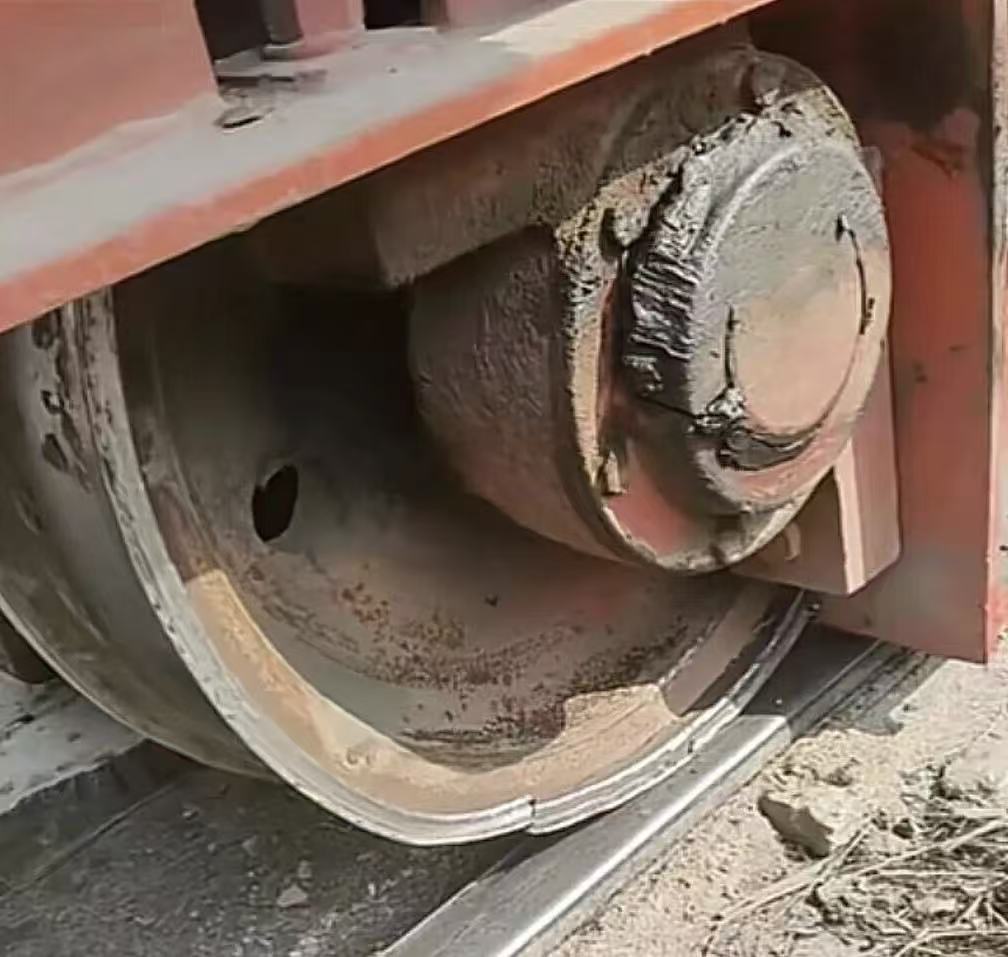
Under normal operating conditions, a specific clearance exists between the wheel flange and the side of the rail. The term wheel flange grinding refers to intense friction and compression occurring between the wheel flange and the rail side. This is not merely a noise issue; it increases operational resistance, damages running mechanisms like motors and gearboxes, and in severe cases, can even lead to structural deformation of the metal frame or derailment accidents. How can you tell if your equipment is experiencing flange grinding? The following 5 key signs cannot be ignored:
First, inspect the rails. If you find bright friction marks on the rail sides, or even burrs and deep grooves, this is the most direct evidence of grinding. Simultaneously, bright spots and burrs will appear on the inner sides of the wheel flanges. If you notice significant changes in the clearance between the wheel flange and the rail over short operating distances, or if the crane body skews, twists, or produces "clunking" impact sounds during operation, it indicates that the grinding is already severe. Behind these phenomena, complex mechanical or installation defects are often hidden.
Root Causes: Why Does Skewing Happen?
The causes of wheel flange grinding are complex and interwoven. Sometimes it results from a single factor, but more often, it's the combined result of multiple issues. Based on the analysis of numerous field cases, Wuxi ChuncoTech summarizes the following core contributing factors:
"Inherent Defects" of Wheels and Rails
Defects in the wheels themselves, such as manufacturing or installation deviations, are primary causes. For example, unequal diameters of driving wheels lead to different running speeds on both sides, causing the crane body to skew. Horizontal misalignment of wheels causes the crane to grind one side when moving forward and the opposite side when moving backward. Vertical misalignment results in uneven tread contact, leading to deviation. Similarly, excessive rail installation deviations — such as significant differences in elevation between the two rails, incorrect rail span, or uneven rail joints — force the wheels to deviate from their normal path during operation.
"Out-of-Sync" Transmission Systems
If we compare a crane to a person, the two sides of the drive system are its two legs. If the legs are of uneven length (e.g., unequal gear clearances, loose keys) or exert different force (inconsistent tightness of brakes on both sides), the crane body will inevitably twist. Especially during starting and braking, this twisting directly transforms into lateral thrust against the rails, triggering flange grinding.
Structural Deformation and Assembly Errors
Long-term overload operation or accidental impacts can deform the crane's metal structure, causing excessive deviations in the span and diagonal dimensions of the four wheels. Additionally, a frequently overlooked detail is the assembly direction of wheels with tapered treads. This design is meant for self-adjustment, but if assembled incorrectly (small end facing inward), it not only fails to correct deviation but actually worsens the grinding problem.
Wuxi ChuncoTech's Solutions: Precision Engineering for Smooth Operation
Faced with these complex grinding problems, many companies often fall into the trap of treating the symptoms rather than the root cause. After replacing worn wheels, the problem soon recurs. Wuxi ChuncoTech offers systematic solutions that address the issue from its origin.
Although we do not engage in research and development from scratch, our years of deep industry involvement have granted us mastery over the manufacturing and repair processes for virtually all mature and reliable types of overhead cranes and gantry cranes available today. Our advantages lie in:
• High-Precision Manufacturing and Assembly: We strictly adhere to national standards like GB50278-2010 "Code for Acceptance of Construction Quality of Cranes and Conveying Equipment Installation Engineering." We exercise precise control over wheel machining accuracy, as well as horizontal and vertical alignment during assembly. We ensure that the deviations in wheel diagonal dimensions and span for every piece of equipment we deliver are controlled within extremely tight tolerances, eliminating "inherent defects" from the source.
• Targeted Retrofit Services: For equipment already in operation that suffers from flange grinding, Wuxi ChuncoTech provides on-site inspection and modification services. We offer customized solutions for rail adjustment, drive system optimization (e.g., replacing brakes for better synchronization, repairing key connections), structural deformation correction, and more. We not only manufacture new equipment but also excel at restoring the health of old machinery.
• Durability Priority: Since we cannot eliminate all external factors (like rail foundation settlement), we focus on strengthening the equipment itself. Our wheels are made from carefully selected materials with stable heat treatment processes, ensuring excellent wear resistance. Even when operating on rails with minor deviations, our wheels maximize service life, buying valuable maintenance windows for our customers.
Conclusion: Prevention Over Repair
Flange grinding in crane bridges and trolleys is a complex issue. It can be the combined result of multiple factors such as wheel machining deviations, rail installation errors, asynchronous drive systems, or structural deformation of the steel frame. As equipment managers, we must never ignore abnormal noises and wear patterns during operation.
Wuxi ChuncoTech consistently adheres to the philosophy of "prevention is better than cure." By providing products that meet high standards of precision—such as metallurgical overhead cranes and general-purpose gantry cranes—and by ensuring precise control during installation and commissioning, we are dedicated to helping our clients nip flange grinding problems in the bud. Choosing Wuxi ChuncoTech means choosing long-term smooth operation, safety, and peace of mind. Visit our website at https://www.chuncotech.com/ to learn more about our expertise in crane maintenance and selection.