
In our previous article, "STS Crane Operation Efficiency: Does Your Terminal Face These Daily Challenges?", we explored common efficiency bottlenecks of rail-mounted container gantry cranes in busy terminal operations. If STS cranes are the heart of a terminal, then the more flexible and versatile electric hoist gantry craneplays an indispensable role as the skeleton and arms in factories, freight yards, and logistics hubs. However, in actual operations, have you ever encountered the harsh screech of equipment misalignment and rail gnawing? Have you felt anxious due to unstable and swaying loads? Are you worried about sudden failures of critical components bringing the entire production line to a halt? These problems often stem from a lack of precise control over core equipment standards and performance. Today, Wuxi ChuncoTech will provide an in-depth analysis of this widely used, yet not always well-understood, lifting equipment based on the industry standard JB/T 5663-2008. We will explore how strictly adhering to standards can eliminate those troublesome operational issues.
Various Types of Gantry Cranes: Did You Choose the Right One for Your Working Conditions?
Stepping into any busy operational area, you might see various types of gantry cranes. According to the classification in JB/T 5663-2008, electric hoist gantry cranes are not one-size-fits-all. Structurally, they are divided into full gantry and semi-gantry types. Regarding load-handling devices, besides the common hook, there are grab bucket types specifically for bulk materials and electromagnetic types for handling steel. The number of main girders also varies, with single-girder and double-girder options. Single-girder structures offer better visibility, while double-girder types generally provide higher load capacity and better rigidity.
Many users only focus on lifting capacity during selection, neglecting the match with their specific working conditions. For example, in timber yards or bulk cargo storage areas, choosing a general-purpose hook crane would significantly reduce efficiency. Wuxi ChuncoTech recommends accurately selecting the model based on the classifications in the standard, considering your material characteristics and operational frequency. This is the first step to avoiding fundamental issues like overloading or inefficiency. Our product range covers various types, from single-girder grab bucket gantry cranes to double-girder electromagnetic gantry cranes, ensuring each piece of equipment is tailored to your specific working conditions.
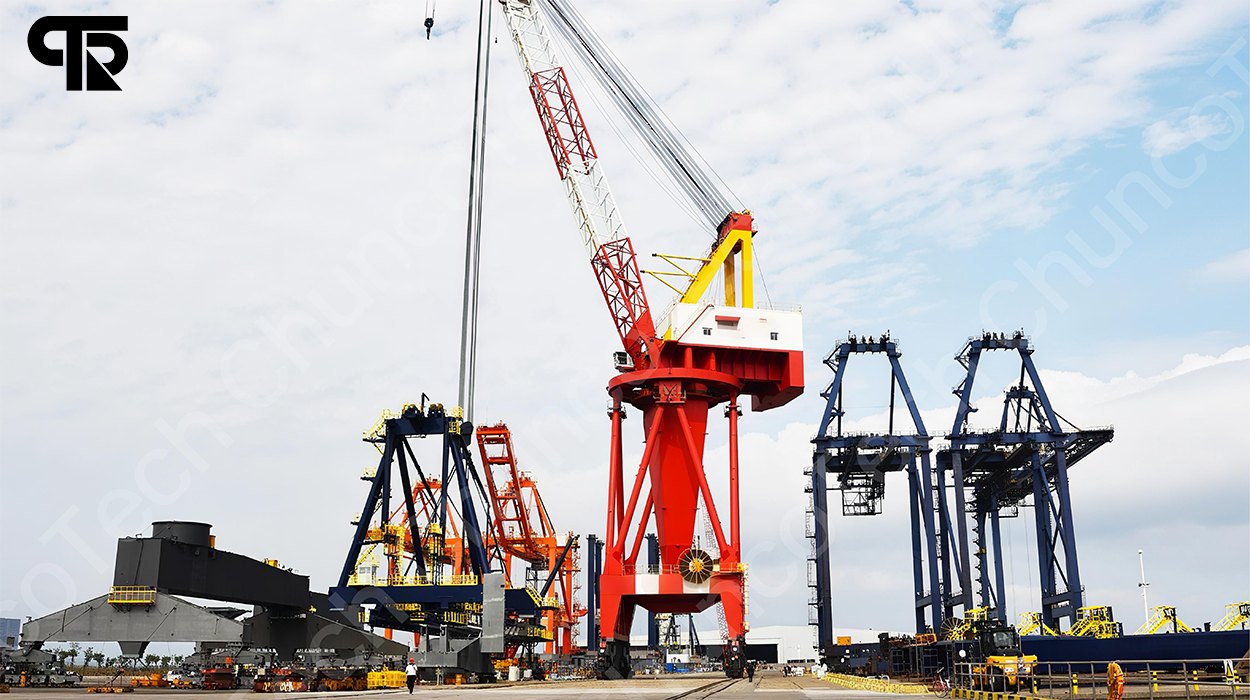
Invisible "Hard Indicators": Basic Parameters and Working Environment
The standard clearly defines the crane's classification group from A2 to A7, which directly determines the equipment's durability. Frequent failures in many construction site cranes occur because equipment with a lower duty classification is used in high-frequency, heavy-load environments. JB/T 5663-2008 also provides preferred series values for rated lifting capacity, span, and lifting height, forming the basis for equipment versatility and compatibility.
Even more critical are the working environment conditions. The standard specifies that the equipment should operate normally in environments ranging from -25°C to +40°C, with strict requirements for power supply voltage fluctuations and operating wind pressure in inland and coastal areas. Have you ever experienced significant shaking of the crane's travel mechanism in coastal wind conditions? This often stems from inadequate wind-resistant design. From the initial design stage, Wuxi ChuncoTech's electric hoist gantry cranes strictly adhere to JB/T 5663's wind pressure requirements. Whether for inland 5-level winds or coastal 6-level wind conditions, our integrated three-in-one drive units and anti-skid braking systemsensure rock-solid operational stability. Furthermore, for high-humidity southern environments or frigid northern conditions, we apply special protective treatments to electrical components and metal structures, ensuring equipment adaptability and reliability in extreme climates.
Rigidity, Precision, and Safety: Eliminating the Persistent Problems of Misalignment and Sway
One of the most common pain points in crane operation is "misalignment" and "rail gnawing." This not only causes severe wear to wheels and rails but also presents significant safety hazards. JB/T 5663-2008 has extremely stringent regulations for this: for the span S, the limit deviation ranges from ±6mm to ±10mm, with strict limits on the relative difference between spans on both sides. Additionally, the standard mandates that the height difference, head gap, and lateral misalignment at rail joints be controlled to the millimeter level (d≤1mm, e≤2mm, f≤1mm). Analysis of many real-world failures shows that the root cause of misalignment is often a mismatch between wheel tread width and rail specifications, or loss of control over installation accuracy.
At Wuxi ChuncoTech, we treat "precision" as our lifeline. We use laser trackers for the entire assembly inspection of the gantry structure, ensuring the actual camber of the main girder is no less than 0.7S/1000, and the actual camber at the effective cantilever ends strictly meets standards. For long-span cranes (S ≥ 40m), we install skewing correction devices as recommended by the standard, providing real-time deviation correction to completely eliminate rail gnawing hazards. Moreover, to address the challenge of load sway—a key issue affecting both safety and efficiency—our products can be equipped with an optional electronic anti-sway system. Through intelligent control algorithms, this allows operators to achieve fast, precise, and stable load positioning during handling, greatly enhancing operational efficiency.
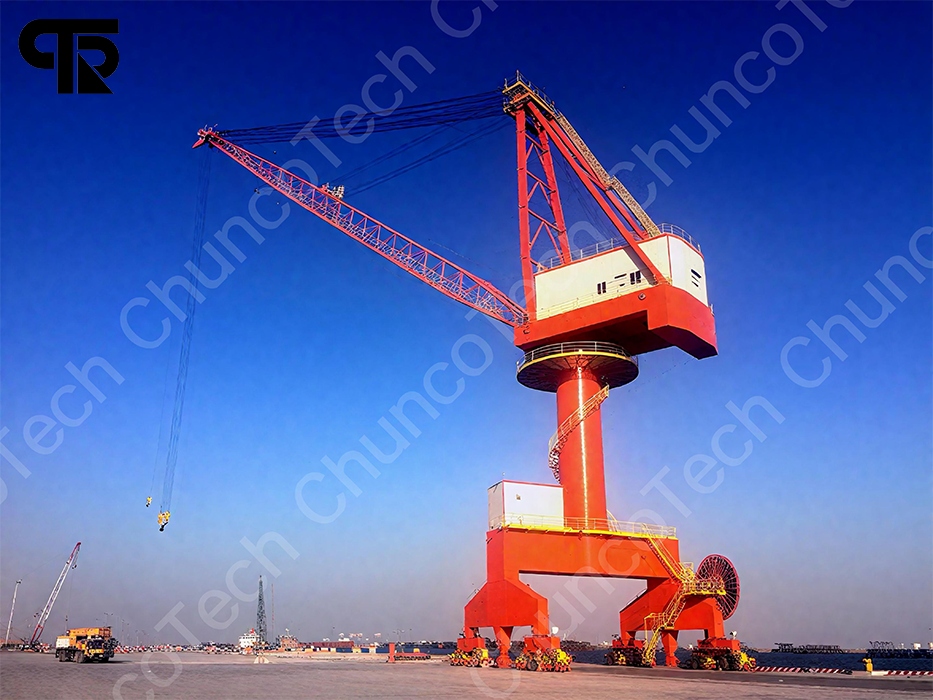
Guarding the Last Line of Defense: Electrical and Safety Protection
Safety is the eternal theme in lifting operations. Section 6 of standard JB/T 5663-2008 provides meticulous regulations on safety requirements. From load limiters, travel limit switches, to emergency stop switches, under-voltage protection, and phase sequence protection, every item is designed to prevent the one-in-a-million danger. Many alarming safety accidents often stem from failed lifting limiters, over-hoisting due to contactor welding, or fatigue fracture of brake shafts. The standard also particularly emphasizes wind prevention devices, mandating reliable manual or electric wind prevention devices and anchoring systems capable of withstanding specified wind forces.
At Wuxi ChuncoTech, safety design is never just a checklist. Every electric hoist gantry crane we ship comes standard with a multi-layered redundant safety protection system. The electric hoist is strictly selected according to the JB/T 9008.1 standard, with its brake undergoing rigorous fatigue life testing to prevent accidents caused by brake shaft fracture. The electrical control system uses low-voltage control (≤50V) and features comprehensive overcurrent protection and grounding protection (grounding resistance ≤4Ω). For electromagnetic cranes, we specifically optimize the circuit design to ensure that in the event of an internal power fault, power supply to the electromagnet is not cut off, securely holding the load and preventing instantaneous drops. We also strictly follow the standard by installing electrical interlocks on cab doors and access hatches; if any door is not properly closed, the equipment cannot operate, fundamentally preventing unsafe operator actions.
Conclusion
While the electric hoist gantry crane may seem structurally simple, its design, manufacturing, and use involve a complex system of standards. From selection and installation to daily operation and maintenance, JB/T 5663-2008 provides us with authoritative guidance. As a professional crane solution provider, Wuxi ChuncoTech not only produces and sells high-quality equipment that meets this standard but also dedicates itself to translating these standards into our customers' tangible benefits: stable production and efficient operation.
If you are troubled by misalignment, sway, or safety hazards in your current equipment, or if you are planning to acquire new machinery for your factory or yard, please visit our official website https://www.chuncotech.com/ or contact our technical team directly. Let us safeguard your material handling needs with our exquisite craftsmanship that strictly adheres to national standards.
*(Some parameters and diagrams in the text reference the JB/T 5663-2008 standard. Product images are for illustration purposes only; please refer to the actual product for specifics.)*